
Unbiased headlines. Facts, not spin.
Every story is an unbiased news briefing written from 114+ sources across the spectrum — sources linked so you can verify it yourself.
 defense
Breaking / Critical (9/10)
October 7, 2026 at 02:26 AM
defense
Breaking / Critical (9/10)
October 7, 2026 at 02:26 AM
Vance Says Iran War Entering 'Different Phase' as Enrichment Dispute Stalls a Deal
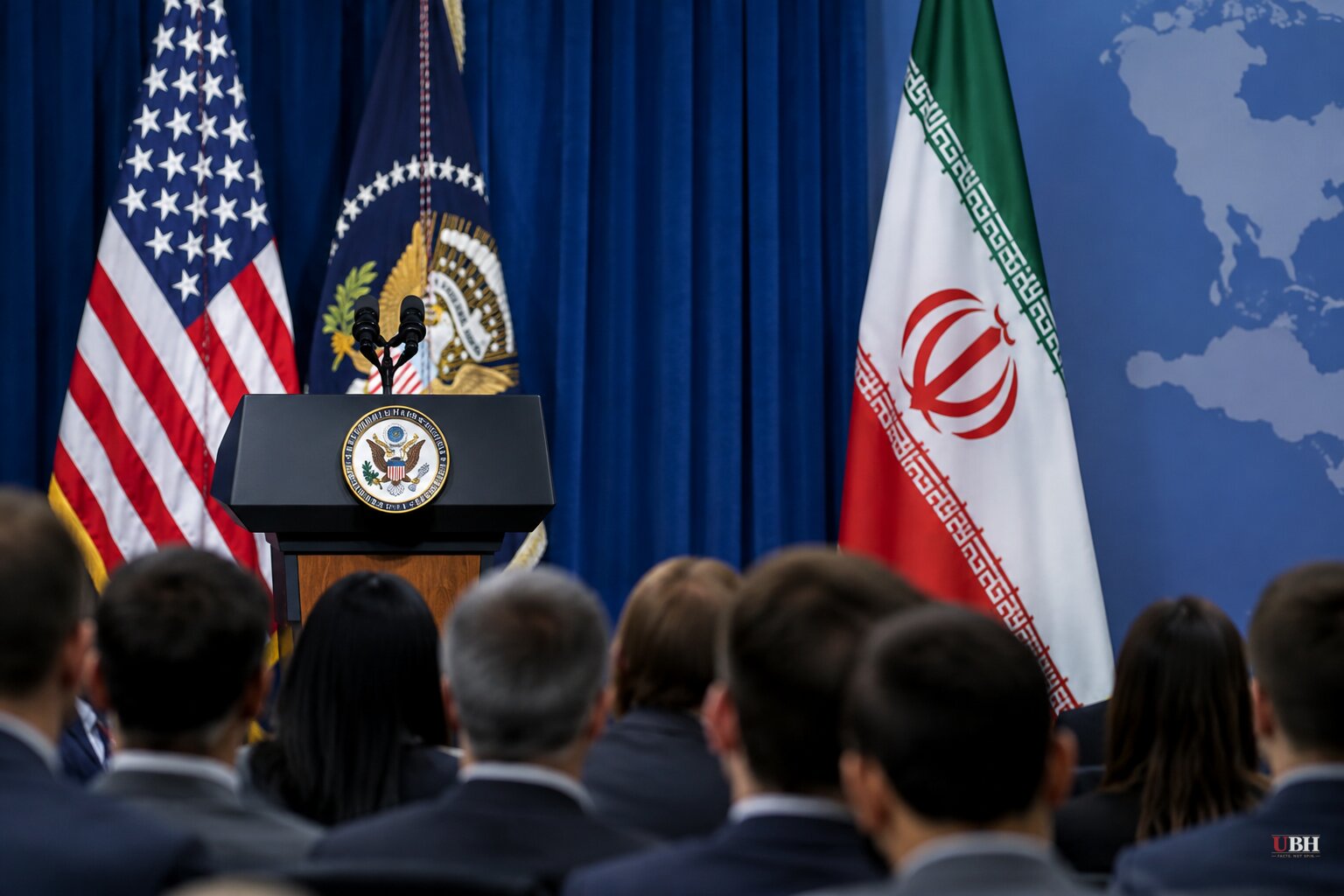
The United States and Iran remain locked in a war that started in late February 2026 and is now headed into its eighth month, with Vice President JD Vance drawing a harder line on what it will take to end it.
In an interview with Reuters published in mid-September, after a campaign stop in Alaska, Vance said any deal requires Iran to actually cut its uranium enrichment capacity, not just promise good behavior down the road.
"If you don't want a nuclear weapon, then why do you need 60 percent enriched fuel?" Vance asked. "If you want to show commitment to not building a nuclear weapon, don't build highly enriched fuel. That's a very basic threshold issue."
Iran has enriched uranium up to 60 percent, well above what civilian reactors need and a short technical step from the roughly 90 percent considered weapons-grade. Iran maintains its program is peaceful. Vance said Washington wants concrete reductions in enrichment levels, stockpiles, or centrifuges, not assurances. "We're not going to trade words for actions," he said.
Who's actually running Iran?
Vance added a complication: the US isn't sure who's calling the shots in Tehran. "One of the things we picked up on is it's not totally clear how their country makes decisions," he told Reuters. Trump separately said his "biggest problem" is not knowing who's running the country, according to Reuters' reporting carried by both the Jerusalem Post and Channel NewsAsia.
Iran's Foreign Ministry pushed back. Spokesperson Esmaeil Baghaei told a weekly press briefing that US officials know exactly who they're negotiating with, President Masoud Pezeshkian and Foreign Minister Abbas Araqchi, and said the real problem is "contradictory positions and mixed messaging from US officials." Neither side's claim is independently verified in available reporting. It's a direct factual dispute between Washington and Tehran, and readers should treat it as unresolved rather than settled by either side's say-so.
Adding to the uncertainty, Breitbart has reported on an internal power struggle inside Iran's regime, with hardline security figures pushing to escalate while questions mount over who holds authority in the absence of what Breitbart described as the country's "unseen Supreme Leader Mojtaba Khamenei." That followed joint US-Israeli strikes at the start of the war that reportedly killed Supreme Leader Ayatollah Ali Khamenei, according to Reuters' reporting.
Blockade, sanctions, and a $38 billion bill
CENTCOM says the US has kept a naval blockade on Iranian ports since early summer, redirecting at least 103 ships to enforce it, according to the Epoch Times. Trump claimed in a separate public comment that Iran's navy has been wiped out, telling reporters "159 ships... every one of them is at the bottom of the sea," and that not a single vessel has broken the blockade.
Vance's own description of the battlefield presents tension with that claim. Vance told the Epoch Times that Iran is "occasionally shooting at commercial shipping" and that the attacks are "usually not successful" but still happening, even during negotiations. If Iran's navy and air force are genuinely gone, as Trump says, it raises the question of what's still doing the shooting. None of the available reporting answers this directly.
The Treasury Department has kept up an economic pressure campaign launched in August, sanctioning Russia's VTB Bank this week for allegedly supporting Iranian banks already under US penalties, the Epoch Times reported. The war has cost $38 billion so far and could rise another $3 billion a month, per the same reporting.
Energy prices reflect the strain. Brent crude was trading around $105 a barrel in mid-September, and AAA data showed average US gas prices climbing to $4.36 a gallon, with Houthi forces in Yemen also striking Saudi oil infrastructure that month.
Vance's energy-crisis warning, and the skeptic's case
Speaking at the All-In Summit, Vance argued that pulling US forces out of the Middle East entirely would trigger a "worldwide energy crisis" as long as Iran keeps shooting at shipping. He framed continued military pressure as consistent with Trump's instinct to avoid "foreign entanglements," arguing that using force to stop a nuclear-armed Iran isn't the same as open-ended war.
Non-interventionist conservatives, the same wing Vance has long aligned himself with, could reasonably ask how a seven-plus-month conflict with a $38 billion price tag, rising gas prices, and no clear end date differs meaningfully from the entanglements Trump campaigned against. Vance's own answer, that the "first phase" of destroying Iran's nuclear and conventional military is done and a "second phase" of preventing a rebuild is now underway, acknowledges that the mission has no fixed endpoint yet.
Separately, the State Department has denied visas to Palestinian Authority President Mahmoud Abbas and his delegation, barring them from the UN General Assembly in New York for a second straight year. The department cited the PLO and PA's failure to meet US legal commitments, including unilateral statehood moves, legal action against Israel, and what it called glorification of terrorism. The UN is reportedly weighing whether to let Abbas address the Assembly remotely, according to the Jerusalem Post.
Trump has warned operations against Iran could intensify after the November midterms, per Reuters' reporting. Whether that means a return to large-scale strikes, a negotiated enrichment deal, or more of the current blockade-and-sanctions standoff remains unanswered.
Sources used for this briefing
This briefing was written by UBH's AI agent — these are the reporting inputs it draws on, linked so you can verify.


