
Unbiased headlines. Facts, not spin.
Unbiased Headlines is an independently owned news organization. We bring you the facts, not opinions, written fresh from 110+ named sources. Sources linked so you can verify it yourself.
 health
Major Story (8/10)
Event date: November 17, 2026 ·
U.S. Loses Measles Elimination Status as 2026 Cases Pass 5,800 and Infants Face a Protection Gap
The United States no longer has official measles elimination status. The Pan American Health Organization (PAHO), the regional arm of the World Health Organization, announced the withdrawal on Nov. 17. The U.S. had held the designation since 2000.
PAHO's regional verification commission met Nov. 10-13 in Washington and recommended pulling the status for Bolivia, Mexico and the United States. PAHO Director Dr. Jarbas Barbosa accepted the recommendation.
"While this is a significant setback, countries are already taking action to bring their outbreaks under control," Barbosa told reporters.
What the numbers show
PAHO defines elimination as no chain of transmission of the same virus genotype and lineage continuing uninterrupted for 12 months. The U.S. crossed that line.
The CDC has confirmed 5,838 measles cases in 2026 as of Nov. 19. That compares with 2,289 for all of 2025. It is the highest annual total since 1991. Nearly 60% of this year's cases are in children and teens, per the CDC.
The country has logged 43 outbreaks this year, and the vast majority of cases trace to them. Nearly all patients were unvaccinated or of unknown vaccination status.
Pennsylvania has the nation's largest outbreak. It began in April 2026 and has passed 1,500 cases. State health officials have reported nine measles deaths among unvaccinated residents, including a newborn and a teenager. Wisconsin recorded an infant death, the state's first from measles since 1990. New York and Virginia have also reported child deaths this year.
PAHO's decision rests on data from January 2025 through January 2026, so it predates the Pennsylvania outbreak. The 2025 West Texas outbreak is the likelier starting point. Texas reported 762 cases that year, 414 of them in Gaines County.
Who is blaming whom
Dr. Jesse Goodman, a former FDA chief scientist who chairs Georgetown University's Expert Vaccine Analysis Team, called the loss "both a national embarrassment and the tip of a dangerous iceberg." John Gräbenstein, former director of the Defense Department's Military Vaccine Agency, said he is "amazed at how casually people are taking it."
Several experts told CIDRAP News that the Trump administration's handling of the West Texas outbreak was inadequate and a turning point.
The administration rejects the idea that the designation itself is what matters. CDC Director Dr. Erica Schwartz said in a statement: "The measles elimination designation is not what protects Americans. Vaccination does." She said the CDC has put $100 million into state and local health departments to reach communities where transmission is occurring.
Health Secretary Robert F. Kennedy Jr. has promoted vaccination while also stressing that the vaccine can cause side effects, that protection declines over time, and that some communities have declined the shot.
The American Academy of Family Physicians took a different line. Losing the status "does not mean the MMR vaccine has stopped working," it said, but means "we must restore confidence in the safety and efficacy of life-saving public health tools." Two doses of MMR are 97% effective against measles.
Babies in the gap
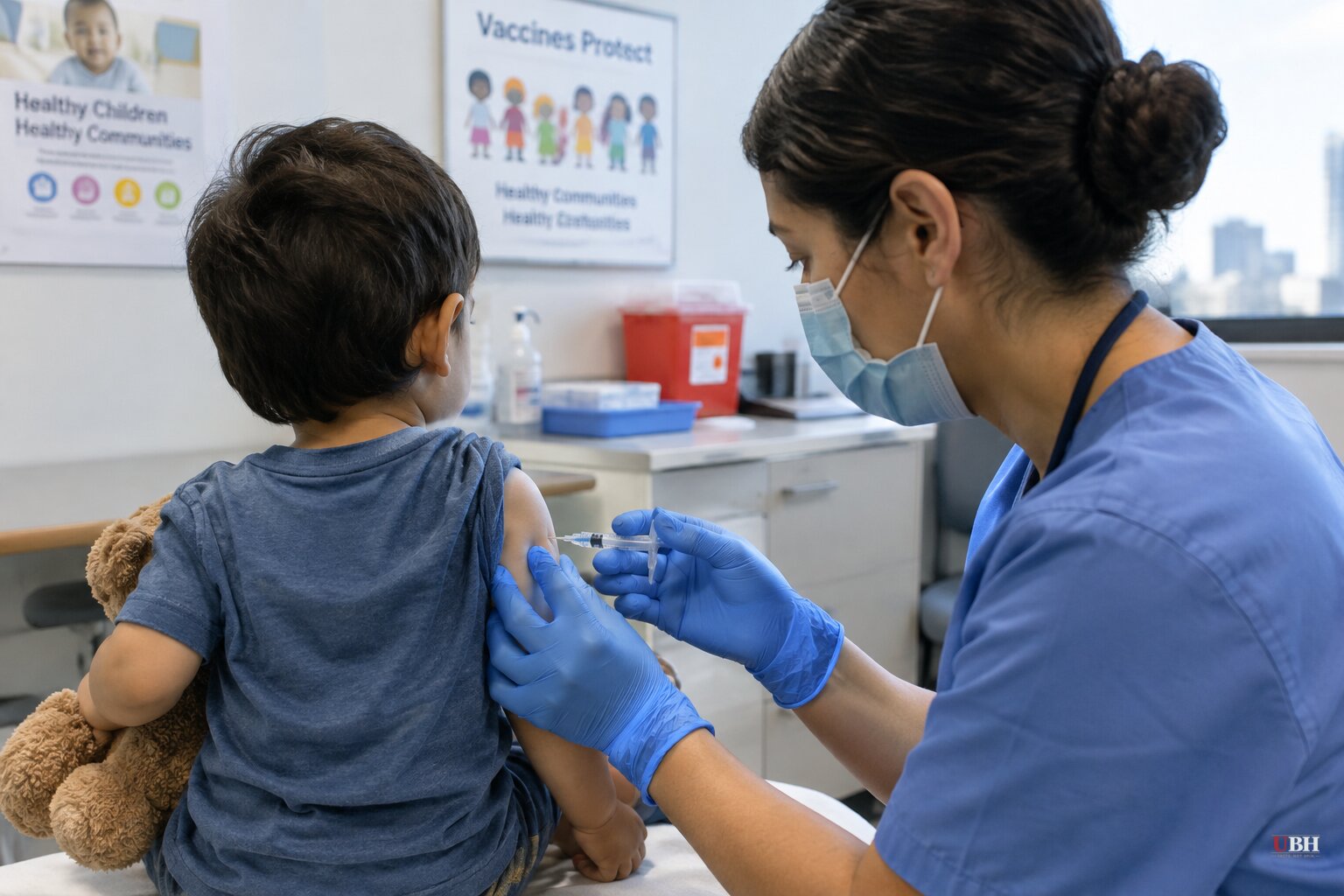
The youngest children are the hardest to protect. CDC guidance generally does not recommend the MMR shot for children under 1. Infants 6 months and older in outbreak areas can get an early "zero" dose ahead of the regular doses, usually given at 12 to 15 months and again at 4 to 6 years.
New research from Dr. Buddy Creech's team at Vanderbilt University Medical Center suggests the gap is wider than assumed. His group analyzed blood samples from 92 mother-infant pairs. Fewer than 20% of 6-month-olds still carried protective antibodies from their mothers.
"By somewhere between 4 to 6 months of age, the majority of kids have completely lost the level of seroprotection that would be needed to protect against measles," Creech said. He presented the work in October at an Infectious Diseases Society of America meeting. It has not been peer-reviewed.
"We're going to have to rethink when we should give the first dose of measles vaccine," Creech said.
Dr. Kristen Panthagani, a Connecticut emergency physician, wrote on her public health blog that her own 6-month-old is "in a window of vulnerability where he likely doesn't have protection against the virus."
Measles before birth
A public health alert published Nov. 16 in NEJM Evidence, with the University of Minnesota's Center for Infectious Disease Research and Policy and authored by CDC scientists, counted 13 congenital measles cases reported to the CDC from the start of 2025 through September 2026. Congenital measles occurs when a pregnant woman passes the virus to her fetus.
The alert also counted 112 confirmed measles cases during pregnancy. Almost all were in women who were unvaccinated or whose status was unknown.
"This is a brand new phenomenon," said Michael Osterholm, who directs the center. He attributed it to the large number of women of childbearing age who have neither been vaccinated in the past 25 years nor been exposed to the virus. Dr. Adam Ratner of the American Academy of Pediatrics infectious diseases committee said: "When you have measles under control, congenital measles doesn't happen."
Pennsylvania's health department issued an advisory last month to providers, schools and child care centers.
What comes next
The CDC's schedule still starts regular doses at 12 months, with the optional early dose limited to outbreak areas. Creech's antibody data is unreviewed, and no change to that schedule has been announced. Whether regulators respond by moving the first dose earlier, or by widening who qualifies for the early shot, is the next decision that will determine how exposed infants stay while the outbreaks continue.
Sources used for this briefing
7 links from 7 independent newsrooms (syndicated copies of the same report count once)
These are the sources it draws on, linked so you can verify.


