
Unbiased headlines. Facts, not spin.
Unbiased Headlines is an independently owned news organization. We bring you the facts, not opinions, written fresh from 110+ named sources. Sources linked so you can verify it yourself.
 health
Major Story (8/10)
Reuters Grave Analysis Points to Large Ebola Undercount in Eastern Congo as WHO Counts 87 Attacks on Health Care
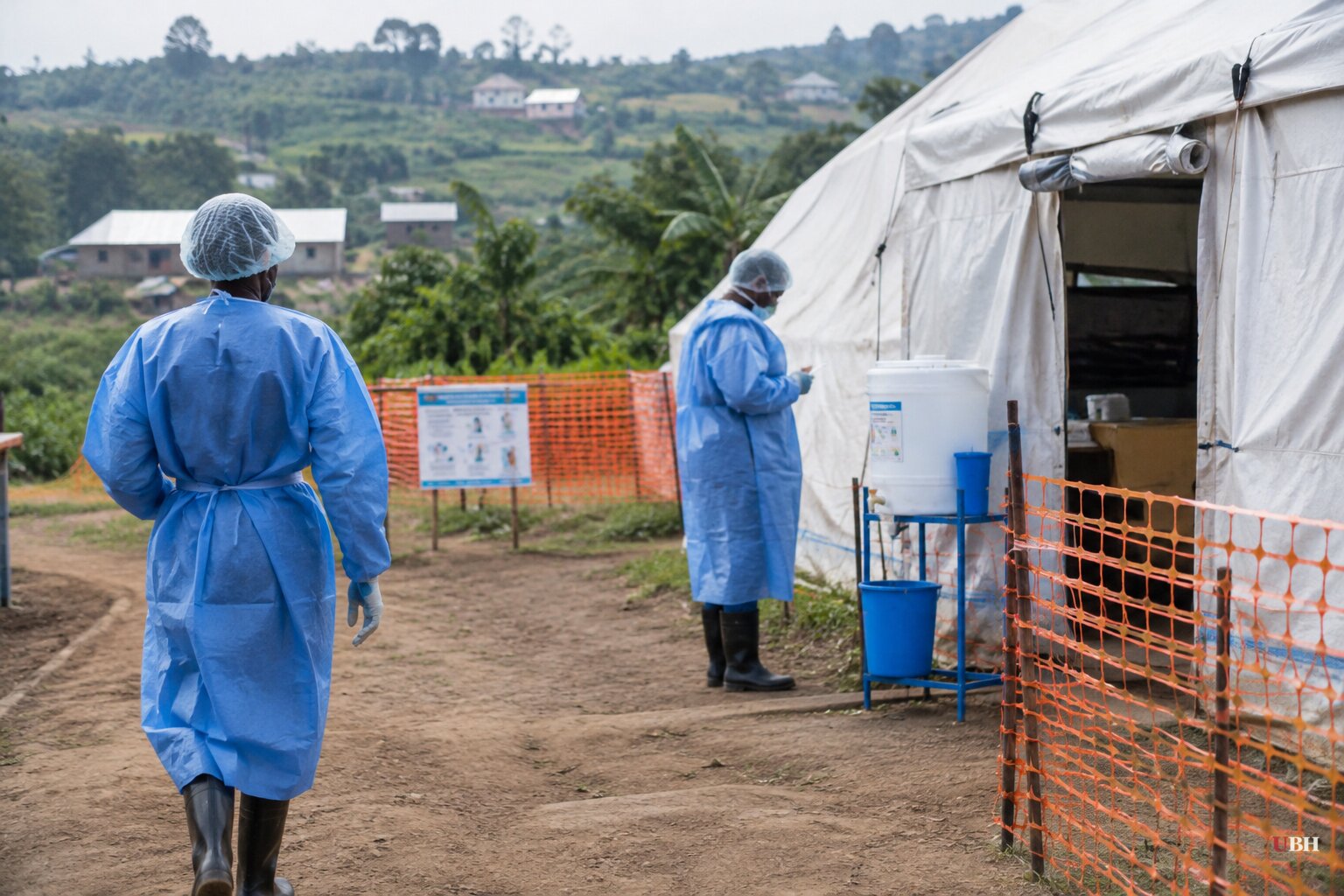
Since Congo declared the Bundibugyo Ebola outbreak on May 15, the official count has climbed past 11,000 cases and roughly 5,700 deaths as of Nov. 20. New evidence published today, Nov. 23, indicates the real toll is larger.
Graves outnumber the death count
Reuters analyzed satellite imagery of eastern Congo and combined it with accounts from local gravediggers. It concluded that far more new graves have been dug than official Ebola death tallies can explain.
The analysis suggests Ebola deaths may have been undercounted by as much as 50 percent in the early stages of the outbreak. Mass graves holding hundreds of undocumented victims have appeared near some villages.
The World Health Organization has already said the outbreak could be two to four times larger than official statistics show, because many infections and deaths never reach health officials. The agency said that a high proportion of deaths still occur in communities, outside treatment centers, especially among young children. That points to failures in finding cases early and getting people to care.
The starting point is also murky. Congo declared the outbreak on May 15, but it almost certainly began weeks or months earlier, with cases in rural areas that were never properly counted.
Violence keeps hitting the response
The WHO said today it has confirmed more than 87 attacks on health care in Congo. On Sunday, Director-General Tedros Adhanom Ghebreyesus said heavy fighting near a hospital in Ituri had forced response partners to shelter in a maternity ward for more than 24 hours. Ituri is close to where the outbreak first emerged.
"Across the Eastern DRC, frequency of attacks has increased since the end of October, seriously affecting the Ebola response," Tedros wrote on X.
The WHO singled out the Allied Democratic Forces, saying contact tracing in areas where the group operates is highly hazardous. Tracing is how teams find and isolate people exposed to a patient. Where it cannot happen, cases spread unseen.
Money, or the lack of it
Explanations for why the outbreak keeps growing differ on the role of funding.
Pardis Sabeti, a Broad Institute geneticist who sequenced samples during the 2014 to 2016 West Africa outbreak, told TIME that cuts to global health funding, especially from the United States, removed programs inside Congo. She also pointed to the breakdown of surveillance in a conflict zone. That, she said, is why the world did not hear about this outbreak until it was far out of control.
Sabeti also asked why no working diagnostic exists for all known Ebola variants. Bundibugyo is less common than the Zaire strain, she said, but it has caused outbreaks before. "Ultimately, in my mind, it's a challenge of funding and interest," she said.
Médecins Sans Frontières describes a different failure. In a Nov. 12 statement, MSF International President Dr. Javid Abdelmoneim said that despite "the vast amounts of money provided for the response, many frontline responders are left trying to contain the outbreak with empty hands and empty pockets."
MSF said response staff are untrained and unpaid, ambulances have no fuel, and health workers lack supplies. It also flagged "the persistent failure of the epidemiological surveillance system" and said entire areas are poorly covered or neglected. Tedros acknowledged safety problems and delayed worker pay in a Nov. 11 briefing to member states in Geneva. The WHO and the Congolese government did not respond to the Epoch Times when it asked about MSF's statement.
The two accounts are not necessarily in conflict. Sabeti describes a shortfall in funding and detection capacity. MSF describes money that is allocated but not reaching the front line.
Where the numbers stand
Congo's National Institute of Public Health reported 11,114 confirmed cases and 5,433 deaths on Nov. 11, a case fatality rate of 48.9 percent. That makes this the deadliest outbreak in Congo's history, passing the 2018 to 2020 epidemic that killed 2,299 people.
Across Africa it is second only to the West African outbreak, which infected at least 28,600 people and killed more than 11,000 across Guinea, Liberia, and Sierra Leone. TIME reports the virus has now infected people in five countries.
Surveillance capacity
Sabeti co-leads Sentinel, a program that trains African health workers in sequencing and diagnostics. It won a $100 million MacArthur Foundation grant announced Nov. 18, 2025, to expand into a continent-wide early-warning network. Her lab lost several federal grants before the award, according to Harvard Medical School's magazine, forcing layoffs.
The open question is how large the gap between official and actual figures is. The WHO's two-to-four-times estimate and the Reuters grave analysis both suggest it is wide. Until contact tracing can run safely in areas where armed groups operate, that gap is unlikely to close.
Sources used for this briefing
7 links from 7 independent newsrooms (syndicated copies of the same report count once)
These are the sources it draws on, linked so you can verify.


