
Unbiased headlines. Facts, not spin.
Unbiased Headlines is an independently owned news organization. We bring you the facts, not opinions, written fresh from 110+ named sources. Sources linked so you can verify it yourself.
 health
Notable (6/10)
PETA Records Allege NIH Funded Overseas Animal Labs With Safety and Oversight Lapses, Including Hendra Virus Bat Study
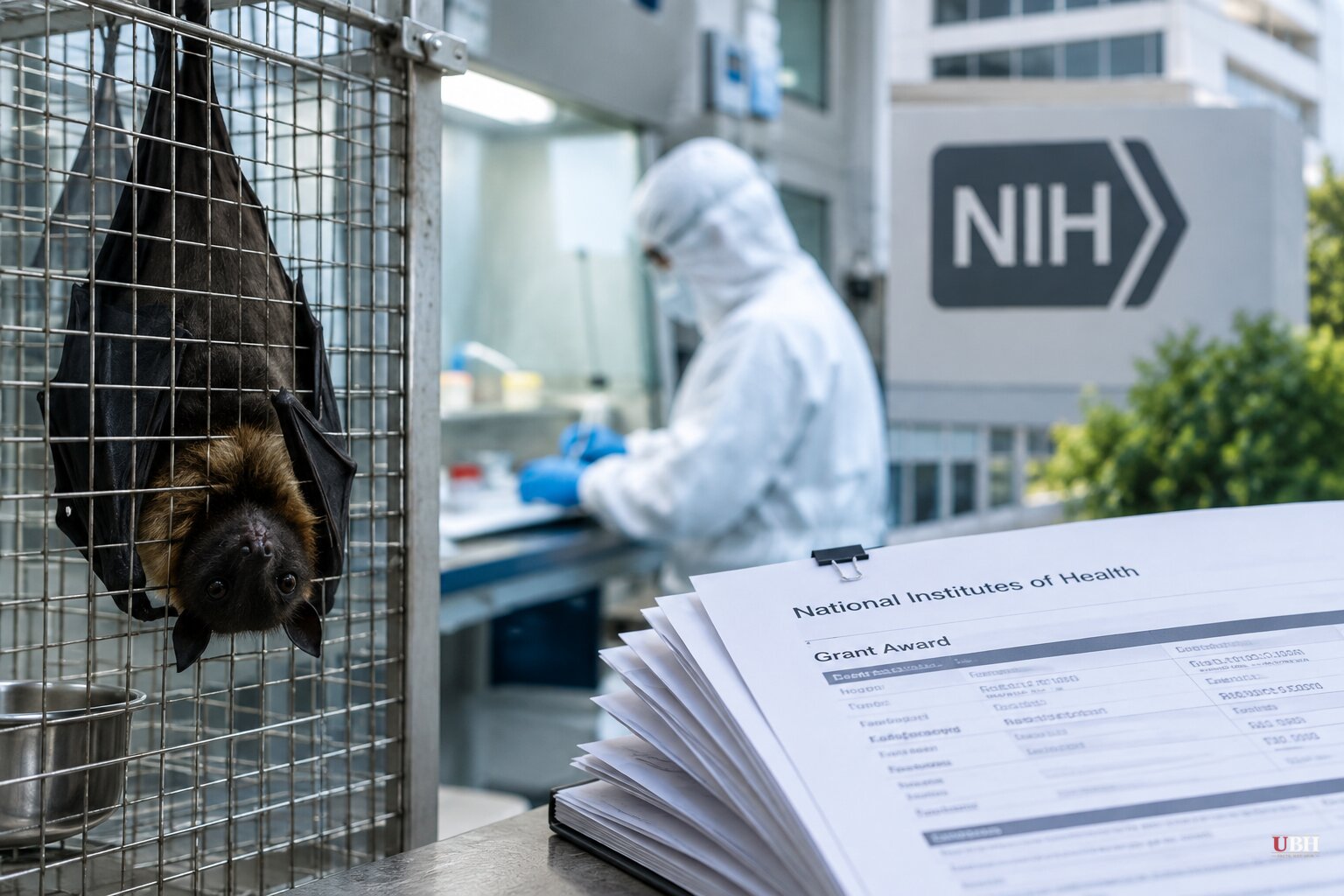
People for the Ethical Treatment of Animals has sent a formal complaint to NIH Director Jay Bhattacharya demanding that the agency stop funding animal experiments outside the United States. The group says 124 federal files it obtained under the Freedom of Information Act show NIH sent millions of taxpayer dollars to foreign labs with serious safety and oversight problems.
PETA is an advocacy group that opposes animal experimentation across the board. Its findings are allegations, not agency conclusions. But the records it cites carry dates, dollar amounts and named institutions.
The Hendra virus bat study in Australia
The most serious case involves the Australian Centre for Disease Preparedness, run by Australia's national science agency, CSIRO. NIH funded a project there titled "Shining a light on bat cellular immunity following virus infection." It involved Hendra virus, a bat-borne pathogen that can cause severe and sometimes fatal illness in humans.
According to PETA's account of the records, the facility did not have enough properly trained staff to do animal procedures at the required biocontainment level. It also lacked adequate contingency planning and clear protocols, and it kept flying foxes confined for long periods without proper enrichment.
Then one flying fox tested positive for Hendra. The room housing it could not be raised to Biosafety Level 4, the highest containment tier, so staff killed all eight bats held there. A ninth bat, housed separately at BSL-4, was later killed after also testing positive.
The principal investigator told NIH about the infections in May 2023. The facility's Animal Ethics Committee suspended the study weeks later.
NIH's Office of Laboratory Animal Welfare did not receive even a preliminary report of the suspension until April 2024. That is more than 10 months after the shutdown. PETA has not alleged that any person was infected or that the virus left the facility.
Sydney, Argentina and the United Kingdom
PETA says the Australian case was not isolated.
NIH awarded the University of Sydney a contract worth more than $13 million for tuberculosis experiments on mice. The university ran the tests at the nearby Centenary Institute, which lacked the animal welfare certification NIH requires. PETA says Centenary's role was no secret, yet the arrangement went unexamined for years.
NIH found the gap in 2025, after questions arose over the death of a mouse. Centenary then obtained the certification. According to PETA, NIH treated that as sufficient and closed the matter without a further investigation.
At the Research Center in Clinical Biochemistry and Immunology in Argentina, NIH-funded researchers infected mice with the parasite that causes Chagas disease. PETA says the animals developed whole-body tremors and trouble moving their hind legs, and none of the untreated infected mice survived. The lab's own protocol called for euthanizing mice with reduced mobility. PETA says the published findings cast doubt on whether that rule was followed.
When PETA asked for veterinary and monitoring records, the lead experimenter acknowledged the lab did not generate them, according to the group.
At Newcastle University in the United Kingdom, NIH funded brain and stroke research on nonhuman primates. A 2025 federal review ordered the facility to reevaluate its protective equipment standards, tuberculosis screening and emergency procedures for testing possible human exposures to Herpes B virus.
How NIH checks foreign labs
PETA's central charge is about process. It says NIH oversight of foreign labs leaned almost entirely on self-reporting and scheduled virtual visits. The records show those visits were announced months ahead of time. Newcastle, for example, got notice of a virtual visit in May 2025.
NIH has said it has strengthened oversight of foreign laboratories, according to PETA. PETA calls that claim a "sham" and says the "enhanced" inspections gave institutions months to prepare and control what reviewers saw.
That is the dispute in plain terms. NIH says oversight is tighter. PETA says the paperwork shows a system that learned of problems only after experiments were underway.
The agency's own money is the issue. A grant that goes to a lab nobody checked, or to a subcontractor missing a required certification, is a grant that was not properly vetted before the check cleared. That question stands apart from where anyone stands on animal research.
What comes next
The complaint lands as Congress is weighing renewed calls for the bipartisan Cease Animal Research Grants Overseas Act, known as the CARGO Act. It would permanently bar NIH from funding animal experiments in foreign countries.
Bhattacharya has not publicly said whether he will act on PETA's demand. The open question is whether NIH will release its own account of the Australian, Sydney and Argentine cases, including why the Hendra suspension took roughly 10 months to reach its animal welfare office.
Sources used for this briefing
5 links from 4 independent newsrooms (syndicated copies of the same report count once)
These are the sources it draws on, linked so you can verify.


