
Unbiased headlines. Facts, not spin.
Unbiased Headlines is an independently owned news organization. We bring you the facts, not opinions, written fresh from 110+ named sources. Sources linked so you can verify it yourself.
 health
Notable (6/10)
New U.S. Organ Donation Rules Take Effect as South Korea Weighs Legalizing Donation After Heart Stops
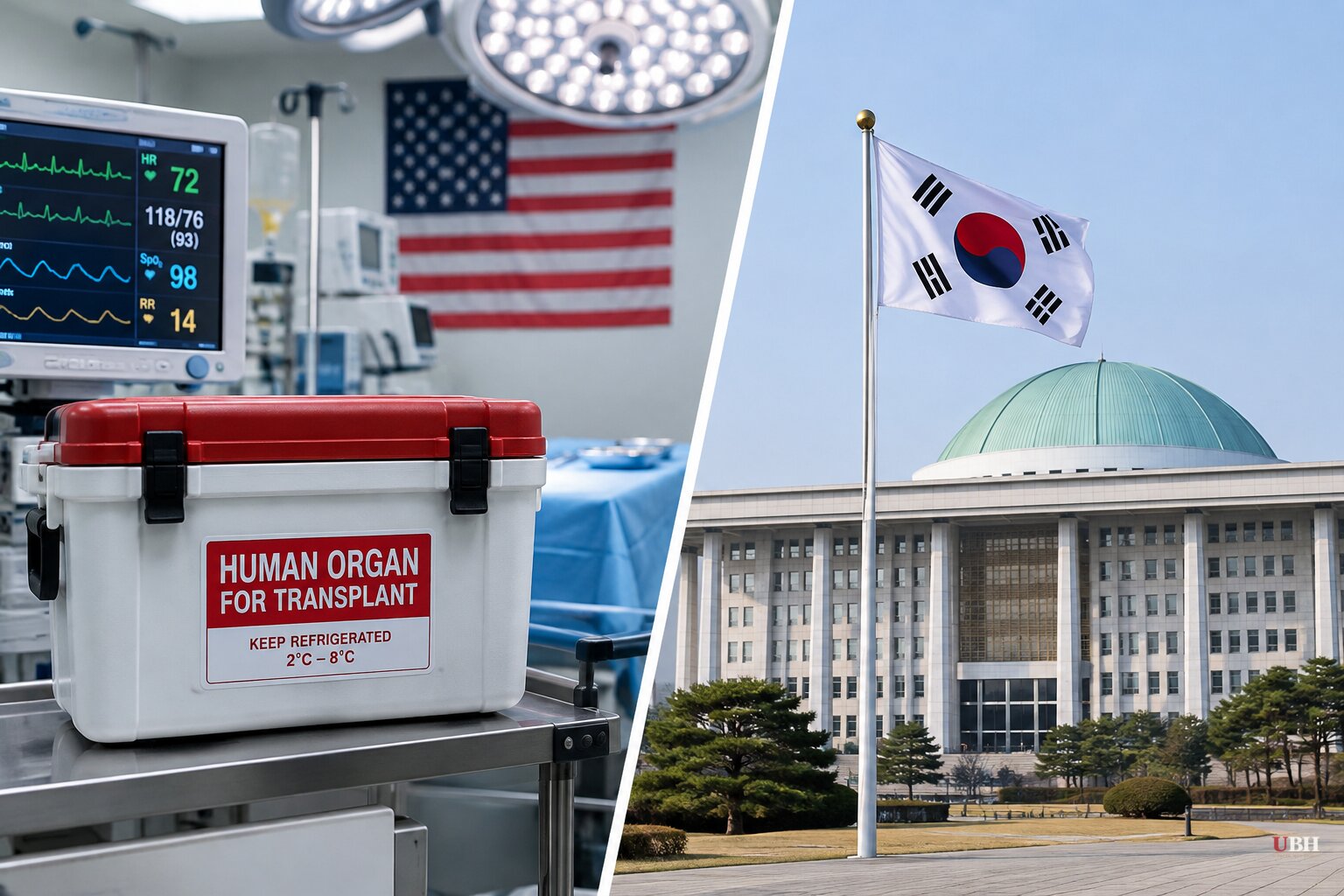
New federal guidelines for organ donation after circulatory death (DCD) took effect Nov. 18, according to the Health Resources and Services Administration (HRSA), the HHS agency that oversees the transplant system. The Organ Procurement and Transplantation Network approved the changes in August.
DCD means organs are recovered after the heart and lungs stop functioning. That differs from donation after brain death, where the donor is declared dead based on irreversible loss of brain function.
What changed in the U.S.
The guidelines set up a formal process to pause a donation if patient safety concerns arise. Families, medical providers and others involved must be told they can request a pause and how to do it.
Procedures are also being added for handling and reporting unplanned pauses, along with more detailed records of neurological assessments. And there is now a minimum five-minute wait after circulation stops before organ recovery can begin.
The changes follow cases in which organ recovery reportedly began before death was confirmed. HRSA Division of Transplantation Director Dr. Raymond Lynch told Fox News Digital that this "does not happen" under the process the new guidelines govern. He said the policies exist to "preserve the sanctity of that decision" and make sure the technical parts of the operation "pose no risk to the patient."
Lynch described the guidelines as improving the "safety, quality and consistency of care that's already being delivered." The American Society of Transplantation said in public comments that it supports honoring requests to pause the process at any point.
The objections
Not everyone is satisfied. University of Rochester bioethicist Dr. Lainie Ross told NPR that letting procurement teams approach families before they decide whether to withdraw life-sustaining care could leave them feeling pressured, or distrustful of doctors' motives.
Wesley J. Smith, a senior fellow at the Discovery Institute's Center on Human Exceptionalism, went further in National Review. His piece argues the new rule allows procurement surgeons to cause brain death. He calls the dead donor rule, under which vital organs may be taken only from deceased patients, "the foundation of ethical organ transplant medicine." Smith also wrote that HHS recently decertified two organ-procurement organizations for what he called egregious and repeated violations.
HRSA has not adopted that reading. Its stated position is that the guidelines add safeguards to a process that is already running.
South Korea: more brain-dead donors, still a record death toll
South Korea is on the other side of the DCD question. The country relies almost entirely on brain-death donation, and DCD is not legal there.
The Korea Organ Donation Agency (KODA) reported Nov. 22 that the country has counted 394 brain-dead donors so far in 2026. That is above the 370 for all of 2025 and is the first annual rise in three years. Donors were 483 in 2023 and 397 in 2024. The 2026 figure is still 89 below the 2023 level.
The gains came early. Donors totaled 337 from January through September, up 23.9% from 272 a year earlier. The first half rose 35.3%, while the third quarter rose only 4.9%. KODA's count reached 380 by the end of October. At 394, it is six short of 400 with about six weeks left in the year.
The death toll on the waiting list is the larger number. A record 3,152 patients died waiting in 2025, about 8.6 a day and up 27.1% from 2,480 in 2021. Kidney patients accounted for 1,739 of those deaths and liver patients for 1,061.
The Korean Society for Transplantation puts the waiting list at 54,789 patients in 2024, up from 43,182 in 2020. It also says brain-dead donors fell from 515 in 2017 to 397 in 2024.
Why Korean transplant doctors want DCD
At a Nov. 12 press briefing in Busan, the society listed DCD legislation among its key policy tasks. Ahn Hyeong-jun, chair of its Organ Donation Promotion Committee, blamed the donor decline on hospital staffing. He said the introduction of an 80-hour workweek for residents has left too few people to manage brain-dead patients and perform retrievals, which cluster on weekends and at night. He added that advances in critical care have reduced how often brain death occurs at all.
Two Democratic Party bills in Korea would add DCD. In the U.S., DCD supplies 49% of deceased donors, according to figures cited in Korean reporting.
The Ministry of Health and Welfare said Nov. 19 that it is reviewing a new fee for hospitals that counsel or report potential brain-dead donors. It says a pilot reporting indicator raised donor reports 35% year over year.
The ministry's own data show a weak link in the chain. Tertiary hospitals file more than 62% of reports, yet their donation-interview linkage rate fell from 41.8% in 2021 to 31.3% in 2025. The ministry gave no effective date for the fee and no projected donor gain. No report attributes this year's rise in donors to a specific policy or campaign.
What comes next
The two countries are at different points on the same road. In the U.S., DCD is a large share of the donor pool, and the question is whether five minutes, a pause mechanism and better records are enough to keep the public's trust. In Korea, the question is whether lawmakers will legalize DCD while thousands die waiting.
The unresolved items are specific. The Korean fee proposal has no start date, and the DCD bills have not passed. In the U.S., critics like Ross and Smith are still arguing that the new rules leave pressure on families and ethical gaps in the process.
KODA's year-end tally will show whether Korea's brain-dead donor count reaches 400.
Sources used for this briefing
5 links from 5 independent newsrooms (syndicated copies of the same report count once)
These are the sources it draws on, linked so you can verify.


