
Unbiased headlines. Facts, not spin.
Unbiased Headlines is an independently owned news organization. We bring you the facts, not opinions, written fresh from 110+ named sources. Sources linked so you can verify it yourself.
 health
Notable (5/10)
Event date: November 18, 2026 ·
Fraser Institute Survey: Canada's Median Specialist Wait Reaches Record 30.7 Weeks
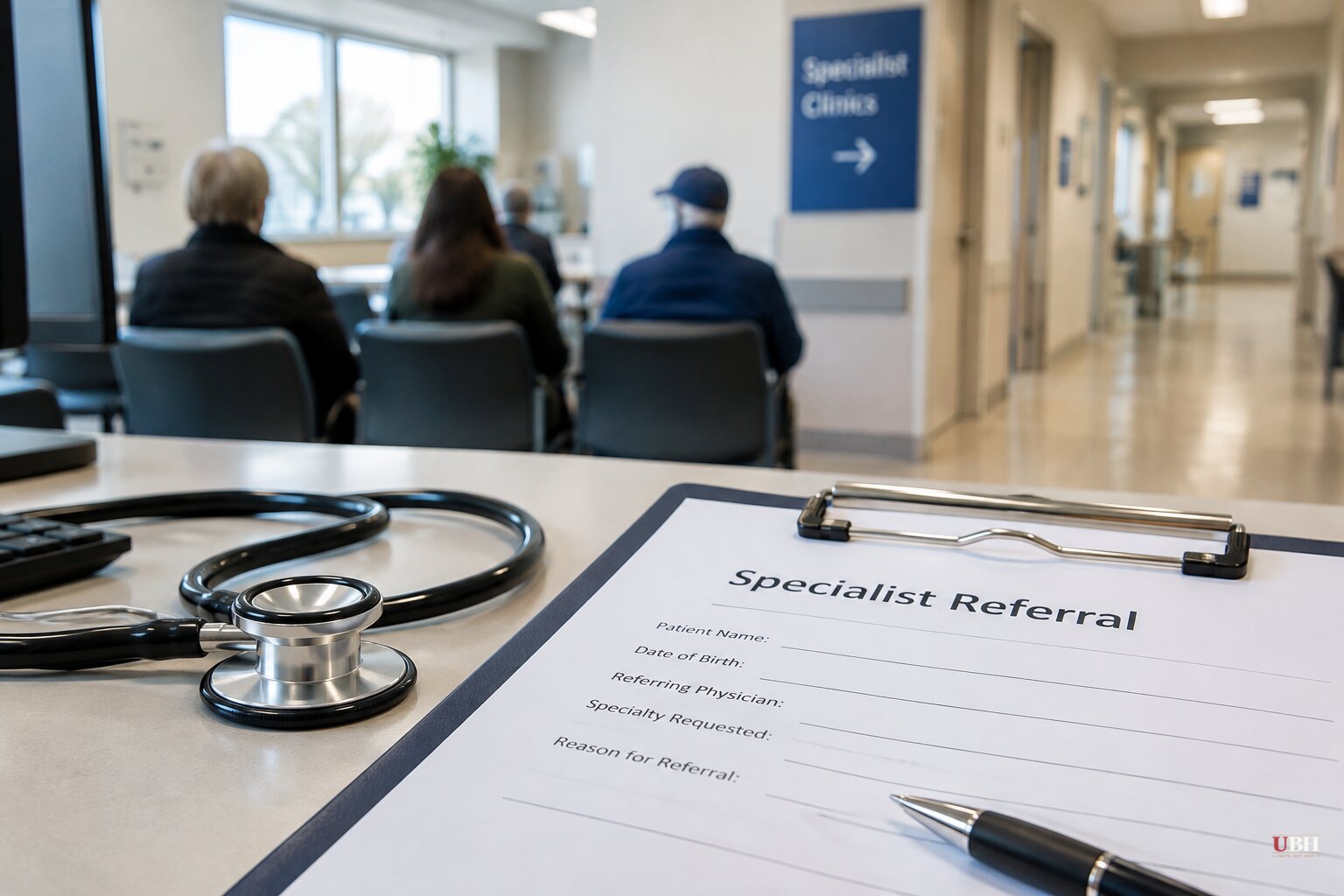
A median Canadian patient now waits 30.7 weeks, nearly eight months, between a family doctor's referral and treatment by a specialist. That is the longest figure in the 35-year history of the Fraser Institute's Waiting Your Turn survey, released Tuesday, Nov. 17.
The previous record was 30.0 weeks in 2024. Last year's figure was 28.6 weeks. In 1993, when the Vancouver-based think tank began tracking, the median was 9.3 weeks. That is a 230% increase. Against the pre-pandemic 2019 figure of 20.9 weeks, it is up 47%.
Where the time goes
The Fraser Institute splits the wait into two stretches, and both grew. Referral to first specialist consultation rose to 17.0 weeks from 15.3. Consultation to treatment rose to 13.7 weeks from 13.3.
The survey gathered responses from 909 physicians across 12 specialties and 10 provinces. The Fraser Institute estimates patients were waiting for nearly 1.5 million procedures as of this past summer. Physicians surveyed said the second stretch runs about 38% longer than they consider clinically reasonable.
"Remarkably long wait times for medically necessary care have become a defining characteristic of the Canadian health care experience," said Nadeem Esmail, the institute's director of health policy studies and a co-author.
"Long wait times can result in increased suffering for patients, lost productivity at work, decreased quality of life, and in the worst cases, disability or death," said co-author Mackenzie Moir, a senior policy analyst.
Province by province
The spread is wide. Ontario had the shortest median at 22.1 weeks, followed by Quebec at 25.3 and British Columbia at 35.0. Quebec improved sharply from 32.5 weeks last year.
Manitoba came in at 39.0 weeks, Saskatchewan at 42.8, Newfoundland and Labrador at 45.5 and Prince Edward Island at 46.2. Nova Scotia hit 51.8.
New Brunswick was worst at 64.4 weeks, more than a year. All four Atlantic provinces topped 40 weeks.
Alberta's median reached 50.0 weeks, up from 36.0 in 2025. B.C.'s 35 weeks is up from 32.2 in 2025.
Surgeries and scans
Orthopaedic surgery, which covers procedures such as hip and knee replacements, had the longest national median at 53.6 weeks. Gynaecology followed at 40.4 weeks.
Cancer care moved fastest: 4.0 weeks for radiation oncology and 4.7 for medical oncology.
Diagnostics lagged. The national median was 18.1 weeks for an MRI, 9.7 for a CT scan and 6.6 for an ultrasound. In B.C., the MRI median was 24 weeks.
Psychiatry's median rose to 30.2 weeks from 25.3. The Fraser Institute itself cautions that the figure rests on a 2.1% response rate.
The cost to patients and employers
Earlier Fraser research by Moir and Esmail put the cost of waiting at roughly $3,043 per patient in 2025, counting only working hours. The same body of research put the national price tag at $4.2 billion in lost wages and productivity that year.
Statistics Canada's 2024 Survey on Health Care Access and Experiences found 36% of Canadians who had a first specialist consultation waited three months or more. Of that group, 83% said the wait affected their lives.
A separate Mercer Marsh Benefits survey found 27% of employees had delayed care in the past two years because they expected long waits.
What the Fraser Institute wants done
The institute argues that spending is not the problem. It says B.C. health-care spending per resident rose almost 32% between 2015 and 2025 after inflation.
Its proposed fix for B.C. is to pay hospitals for each patient treated instead of a fixed annual budget. The institute's reasoning is that set budgets turn each patient into a cost and give hospitals weak incentive to treat more people faster. It says this funding model is used in most universal systems and has shortened waits there.
It also recommends a larger role for private providers delivering publicly funded hospital and surgical services. Those are the institute's policy positions. The survey itself measures physician-reported waits, not the effect of any reform.
Provincial responses
Alberta recently announced a nearly $14 million investment in artificial intelligence technology meant to raise MRI capacity by 20%. That could allow more than 41,000 additional scans a year once fully implemented in 2028.
The timeline is significant against this year's numbers. Alberta's overall median wait grew by 14 weeks in a single year, and the MRI upgrade is not due to be fully in place for roughly two more years.
Whether any province will adopt activity-based hospital funding remains to be seen. None has announced such a move in response to this year's survey, and next fall's edition will show whether Quebec's improvement holds and whether the Atlantic provinces move at all.
Sources used for this briefing
7 links from 7 independent newsrooms (syndicated copies of the same report count once)
These are the sources it draws on, linked so you can verify.


