
Unbiased headlines. Facts, not spin.
Unbiased Headlines is an independently owned news organization. We bring you the facts, not opinions, written fresh from 110+ named sources. Sources linked so you can verify it yourself.
 health
Major Story (7/10)
Event date: November 17, 2026 ·
Medicaid Work Rules Still Start Jan. 1 in States That Skip CMS Delay, and Disaster Exemptions Vary by State
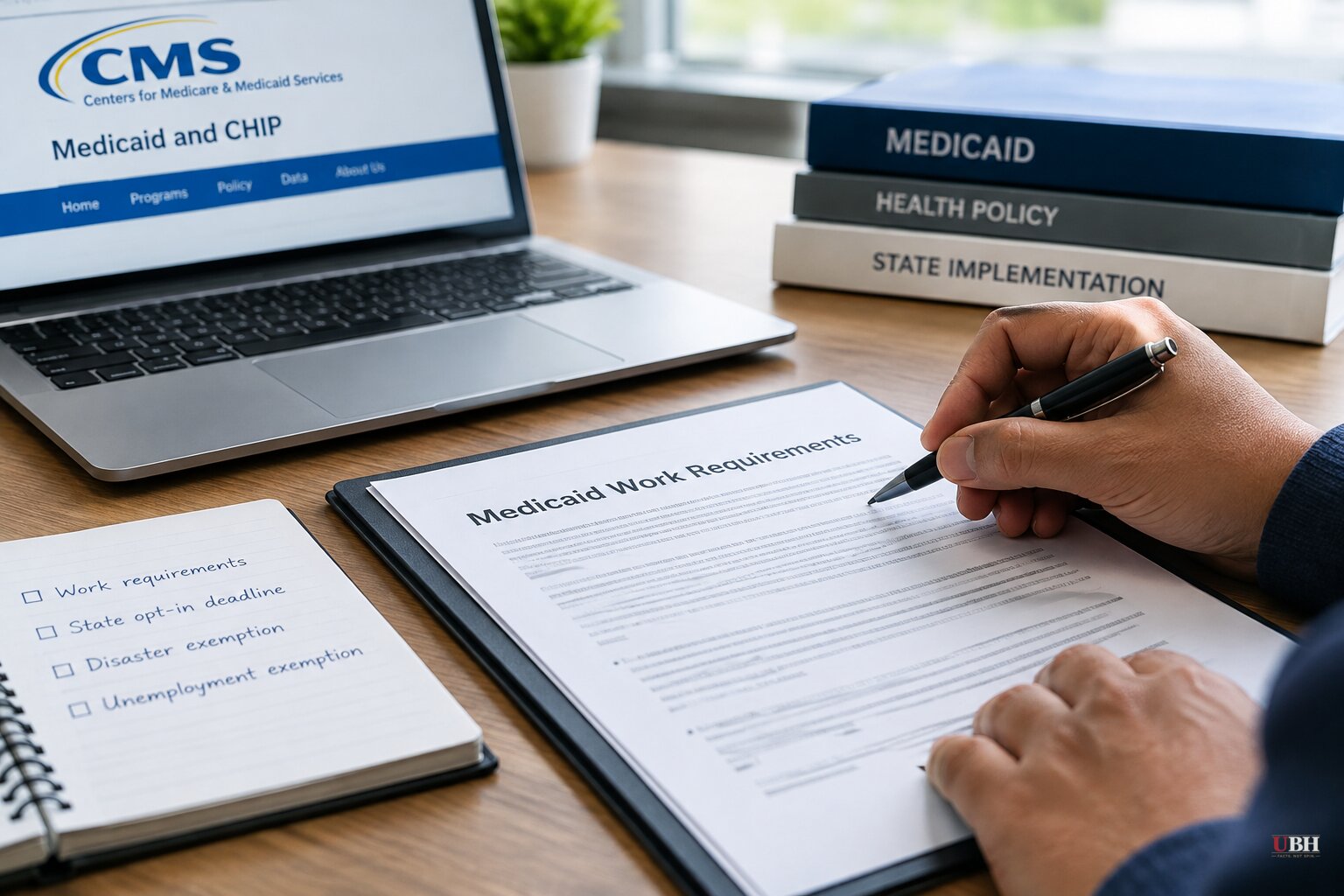
Since President Trump signed the One Big Beautiful Bill Act on July 4, 2025, the Medicaid work requirement has moved from legislative text to a hard operational deadline. Eligibility checks are due to begin Jan. 1, 2027, and what happens to enrollees hit by layoffs or disasters now depends heavily on which state they live in.
A grace period with a deadline
On Nov. 13, the Centers for Medicare & Medicaid Services said states may take up to six more months before denying or ending coverage over the requirement. Through June 30, 2027, participating states can approve applications and keep people enrolled if they otherwise qualify. States can also choose a shorter transition.
States that want the option must tell CMS by Dec. 11. They still have to start checking whether people meet the requirement or qualify for an exemption. States that don't opt in face enforcement on Jan. 1.
Dan Brillman, director of the Center for Medicaid and CHIP Services, said in a statement that "states have made real progress, and they've been clear with us about what it takes to get this right." He added: "If the state can use data to show that someone is working or qualifies for an exclusion, that person should not have to track down paperwork to prove it."
Sen. Ron Wyden (D-Ore.) and Rep. Frank Pallone Jr. (D-N.J.) called the decision a "small step in the right direction." They urged every state to use it and warned the reporting rules could still jeopardize coverage for millions. Earlier in the week they had asked for a full delay.
The rule
The law requires many nondisabled adults on Medicaid, mainly those covered through the program's expansion to low-income adults, to complete 80 hours a month of work, volunteering or other qualifying activity, attend school at least half-time, or meet an income threshold. Medically frail people, pregnant women and people with substance use disorders are among those exempt.
The Congressional Budget Office estimates more than 5 million people will lose coverage by 2034. Many, officials and experts say, would drop off by missing filing deadlines or tangling with paperwork even when they meet the criteria. The government projects the mandates will save $317 billion over 10 years.
Many Republicans in Congress have long backed the requirement. They argue the system was riddled with fraud and that health insurance should be earned.
Courts and Congress
On Oct. 29, a federal judge in Massachusetts struck down part of CMS's rule, finding that officials unlawfully narrowed the exemption for medically frail people. Massachusetts Attorney General Andrea Joy Campbell, California's Rob Bonta and New Jersey's Jennifer Davenport co-led the multistate suit. CMS Administrator Dr. Mehmet Oz said on CNBC that the ruling would be appealed.
Democrats take control of Congress on Jan. 3. They do not have the votes to override a presidential veto, so any rollback would need a deal with Republicans.
Hospitals aren't waiting. Health systems are texting and calling patients to help roughly 19 million people keep coverage. "There's going to be people who fall through the cracks," said Nicole Harper, chief financial officer at Eskenazi Health, a safety-net hospital in Indianapolis. "We're bracing for impact."
Disaster and hardship exemptions
The law lets states adopt optional short-term hardship exceptions. They cover counties with unemployment at or above 8% (or 1.5 times the national average), federally declared disaster areas, extended medical travel and hospital stays. States must take all of them or none, and the county-level exceptions only take effect after further state action.
At least 34 states, plus Washington, D.C., plan to adopt the optional hardship exemptions. According to KFF, four states — Indiana, Iowa, Missouri and Ohio — do not plan to adopt them, and all four were issued disaster declarations for severe storms and flooding this summer. The Missouri Department of Social Services said it expects mandatory exemptions for medical frailty and caregivers to cover acute medical events and specialized medical travel. Six of the eight states bordering Missouri plan to offer the exceptions.
Nebraska shows how the option works. After a Tyson Foods plant closure in January eliminated about 3,000 jobs, the state sought federal approval in June to exempt residents of surrounding Dawson County.
Hawaii after Hurricane Lowell
On Kauai, unemployment claims rose from 69 before the September hurricane to about 1,800 nearly two weeks later, amid tourism layoffs. Medicaid applications from island residents rose about 50% in the following month, according to the Hawaii Department of Human Services. Over 100 workers were laid off at the Sheraton Kauai Resort alone.
Rochelle Ganotisi, a housekeeper laid off there, has three months of union-secured health coverage. If she isn't rehired by then, she plans to apply for Medicaid.
The disaster exemption largely depends on a presidential disaster or emergency declaration, which can take months or never come. The Trump administration has not given clear guidance on how long a state can apply the exemption, so it is unclear whether workers laid off after Lowell would still qualify months later.
Gov. Josh Green, a Democrat and physician, urged quick declarations. "It would be devastating if suddenly 40,000 or 50,000 people didn't have their Medicaid benefits," he said.
The next fixed date is Dec. 11, when states must tell CMS whether they will use the grace period. Whether Hawaii and other disaster-hit states have adopted the hardship exceptions will decide how many laid-off workers face the work rules in January.
Sources used for this briefing
7 links from 6 independent newsrooms (syndicated copies of the same report count once)
These are the sources it draws on, linked so you can verify.


