
Unbiased headlines. Facts, not spin.
Unbiased Headlines is an independently owned news organization. We bring you the facts, not opinions, written fresh from 110+ named sources. Sources linked so you can verify it yourself.
 health
Notable (6/10)
Event date: November 16, 2026 ·
UnitedHealth Sues CMS Over 2027 Star Ratings, Says 26 Measures Cut Scores on 45 Medicare Advantage Contracts
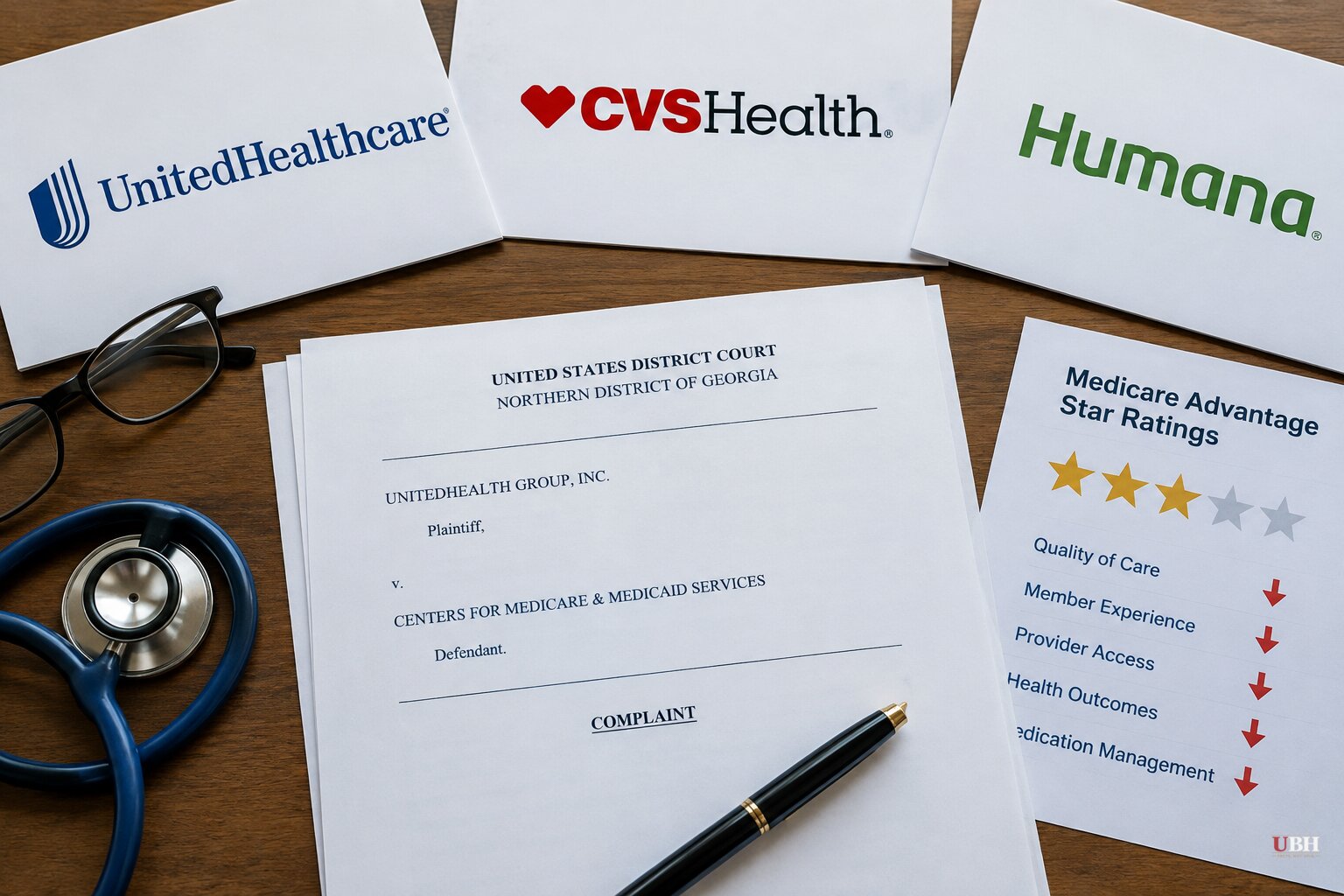
UnitedHealth Group, the largest Medicare Advantage insurer, sued the Centers for Medicare & Medicaid Services late last Thursday over its 2027 star ratings. The complaint was filed in federal court in Brunswick, Georgia.
The company says CMS improperly applied 26 measures when it calculated ratings for 45 of its contracts. UnitedHealth argues the agency lacked statutory authority for some of those measures, failed to give the company a chance to object to others, or both.
CMS declined to comment.
What UnitedHealth is claiming
UnitedHealth says the 45 disputed contracts would gain at least 0.5 stars, and as much as 1.5 stars, if CMS had calculated them correctly. Star ratings run from one to five.
The money is the point. Higher-rated plans collect government bonuses, and those payments can reach hundreds of millions of dollars, or billions, when costs stay low.
UnitedHealth calls the ratings the government's "principal signal" to patients about plan quality. The company says improperly low scores could weaken its ability to offer preventive care, force benefit cuts and push premiums higher.
"We did not take this step lightly," UnitedHealth said in a statement. "We remain committed to working with CMS to modernize the Stars program and create a more durable approach to measuring quality."
Those claims are the company's own. CMS has not responded to them on the record, and the court has not ruled on any of them.
UnitedHealth is not the first to sue
CMS released the 2027 ratings last month, and insurers have been heading to court since. CVS Health, the parent of Aetna, sued in October, saying it could lose more than $2 billion in bonus payments and rebate retention. That case was also filed in Brunswick.
Humana filed a similar suit in 2024.
The venue matters. In May, a federal judge in Brunswick found that CMS calculated an incorrect star rating for Clover Health and ordered a recalculation. The same judge is assigned to the insurer cases there.
No equivalent ruling has been issued in UnitedHealth's case. A recalculation order for a smaller insurer is not a recalculation order for the biggest one, and each contract's score turns on its own measures and data.
The market reaction
UnitedHealth shares rose 4.6% on Friday. The same day, Cowen analyst Ryan Langston upgraded the stock to Buy with a $455 price target.
The filing and the upgrade landed within a day of each other, and the sources do not say how much of the move came from either one. A stock rising is not the same as the lawsuit succeeding.
Star bonuses are federal money. The stakes run both ways.
If CMS used measures it had no authority to apply, or skipped required notice, insurers have a legitimate procedural complaint, and a court is the proper place to settle it. Agencies are supposed to follow the statute and the process, and a ruling that they did not would be a problem for CMS.
If CMS's calculations stand, the insurers are asking for ratings upgrades that would send more bonus dollars their way. When the biggest players in the program each go to the same courthouse after every ratings cycle, the rules deserve scrutiny for clarity and consistency.
The program's scoring is complicated enough that its largest beneficiaries are litigating it measure by measure.
What happens next
CMS has not said whether it will contest UnitedHealth's claims on the merits or settle the dispute through a recalculation, as it was ordered to do for Clover. Neither the court nor the parties have set out a timeline.
The outcome in the CVS case, filed in the same courthouse last month, and any ruling on the 45 UnitedHealth contracts will show how far the Clover decision extends.
Sources used for this briefing
7 links from 7 independent newsrooms (syndicated copies of the same report count once)
These are the sources it draws on, linked so you can verify.


