
Unbiased headlines. Facts, not spin.
Unbiased Headlines is an independently owned news organization. We bring you the facts, not opinions, written fresh from 110+ named sources. Sources linked so you can verify it yourself.
 health
Major Story (7/10)
Event date: November 23, 2026 ·
Congo Ebola Outbreak Holds at About 470 Cases a Week as Fighting Traps Responders in an Ituri Hospital
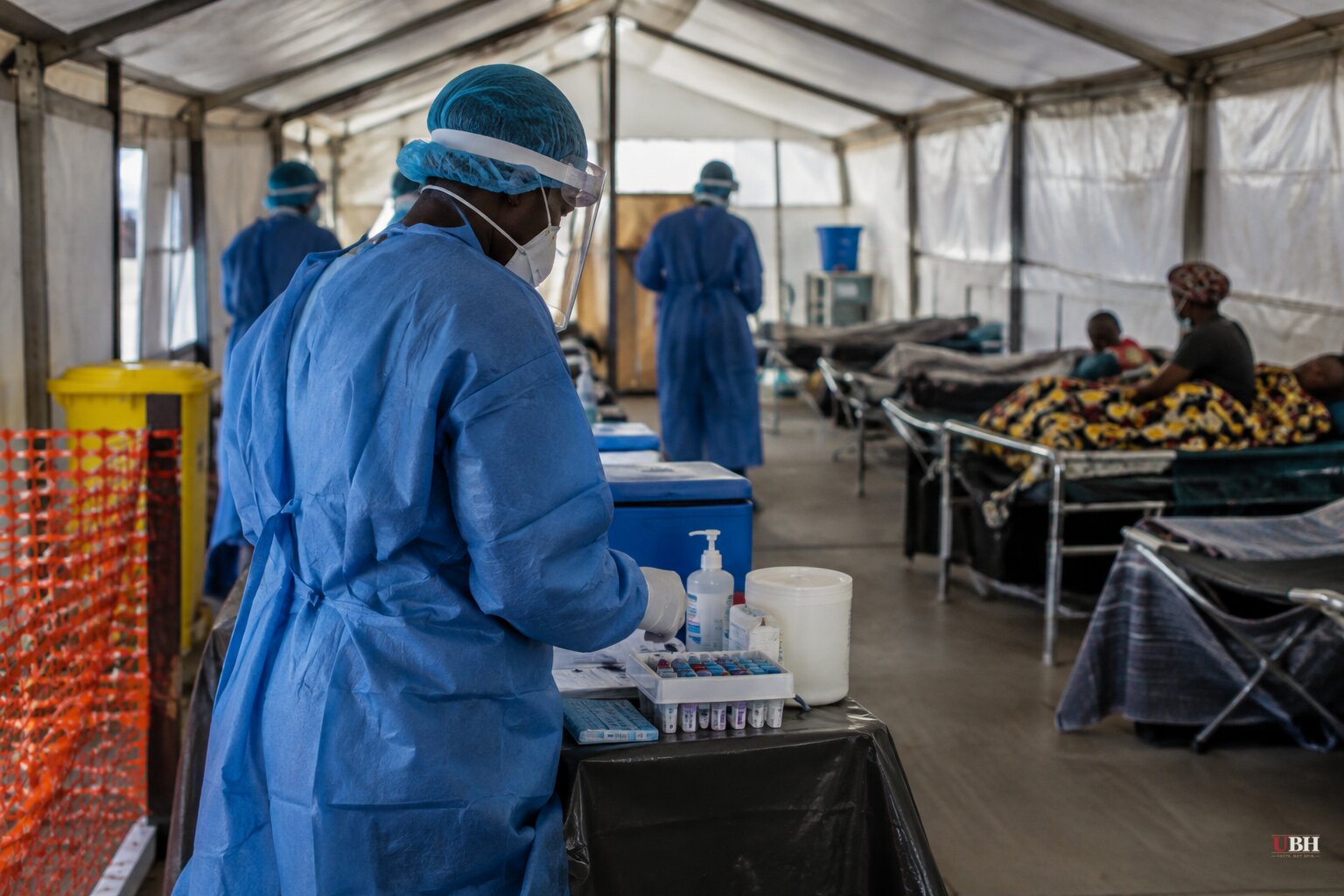
Since Congo declared the outbreak on May 15, confirmed cases have climbed to 11,793 with 5,779 deaths, a crude case-fatality rate of 48.9%, and the latest data show a plateau rather than a decline. Africa CDC says virus activity peaked in August. National notifications have held at roughly 460 to 480 confirmed cases a week since late September, which the agency describes as the outbreak's third month at that level.
Responders pinned down in Ituri
WHO Director-General Tedros Adhanom Ghebreyesus said on X on Sunday, Nov. 22, that heavy fighting had been under way since Saturday near a hospital in Ituri province, close to where the outbreak first emerged. Colleagues and response partners had been sheltering in the hospital's maternity ward for more than 24 hours.
"The situation has disrupted the work of the hospital and the wider Ebola response, putting patients, families, and health workers at grave risk," Tedros wrote. He said attacks across eastern Congo have become more frequent since the end of October. WHO says it is working with partners to arrange a safe exit for the team and is calling for protection of the hospital, its staff and its patients.
The WHO has verified more than 87 attacks on health care in Congo since Jan. 1. The sources do not say whether the trapped team has been evacuated.
Ituri accounts for more than two-thirds of confirmed cases. As of figures released Nov. 20, the province had more than 8,000 cases and 3,791 deaths, a fatality rate of 47%. Of 39 new confirmed cases in the latest update, 23 came from Ituri. The outbreak has touched 68 health zones in eight provinces.
Contact tracing is failing
Africa CDC's six-month report, covering May 15 to Nov. 15, contains the starkest number so far. Only 1,146 of 10,659 confirmed cases with onset between weeks 19 and 45 came from contact lists. That is 11%, against a target of 95%.
"The response found the other 89% outside those lists, which means many transmission links were identified too late to list and monitor the contacts," Africa CDC said in the report's executive summary.
The violence makes that gap harder to close. Julien Harneis, the UN's senior Ebola response coordinator, told journalists in Geneva on Nov. 13 that following up contacts in areas where the Allied Democratic Forces operate is "a very hazardous idea." He said more people had recently been killed by ADF fighters than by Ebola, and that violence in tens of villages across southern Ituri and North Kivu "goes unnoticed."
One attack illustrates the problem. Officials blamed the ADF for a raid on Cantine-Aloya in North Kivu in which 66 people, including three health workers, were killed and three health facilities were burned. Tedros told heads of state that three Ebola patients and 1,000 contacts fled the town afterward. Separately, the rebel group now called the Front for the Reformation of the Nation, formerly known as M23, launched an offensive in South Kivu last week and displaced more people.
Disagreement over how the response is run
WHO has said some areas have seen a slight decline in cases but that "sustained, high-level transmission continues overall." Médecins Sans Frontières takes a harsher view. The group calls the outbreak "out of control" and says there is "a troubling disconnect between the considerable resources mobilised for the response and what is actually reaching patients, frontline workers, and communities."
"Despite the vast amounts of money provided for the response, many frontline responders are left trying to contain the outbreak with empty hands and empty pockets," MSF president Dr. Javid Abdelmoneim said. MSF cited the "persistent failure of the epidemiological surveillance system" as a main concern.
The money question cuts two ways. The International Organization for Migration says it is short almost $60 million for a comprehensive response, including screening at displacement sites and informal transit routes. It has already found 71 infected people by screening those unmonitored routes, and an assessment in Tshopo Province flagged 19 river locations that may need more surveillance points.
Pardis Sabeti of the Broad Institute, who sequenced samples in the 2014-2016 West African outbreak, told TIME that cuts to global health funding, particularly from the United States, removed programs in Congo directly. She also said conflict stripped away the surveillance that would have flagged the outbreak early. TIME describes this as the second-largest Ebola outbreak on record.
Undercount and the vaccine question
WHO has estimated the true outbreak could be two to four times larger than official statistics show, because many infections and deaths go unrecorded. A high proportion of deaths continue to occur in communities rather than treatment centers, especially among young children.
Richard Hatchett, CEO of the Coalition for Epidemic Preparedness Innovations, told Semafor that three large vaccine trials could produce a breakthrough at the beginning of 2027. He said conflict and misinformation are the obstacles.
"The biggest variable is how quickly can we enroll the necessary number of subjects, and that is a dynamic process," Hatchett said. Enrollment depends on reaching people in Ituri and North Kivu, the same areas where responders were pinned down this weekend.
Sources used for this briefing
7 links from 7 independent newsrooms (syndicated copies of the same report count once)
These are the sources it draws on, linked so you can verify.


