
Unbiased headlines. Facts, not spin.
Unbiased Headlines is an independently owned news organization. We bring you the facts, not opinions, written fresh from 110+ named sources. Sources linked so you can verify it yourself.
 health
Notable (6/10)
Event date: November 23, 2026 ·
WFP projects 19.2 million Afghans face acute hunger this winter as drought and returnee influx strain the economy
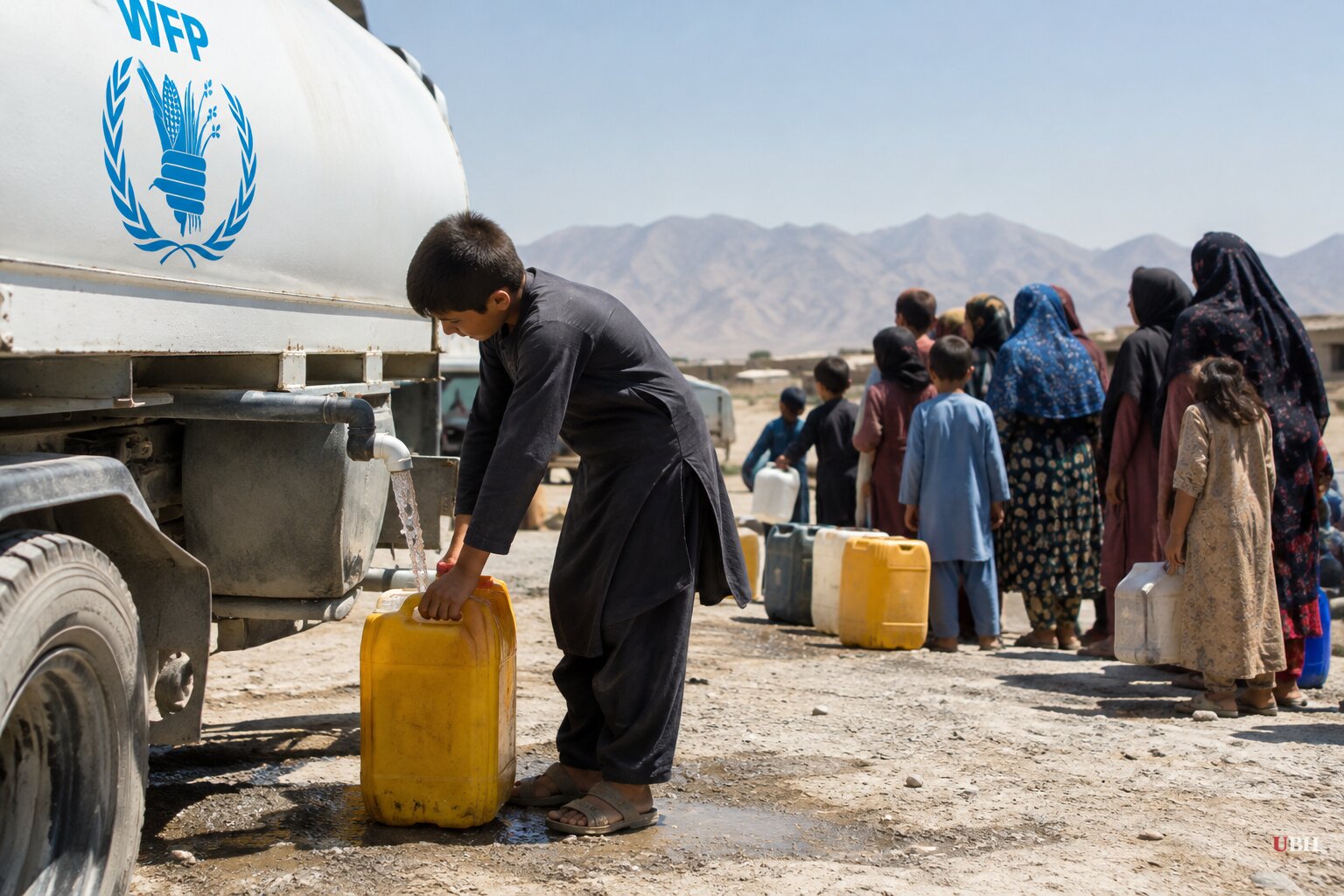
Afghanistan is heading into winter with more people in acute hunger than at any point in the data the World Food Programme cites.
The WFP's November country brief, drawing on a new Integrated Food Security Phase Classification (IPC) analysis, projects 19.2 million people, or 38% of the population, will face crisis levels of food insecurity or worse (IPC 3+) during the November-April lean season. A year earlier the projection was 17.4 million.
About five million of them are expected to face emergency-level hunger (IPC 4). The WFP says that is double the number projected for April to September 2026.
Malnutrition numbers climb
The WFP expects roughly 4 million children to need treatment for acute malnutrition in 2027, a 10% increase over 2026. Nearly 1.1 million of those would be suffering severe acute malnutrition. The agency also projects that 1 million pregnant and breastfeeding women will need treatment.
The United Nations said nearly three-quarters of Afghans were living in poverty by the end of last year.
A better harvest, a worse economy
The World Bank's latest Afghanistan Development Update expects 3% GDP growth in fiscal 2026. That is one percentage point below its spring projection.
Population growth of 6.6% is outrunning that. The Bank attributes part of it to the return of about one million Afghans between April and September 2026. It projects GDP per capita will fall 3.3%, the third consecutive annual decline.
Agriculture rebounded about 8% after the 2025 drought and supplied almost 90% of overall growth, the Bank says. Almost everything else shrank. Services contracted 1.5%, private investment fell about 15%, and real exports dropped 22%.
Inflation is forecast to average 7%, almost double last year's rate. The Bank points to higher fuel prices and transport costs on alternative trade routes.
The household numbers are harsher. In September, casual laborers worked 14% fewer days than a year earlier. Their weekly earnings bought 27% less wheat flour. Purchasing power fell in 31 of 34 provinces.
An estimated 15.9 million people still face acute food insecurity despite the harvest, the Bank report says. More than half of returnee households cannot meet basic needs from their income.
Trade cut off at the Pakistan border
The Bank ties part of the squeeze to the closure of crossings with Pakistan. Afghanistan has rerouted imports through Central Asia and Iran, and those two corridors now carry 97% of imports. Imports rose 2.2% in the first half of fiscal 2026.
Exports have not recovered. They fell 15.1%, and fresh fruit and vegetables lost almost 90% of their export volume. Customs revenue dropped 16.9%, though overall domestic revenue rose 10.2%.
The current account deficit is projected at 34.2% of GDP, about $7.9 billion. Declining aid and remittances add to the pressure, according to the Bank.
Bamyan: five years of shrinking fields
The national harvest figure hides regional collapse. PBS NewsHour's Leila Molana-Allen reported from Bamyan province, once an agricultural heartland, where farmer Yasin says one of his family's fields has dried out in each of the past five years. Only one is left.
"This year we had no harvest at all," Yasin said through an interpreter. "Everything we have depends on agriculture." Several neighbors have already left for the city.
Water supply shrinking
The UN Development Programme says the share of households with enough drinking water year-round fell from 59% in 2024 to 44% in 2025. The 2025 Afghanistan Humanitarian Needs Assessment found 67% of households affected by drought and water shortages.
The World Bank estimates Afghanistan loses about 4.9 billion cubic meters of freshwater reserves a year, around 7.5% of its long-term average renewable water resources.
In Kabul, groundwater has fallen 25 to 30 meters over the past decade, according to the Associated Press. The city has grown from about 2.5 million people in 2001 to nearly six million. The International Committee of the Red Cross says many wells in Kandahar have dried up, with groundwater down more than 100 meters in parts of the city.
The UNDP said on X today, Nov. 23, that its ABADEI program has given 5.5 million people access to water between January 2022 and September 2026. The UNDP's own figures show the problem is growing faster than the projects.
The Taliban-run Ministry of Water and Energy announced in September that it had allocated 3.7 billion Afghanis for 411 water resource projects. Finishing all of them would take 10.2 billion Afghanis, the ministry said. Its officials have also warned Kabul risks severe shortages.
Displaced children going hungry
Save the Children interviewed 824 children and 838 caregivers across seven provinces for a report released Nov. 18. The organization notes the findings reflect the areas studied, not the whole country.
Of the displaced children surveyed, 55% said they have less food since moving. 41% said their health had worsened. Fewer than one in 10 said they had received any assistance, while nine in 10 said they needed help getting food.
Save the Children cites more than 6.67 million Afghans returning from Pakistan and Iran since September 2023, which it says has increased the population by up to 14%.
OCHA argued on X on Nov. 12 that communities on the front lines of the climate crisis "have contributed the least to causing it but suffer the greatest consequences." It called for climate financing to reach affected communities in a fair and accessible way.
What comes next
The lean season runs through April. The 3.7 billion Afghani water budget covers well under half of the 10.2 billion the ministry says its projects require. Neither the ministry nor the UN agencies have said where the difference would come from, with the World Bank reporting that aid and remittances are already declining.
Sources used for this briefing
7 links from 6 independent newsrooms (syndicated copies of the same report count once)
These are the sources it draws on, linked so you can verify.


