
Unbiased headlines. Facts, not spin.
Unbiased Headlines is an independently owned news organization. We bring you the facts, not opinions, written fresh from 110+ named sources. Sources linked so you can verify it yourself.
 health
Major Story (7/10)
Event date: November 19, 2026 ·
European Parliament Votes Wednesday on EU Drug Law Overhaul That Cuts Baseline Generic Wait to 9 Years
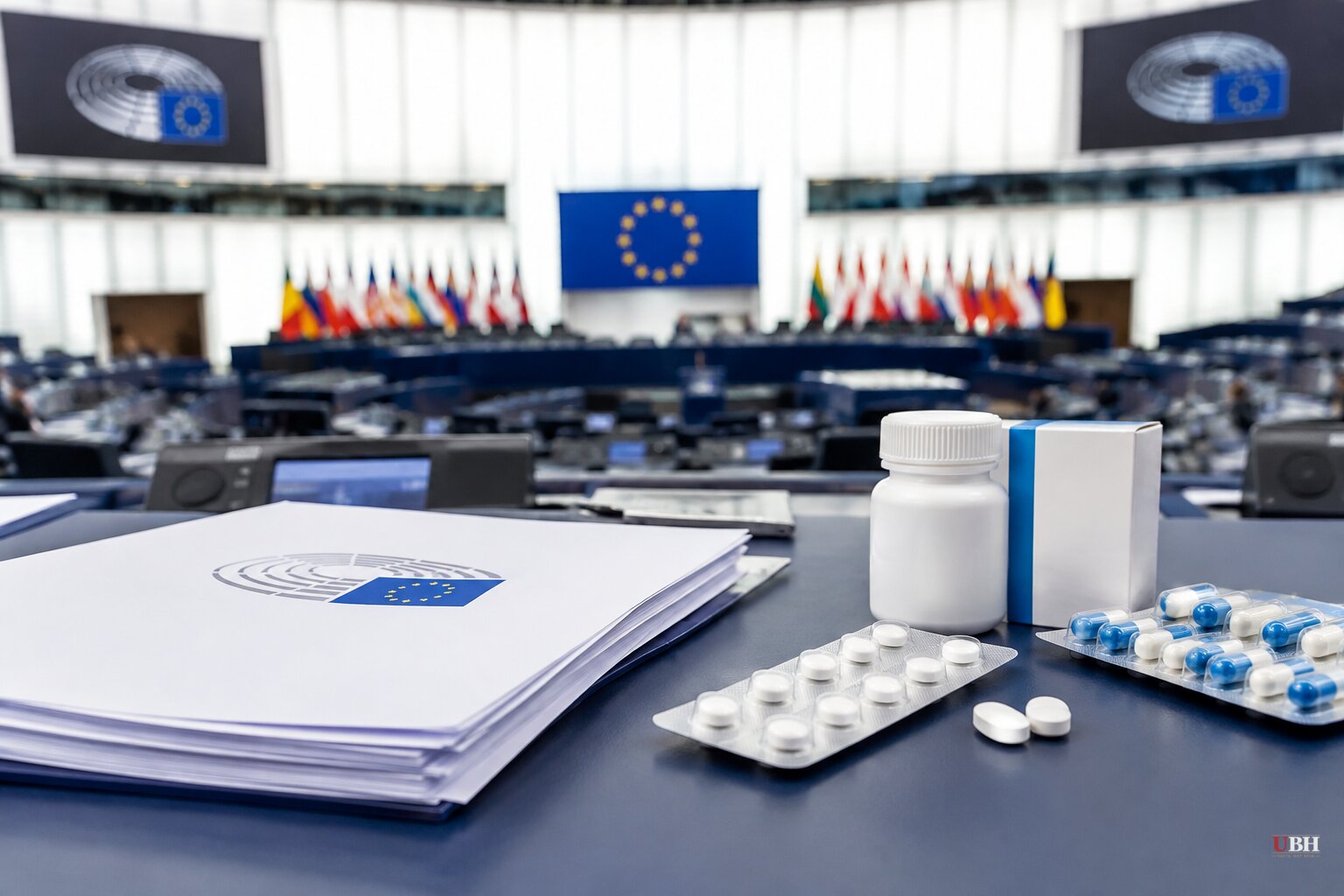
The European Parliament is scheduled to vote Wednesday, Nov. 25, on the biggest overhaul of EU pharmaceutical law in two decades. Parliament's voting list confirms the day. Spanish trade outlet diariofarma reports the vote is set for around midday in Strasbourg, about 6 a.m. ET. No result exists yet.
MEPs will take up three texts together: the new Regulation (rapporteur Tiemo Wölken, S&D), the new Directive (rapporteur Dolors Montserrat, EPP) and the Critical Medicines Act file (rapporteur Tomislav Sokol, EPP).
How we got here
The European Commission proposed the package in April 2023. Parliament adopted its position in April 2024, and the Council adopted its mandate on June 4, 2025. Negotiators struck a political deal on Dec. 11, 2025, and the Council formally adopted its first-reading position on Sept. 28, 2026.
Parliament's public health committee (SANT) approved sending the deal to the full chamber on March 18. The Regulation passed 29 to 3 and the Directive 30 to 2, each with six abstentions. The committee voted its second-reading recommendation on Nov. 10.
The Regulation and Directive are at second reading. Under Article 294 of the EU treaty, the act counts as adopted if Parliament approves the Council's position or takes no decision. Rejecting or amending it takes an absolute majority of Parliament's component members, not just a majority of those voting. The law firm Cuatrecasas expects Parliament to accept the Council's position.
The Critical Medicines Act is earlier in the process. Wednesday is its first-reading vote on the text agreed with the Council on May 12. Parliament set its negotiating position on Jan. 20 by 503 votes to 57, with 108 abstentions. Cuatrecasas expects publication in the Official Journal toward the end of 2026.
What changes for drugmakers and generics
The old formula, 8+2(+1), gave eight years of data protection and two years of market protection, plus one more year for a new indication. The new 8+1(+1+1) formula keeps eight years of data protection, during which generic applicants cannot rely on the originator's clinical data. It then adds one year of market protection, when generics cannot be sold.
The baseline wait for generics therefore falls from 10 years to 9. Extensions can push it to a maximum of 11 years. It reaches 12 only when a transferable antibiotic voucher is used.
That voucher is the other money question. It hands antibiotic developers an extra year of protection, and who pays for that year is still a live issue for health budgets.
Shortage plans and the launch obligation
Every holder of a prescription medicine authorization must write a shortage prevention plan. Each plan needs a supply chain risk assessment with a map of manufacturing sites and their production shares. Holders cannot build that map without data from contract manufacturers and API suppliers.
The hardest fight is over Article 59. The Commission first proposed cutting two years of protection for companies that did not launch across the EU. Article 59 replaced that idea. Companies must now try to bring a medicine to each market, and if they do not, they can lose protection in that market.
Rainer Becker, director for medicinal products and innovation at the Commission's health directorate (DG SANTE), said at BIO-Europe in Cologne that the earlier link to commercial conditions "has been completely removed." Industry, regulators, wholesalers and pharmacists still disagree on what the remaining conditions will mean in practice.
The access problem the law targets is concrete. New medicines take more than 1,000 days to reach patients in Romania, and pharmacists lose 12 hours a week chasing shortages.
Wölken, the Regulation's rapporteur, summed up the pitch: "We established improvements for patients for security of supply. We made sure that companies invest in Europe and develop medicines in Europe."
The clock after the vote
Once the law appears in the Official Journal, a 24-month transition period starts, said Katherine Tyner, a senior regulatory policy director at Johnson & Johnson and a former FDA liaison to the European Medicines Agency. Some pieces move faster. Regulatory sandboxes, which let regulators test tailored rules for innovative medicines, take effect immediately, Tyner said.
Maja Leon Grzymkowska, a legal officer at DG SANTE, said the supply security chapter has "some measures applied after the day of entry into force." Industry reporting puts the supply rules at six months after the law takes effect. Grzymkowska said the Commission is now "managing the implementation plan and setting the strategy" and needs input from national authorities and stakeholders.
Washington is stuck on the same problem
The U.S. has not matched this pace on drug pricing. Sens. Chuck Grassley (R-Iowa) and Dick Durbin (D-Ill.) used a Judiciary Committee hearing on Tuesday to complain that six drug price bills the committee recommended in April 2025 have mostly stalled. Only one passed the full Senate, and none passed the House.
USC professor Neeraj Sood told the committee that 40 percent of every dollar spent on prescription drugs flows to intermediaries in the supply chain. Alex Oshmyansky, CEO of Mark Cuban Cost Plus Drug Company, listed tactics he said pharmacy benefit managers use to obscure their business, including spread pricing, rebate guarantees and data fees. Sen. John Kennedy (R-La.) called it unconscionable that the remaining bills hadn't reached a Senate vote. The 119th Congress is in its final weeks.
Brussels has taken three years to reach this vote. The next test is whether 27 national governments apply Article 59 and the shortage-plan rules the same way, a question that carries into the 24-month transition after publication in the Official Journal.
Sources used for this briefing
7 links from 6 independent newsrooms (syndicated copies of the same report count once)
These are the sources it draws on, linked so you can verify.


