
Unbiased headlines. Facts, not spin.
Unbiased Headlines is an independently owned news organization. We bring you the facts, not opinions, written fresh from 110+ named sources. Sources linked so you can verify it yourself.
 health
Major Story (7/10)
Democrats Plan Steps Toward Medicare for All Before Jan. 3 Takeover; Price Tag and Moderates Are the Obstacles
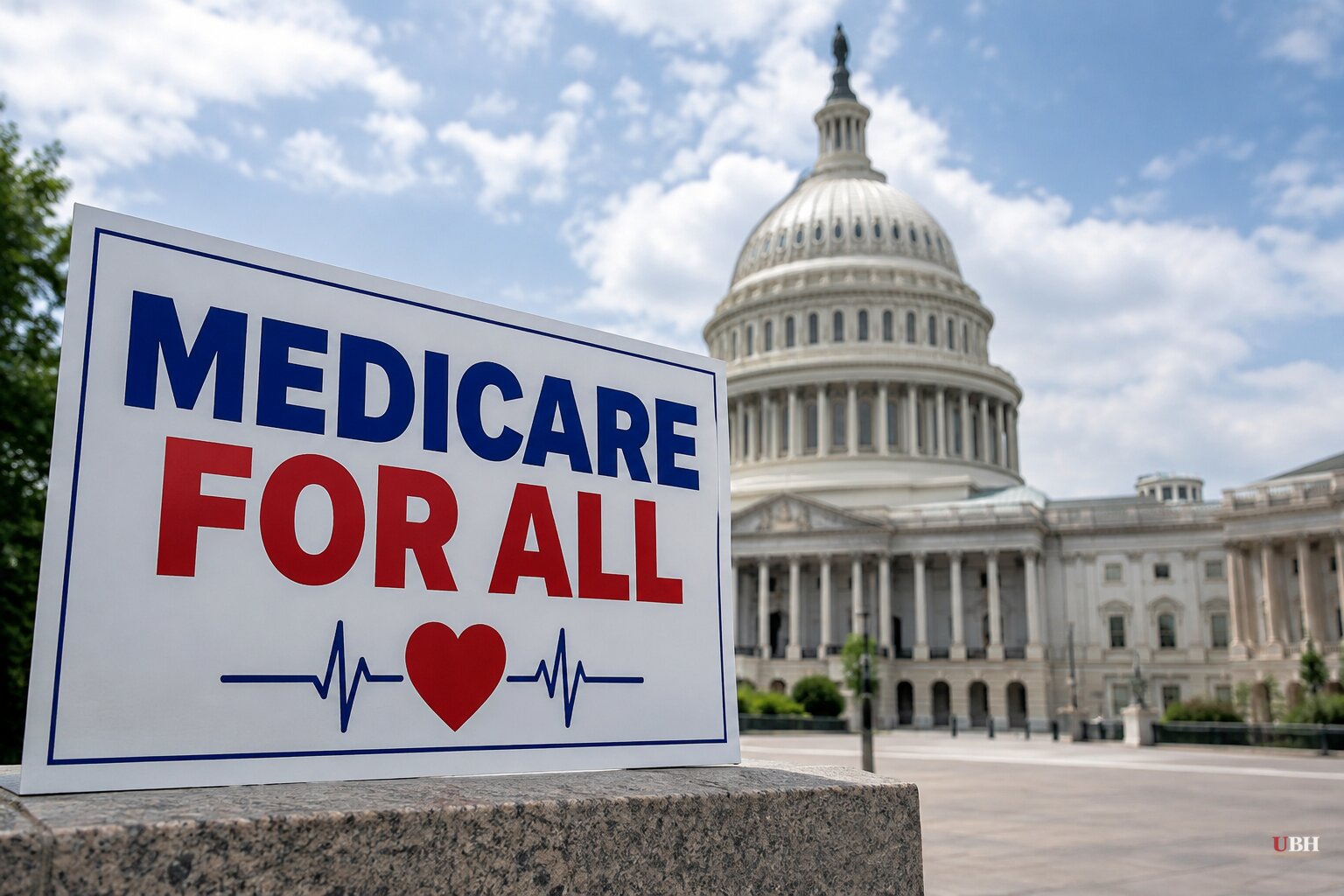
Since Democrats won both chambers of Congress in the November midterms, healthcare has moved from campaign complaint to legislative blueprint. The new majority takes charge on Jan. 3, 2027, and its leaders are already signaling they want to go further than patching the system they inherit.
What Democrats say they will do first
The party plans swift action in its first 100 days to reverse recent Medicaid cuts and revive tax breaks for people who buy insurance through the Affordable Care Act. House Democrats drafted an 84-page healthcare agenda before the election that lays out those first moves.
The cuts at issue come from the One Big Beautiful Bill Act, which imposed nearly $1 trillion in Medicaid reductions over a decade and brought work requirements. The enhanced ACA subsidies for middle-income buyers expired at the end of 2025. ACA marketplace benchmark premiums rose 26% in 2026, and KFF projects another double-digit increase in 2027.
The bigger shift is the ambition behind it. House Democratic leader Hakeem Jeffries, on track to become speaker, said in a post-election speech that he wants to lower the Medicare eligibility age below 65, add dental, vision and hearing aid benefits, and open Medicare to children. Those are all pieces of Medicare for All, and the speech stunned health advocates.
Sen. Bernie Sanders, a Vermont independent who caucuses with Democrats, is taking over the Senate health committee and has unveiled a push for portions of the plan. Former President Barack Obama told incoming Democrats at the Capitol that the ACA "is a starter home. It is not the answer." He added: "You should push further and get more."
Rep. Pramila Jayapal, D-Wash., said talks with Jeffries have centered on "the urgency of the moment on healthcare and that it can't just be going back to restoring what was."
NPR reports that newly elected Democratic senators from Michigan, Maine, Iowa and Texas made universal or government-funded coverage a central campaign pillar. Michigan's Abdul El-Sayed ran on the slogan "Money out of politics, money in your pocket, Medicare for all."
The polling cuts both ways
KFF polling found 59% of voters were concerned about healthcare affordability, up from 2024. That included two in five Republican voters. Half of voters preferred Democrats on healthcare, including 42% of independents and 9% of Republicans.
KFF also found that two-thirds of U.S. adults now prefer a national health plan, up from a little more than half in 2020. One-third of Republicans back it, up from 21%.
The label is slippery, though. Mollyann Brodie, KFF's chief operating officer, said she can push approval up to three-quarters by describing a guaranteed right to healthcare or the end of premiums and out-of-pocket costs. She said she can "plummet that support down to the 20s" by describing higher taxes or a threat to current Medicare.
Nicholas Bagley, a University of Michigan law professor, put it more bluntly: "It's cosplay." In his words, people hear "Medicare for All" and think "Healthcare, good. We should have more of it."
The cost argument
Medicare itself is on shaky ground. The trust fund behind its hospital insurance program is projected to become insolvent in 2033.
CMS Administrator Dr. Mehmet Oz has called Medicare for All a "sleight of hand" for socialized medicine. A Fox News column argues that Congressional Budget Office modeling of single-payer systems shows added federal spending of roughly $1.5 trillion to $3 trillion a year by 2030. It sets that against about $5.4 trillion in federal revenue in fiscal 2026 and more than $40 trillion in national debt.
The same column cites Committee for a Responsible Federal Budget illustrations of a 32% payroll tax or a 25% income surtax to finance about $30 trillion over 10 years. Those are examples of scale, not Democratic proposals. El-Sayed has acknowledged that free healthcare means paying "a little bit more in taxes."
Brian Blase, president of the Paragon Health Institute, took aim at the insurance side. He said health insurer and hospital stocks rising the day after the election was "a signal that the market expects more corporate welfare from Washington."
Divisions inside the majority
The AP reports that Democratic leaders appear confident that expanding coverage is no longer a far-flung liberal idea. It also says moderate and centrist Democrats who helped win the majorities are almost certain to push back, especially on cost.
That split has sunk or shrunk past efforts. The Clinton plan fractured in 1993-94 over a dramatic overhaul versus a public option, and the ACA barely passed in 2010 after similar fights.
Then there is the White House. Larry Levitt, KFF's executive vice president for health policy, said President Trump is likely to veto "any bill that the Democrats pass" to restore the subsidies. Levitt said a deal is still possible, such as a delay instead of a reversal, or restored subsidies paired with Trump priorities like Health Savings Accounts.
The first test comes after Jan. 3. Whether the 100-day Medicaid and ACA bills draw enough moderate support, and whether Trump signs or vetoes them, will show how far the Medicare eligibility-age and benefit-expansion ideas can go.
Sources used for this briefing
7 links from 6 independent newsrooms (syndicated copies of the same report count once)
These are the sources it draws on, linked so you can verify.


