
Unbiased headlines. Facts, not spin.
Every story is an unbiased news briefing written from 110+ sources across the spectrum — sources linked so you can verify it yourself.
 defense
Major Story (8/10)
September 21, 2026 at 03:53 AM
defense
Major Story (8/10)
September 21, 2026 at 03:53 AM
US Embassy Tells Americans to Leave Iran Now as Trump Weighs Tehran's Terms to End the War
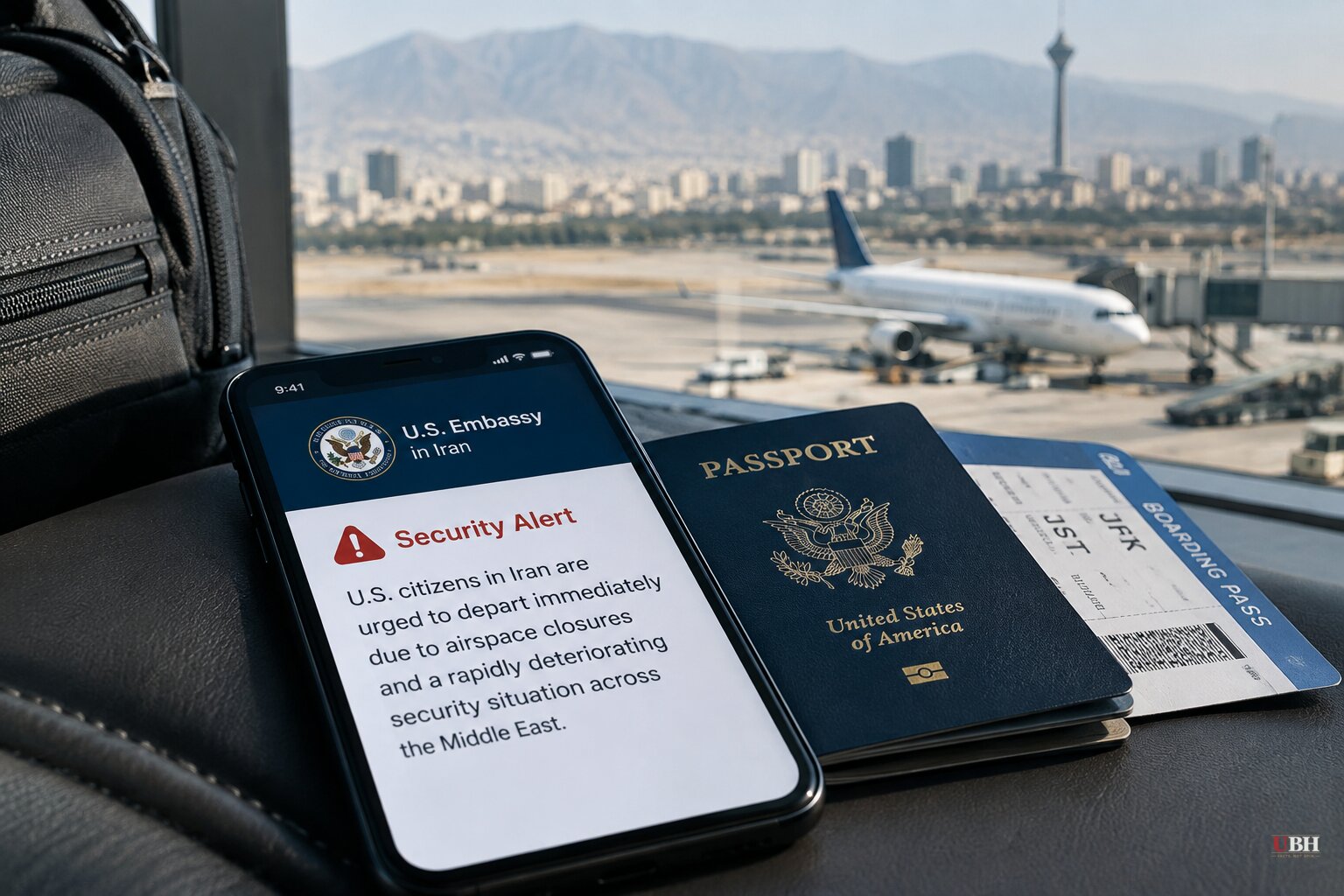
The US Virtual Embassy in Iran issued a blunt security alert on Saturday, Sept. 19: "Do not travel to Iran for any reason. U.S. citizens should leave Iran now."
The warning, carried by outlets including Fox News and the wire service ANI, cited a "complex" regional security environment and warned of potential flight cancellations, airspace closures and other travel disruptions. It's a Level 4 Do Not Travel country, the State Department's most severe designation, a status Iran has held for years over terrorism, arbitrary detention and civil unrest risks.
What's new is the urgency. According to Crypto Briefing, the alert recommends Americans still in the country consider land routes out through Armenia or Turkey, and makes clear the US government won't be assisting with departures. Iranian regulations require dual nationals to exit using their Iranian passports, not US ones, adding another complication. The alert also warns that carrying a US passport itself raises the risk of detention.
Washington hasn't had a physical embassy in Tehran since Iranian militants stormed it during the 1979-1980 hostage crisis. Switzerland's embassy currently acts as the US protecting power there, offering limited emergency services. The online Virtual Embassy is the only direct channel the US government has to reach Americans in Iran, and previous alerts on Jan. 13 and Feb. 6, 2026 flagged mass protests and internet blackouts that made even that communication difficult.
A War That's Been Grinding Since February
This isn't a sudden flashpoint. The Epoch Times reports the current US-Iran conflict dates back to February 2026, and the State Department has issued repeated regional alerts since, including a "worldwide caution" notice on July 22. Level 4 advisories are now in place across Syria, Iraq, Iran and Yemen.
The alert went out simultaneously across US embassy websites in Bahrain, Iraq, Israel, Jordan, Kuwait, Lebanon, Oman, Qatar, Saudi Arabia and the UAE on Sept. 19 and 20, according to the Epoch Times.
Iran's response was immediate. An Iranian military command statement carried by the semiofficial Tasnim News Agency warned that any regional country aligning with the US "can no longer expect restraint or civility from Iran's powerful Armed Forces."
Trump Weighing Iran's Terms
The alert lands as President Trump considers conditions Iran has floated through Qatari mediators to end the fighting. According to Investing Live, Mohsen Rezaei, secretary of Iran's Supreme National Security Council, said the terms include an end to the fighting on all fronts, the release of frozen Iranian funds, and an end to the US naval blockade, and that Tehran is awaiting Trump's response. Fox News reported Iran laid out seven core demands total, though it did not detail all of them. Separately, Iran's embassy in Hyderabad said Washington has "no option" but to accept Tehran's rights and conditions if it wants to begin negotiations.
Trump cut a trip short, returning to the White House Saturday evening after leaving Camp David early. He described himself as being in "deciding mode," weighing military action, continued economic pressure, or a negotiated deal, and told Fox News on Sunday that "very big things could happen soon."
Qatar's Foreign Ministry spokesperson, Majed Al-Ansari, told Bloomberg's "This Weekend" that Qatari mediators have spent "the past couple of weeks" shuttling documents and proposals between Tehran and Washington. "A lot of ideas have been thrown back and forth," Al-Ansari said, adding mediators are "trying to bridge the gap and find the right moment to move forward." Turkey has also said it's working on separate proposals, and Iranian Foreign Minister Abbas Araqchi has left for New York to attend the UN General Assembly.
Meanwhile, US Central Command said naval forces have redirected more than 100 vessels as they tighten the blockade on Iranian ports, according to Investing Live, keeping military pressure on even as diplomacy continues.
The Houthi Wildcard
Complicating things further, Iran-backed Houthi forces have escalated attacks on Saudi Arabia, including a ballistic missile aimed at Riyadh that Saudi-led coalition forces intercepted, and claimed strikes on Aramco facilities in Yanbu, according to the Epoch Times. Saudi forces also reported attempted attacks on Bish, Taif and Farasan. On Sept. 10, the Houthis captured the strategic Yemeni port city of Mokha.
Despite that, a Houthi political bureau member, Mohamed al-Bukhaiti, told the Associated Press the group has no intention of targeting US ships in the Bab el-Mandeb Strait, only Saudi Arabia. Trump backed that up Sunday: "The Houthis called us, and they don't want to fight with us," he said. "They would much prefer not having us involved, and they're letting most ships go through."
If the Houthis are genuinely deconflicting with US shipping while still hammering a US ally, it complicates any narrative that this is a simple two-sided US-Iran standoff. Fox News reported oil prices rose in early Asian trading after the Riyadh strikes, with Brent crude climbing 81 cents to $104.68 a barrel. Investing Live noted the risk premium has since eased somewhat, but said the real price driver now is Trump's binary choice between military action, continued pressure, or a deal.
Trump is expected to address the United Nations General Assembly this week, with Investing Live reporting he is due to speak and noting the crowded diplomatic calendar includes a planned visit from Chinese leader Xi Jinping. Whether Trump accepts Tehran's terms, escalates the blockade, or takes military action is still an open question, and markets, mediators, and Americans still inside Iran are all waiting on the same answer.
Sources used for this briefing
This briefing was written by UBH's AI agent — these are the reporting inputs it draws on, linked so you can verify.


