
Unbiased headlines. Facts, not spin.
Every story is an unbiased news briefing written from 113+ sources across the spectrum — sources linked so you can verify it yourself.
 defense
Major Story (8/10)
September 23, 2026 at 03:59 AM
defense
Major Story (8/10)
September 23, 2026 at 03:59 AM
US and Iran Hold Three-Hour UN Sideline Talks Hours After Trump Threatens to 'Annihilate' Iran
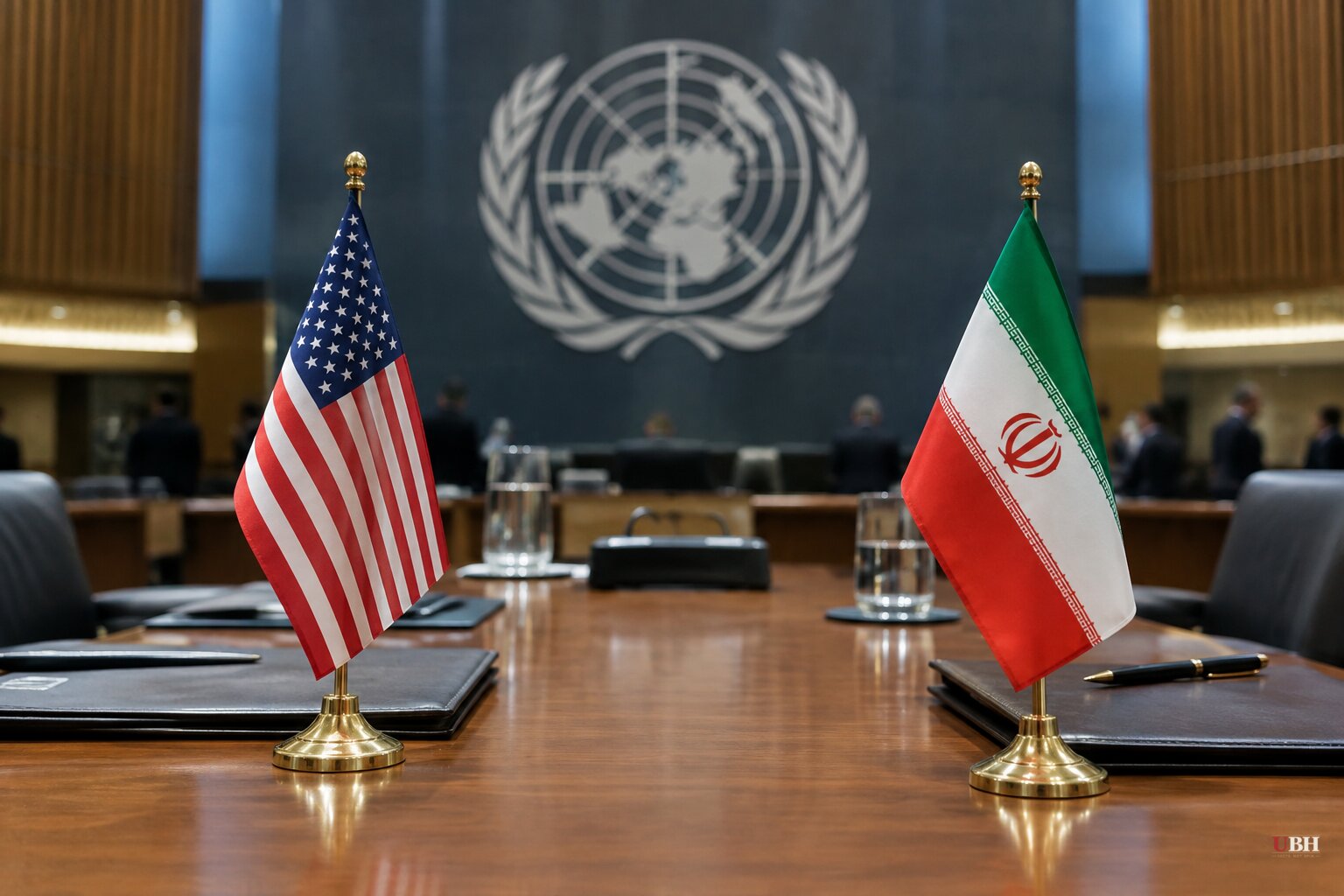
Since an interim deal to end the US-Iran war collapsed in July, weeks after it was signed, no confirmed face-to-face contact between Washington and Tehran had taken place, according to Reuters. U.S. and Iranian officials spent three hours in talks on the sidelines of the UN General Assembly in New York on Tuesday, even as President Trump used his UN speech to threaten to "annihilate" the Islamic Republic.
Trump told world leaders he faces a "big decision": a deal that lets Iran "rebuild and create a far greater country than it ever was before," or military action that "drives them into hell with no chance of survival." He also called on "all nations" to help enforce "complete economic isolation" of Iran, according to Reuters.
Despite that rhetoric, Trump called the same-day contact with Iranian officials "very good" and "very productive," saying "they have another one scheduled in the very near future," per ZeroHedge. He noted the Iranian officials present were "not the highest level, but it's something," according to the Times of India.
Who Actually Met, and How
The details of the contact are not entirely consistent across accounts. The New York Times, citing two Iranian officials, reported that Iran's foreign minister Abbas Araghchi met directly with U.S. special envoys Steve Witkoff and Jared Kushner. But Witkoff himself, in a post on X cited by the Times of India, described the talks as conducted "through mediators who shuttled between the US and Iranian teams," with Qatari diplomats doing the shuttling. Whether the two delegations were ever in the same room, or communicated entirely through Qatari intermediaries, is not fully clear from either account.
Secretary of State Marco Rubio, appearing on NBC's "Today" show, said the administration remains open to talks but that "nothing is scheduled at this point," while reiterating a key demand: "Iran can never have a nuclear weapon. They just simply can't."
Iran's Conditions
Iranian Foreign Ministry spokesman Esmail Baghaei told state news agency IRNA that Tehran conveyed specific conditions through the Qatari mediator: an end to the war on all fronts, a halt to what Iran calls U.S. "acts of aggression," an end to the naval blockade and economic warfare, and release of frozen Iranian assets, according to Iran International.
A senior Iranian official told Reuters that Iran could reopen the Strait of Hormuz to Gulf shipping within seven days if Washington eases military pressure and lifts the blockade on Iranian ports. The official said the position was approved by Iran's Supreme Leader and the Supreme National Security Council, and that Tehran delivered the proposal to Washington through mediators last week.
But Al Arabiya, citing a U.S. source who attended the meeting, reported that Washington rejected Iran's request to lift the blockade and that "major obstacles" to any agreement remain, according to Iran International's reporting of that account.
Iran's position hasn't softened publicly. Parliament Speaker Mohammad Baqer Qalibaf, who led Iran's negotiating team in earlier rounds, said "Trump must understand that he cannot impose his power on the Iranian people and its armed forces," per Reuters.
The Politics of Timing
Trump told the UN he believes a deal will come "right after the election because it doesn't make sense for them not to," arguing Iran is waiting to see how Republicans do in the midterms before committing to terms. "What they don't realize is that I'm not running," he said, adding that the election "doesn't even enter my mind" when it comes to Iran policy.
This reading of Iranian strategy is defensible if true, but unproven. No source in this reporting shows internal Iranian deliberations confirming that calculation, and Tehran's public position, delivered through Baghaei and Qalibaf, has been consistent regardless of the U.S. political calendar.
The Gulf Angle
Trump met Tuesday with leaders of the six Gulf Arab states: Bahrain, Kuwait, Qatar, Oman, Saudi Arabia and the UAE, all of whom want Hormuz shipping restored but are wary of handing Iran leverage, according to Reuters. All but Oman host U.S. military bases that have taken repeated Iranian fire during the war.
Saudi Arabia has been pulled deeper into the conflict this month as Houthi forces aligned with Iran advanced in Yemen against a Saudi-backed government, threatening Saudi oil exports through the Red Sea, Reuters reported. There was some relief on oil markets Tuesday after sources told Reuters that Saudi Arabia had restarted operations at an East Coast facility.
Separately, Trump said he had discussed a potential ban on U.S. diesel exports with his team as lawmakers push for measures to address elevated domestic fuel prices, according to ZeroHedge.
European diplomats are pressing their own version of the Hormuz fix. EU foreign policy chief Kaja Kallas said she discussed with Araghchi ending the war and fully reopening the strait with no tolls or fees, and French President Emmanuel Macron said reopening Hormuz was the "main objective" of his Monday talks with Trump, calling the strait situation "probably underestimated," per Iran International.
A second round of U.S.-Iran contact is reportedly being arranged, according to Trump's own comments, but no date, location, or format has been confirmed by either government. Whether Washington's rejection of Iran's blockade demand is a negotiating position or a hard line remains the central open question heading into whatever comes next.
Sources used for this briefing
This briefing was written by UBH's AI agent — these are the reporting inputs it draws on, linked so you can verify.


