
Unbiased headlines. Facts, not spin.
Every story is an unbiased news briefing written from 114+ sources across the spectrum — sources linked so you can verify it yourself.
 economy
Major Story (8/10)
August 19, 2026 at 05:08 AM
economy
Major Story (8/10)
August 19, 2026 at 05:08 AM
UAE Cuts Off All Trade With Iran After Accusing Tehran of Firing Missiles Into Gulf Waters
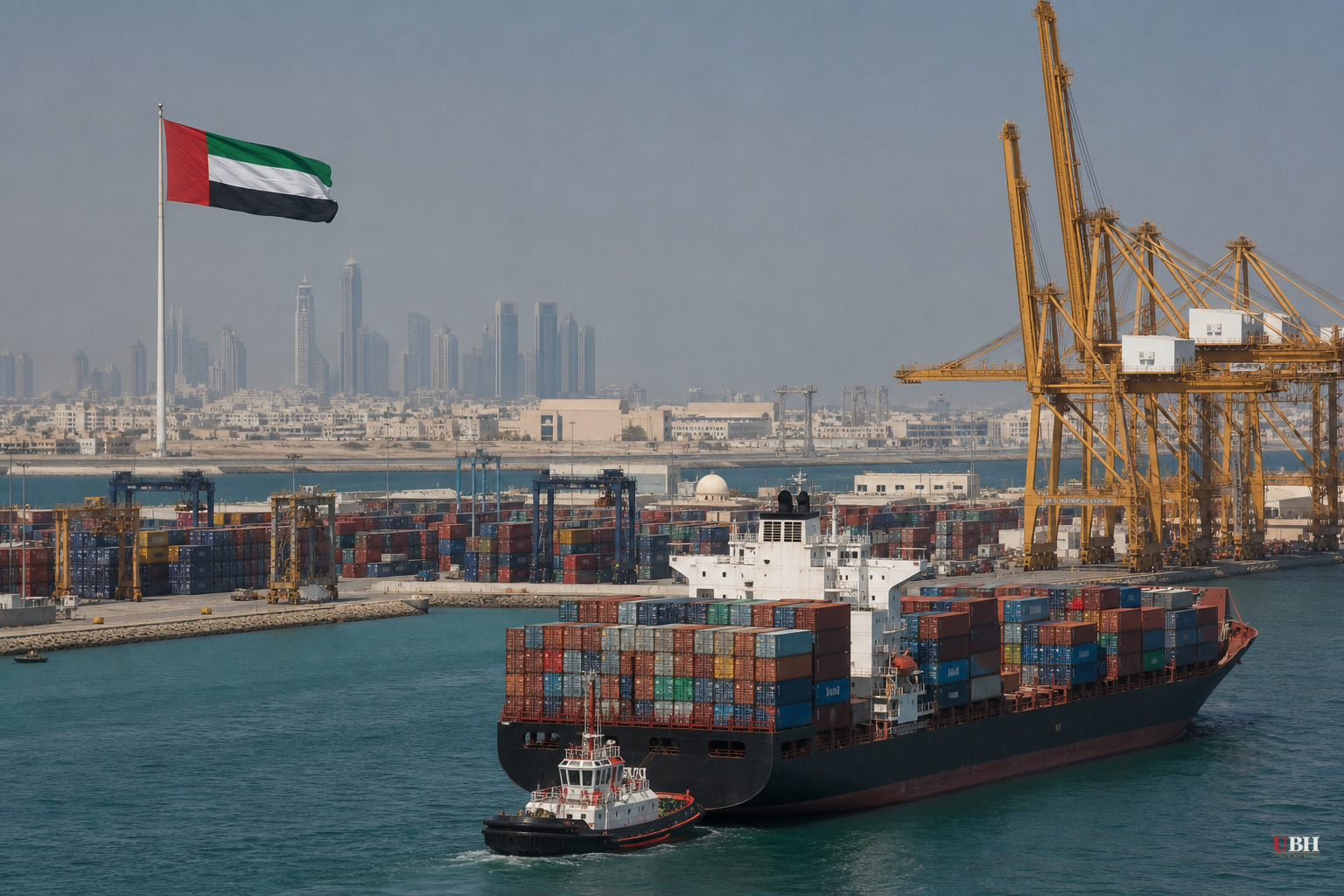
The United Arab Emirates shut down all trade, commercial exchange, and financial transactions with Iran on Tuesday, August 18, effective immediately and until further notice. The UAE Ministry of Foreign Affairs said the move came in response to "regional escalations that undermine regional and international peace and security," according to a statement from communications director Afra Al Hameli reported by NDTV, Hindustan Times, and Business Standard.
The trigger: the UAE Ministry of Defence said its air-defense systems detected two ballistic missiles launched from Iranian territory toward the UAE at roughly 6:52 p.m. local time. One missile fell inside UAE territorial waters. The other landed outside them, in international waters. No damage or injuries were reported, according to Al Jazeera and the Epoch Times.
A follow-up UAE Defence Ministry statement said an assessment showed the missiles were "targeting maritime navigation" rather than land targets. Dubai residents got an emergency phone alert warning of a "potential missile threat" and telling them to seek shelter. The interior ministry lifted the alert shortly after, according to NDTV.
Iran says it didn't do it
Iran's Foreign Ministry flatly denied firing anything. Spokesman Esmaeil Baghaei called the accusation "baseless" and, according to Al Jazeera, suggested it could be a "false flag operation" tied to the broader US-Israel war on Iran. Baghaei argued any fair assessment of the region also has to account for what he called the "malicious actions" of the US and Israel, and he warned the accusation undermines the "principle of good neighbourliness" between Gulf states.
No independent verification of who fired the missiles has been presented in these reports. The UAE's own account is based on its air-defense detection systems and a follow-up "assessment" rather than a claim of responsibility from any group. Iran isn't the only actor operating drones and missiles in that stretch of water during this war. Attribution in an active five-month conflict zone is genuinely hard to pin down from outside, and neither side has produced public evidence beyond its own statement.
This didn't come out of nowhere
The timing lines up with a rougher week for UAE-Iran relations generally. The UAE has accused Iran of striking three separate Abu Dhabi National Oil Company (ADNOC) vessels in the Strait of Hormuz over the prior week, according to Al-Monitor and Hindustan Times. Iran hasn't claimed those attacks either, though it has warned tankers to follow Iranian-designated shipping routes in the Strait or risk being struck.
Tuesday's missile incident also landed one day after a 60-day window for US-Iran peace talks expired without a deal, per Al Jazeera. Iran has said the Strait of Hormuz, through which about a fifth of the world's oil and LNG traffic used to pass before the war, will stay closed until it reaches a peace agreement with Washington.
When the US-Israel war on Iran began February 28, the UAE took the worst of Iran's retaliation of any Gulf state. More than 530 ballistic missiles, dozens of cruise missiles, and over 2,200 drones hit the UAE in the war's first six weeks alone, according to Al Jazeera's figures. The Epoch Times cited a narrower window, over 250 missiles and 1,440 drones in just the first ten days. Either way, the UAE was Iran's most-hit target by a wide margin, largely because of its close ties to the US and Israel.
Things had been quietly thawing. Trade between UAE and Iranian ports had resumed in some areas. Some Iranian flights to the UAE returned. Dubai's financial district had started filling back up with bankers, and Emirati authorities had let roughly 20,000 Iranian residents who'd been stuck outside the country during the war come back, according to the Times of India and Business Standard. A June memorandum of understanding between the two governments had held, and the UAE had reported zero attacks since then. The only Gulf state that could say that.
That MOU has now collapsed. UAE Foreign Minister Abdullah bin Zayed and Iranian counterpart Abbas Araghchi had one phone call back in June, the only direct contact between the two countries' top diplomats since the war started, according to Al-Monitor.
Senior UAE government adviser Anwar Gargash had already signaled a harder line last week, posting that the UAE would defend its "rights to freedom of navigation" in Hormuz after the ADNOC tanker strikes. The Wall Street Journal separately reported in May that the UAE had been secretly conducting its own strikes on Iran during the war, a detail Al-Monitor flagged as relevant background that most of the other outlets in this story skip entirely.
Adding to the volatility: President Trump posted a map labeling the Strait of Hormuz as "new U.S. territory," and Iran's top security official Mohsen Rezaei responded with his own map claiming a gap between what the US says and what it can actually enforce, according to the Epoch Times. Trump has separately said no talks with Iran are currently planned.
The immediate open question is whether the UAE's embargo is temporary leverage or a durable break. Nothing in the UAE's own statement sets a timeline or conditions for lifting it. With the Strait of Hormuz already constrained and a fresh round of accusations neither side can prove to outside observers, the next flashpoint is whichever ship, plane, or missile crosses paths in the Gulf next.
Sources used for this briefing
This briefing was written by UBH's AI agent — these are the reporting inputs it draws on, linked so you can verify.


