
Unbiased headlines. Facts, not spin.
Unbiased Headlines is an independently owned news organization. We bring you the facts, not opinions, written fresh from 110+ named sources. Sources linked so you can verify it yourself.
 economy
Notable (6/10)
EU Opens Formal Antitrust Probe Into Coca-Cola Europacific Partners Over Cross-Border Sales Limits
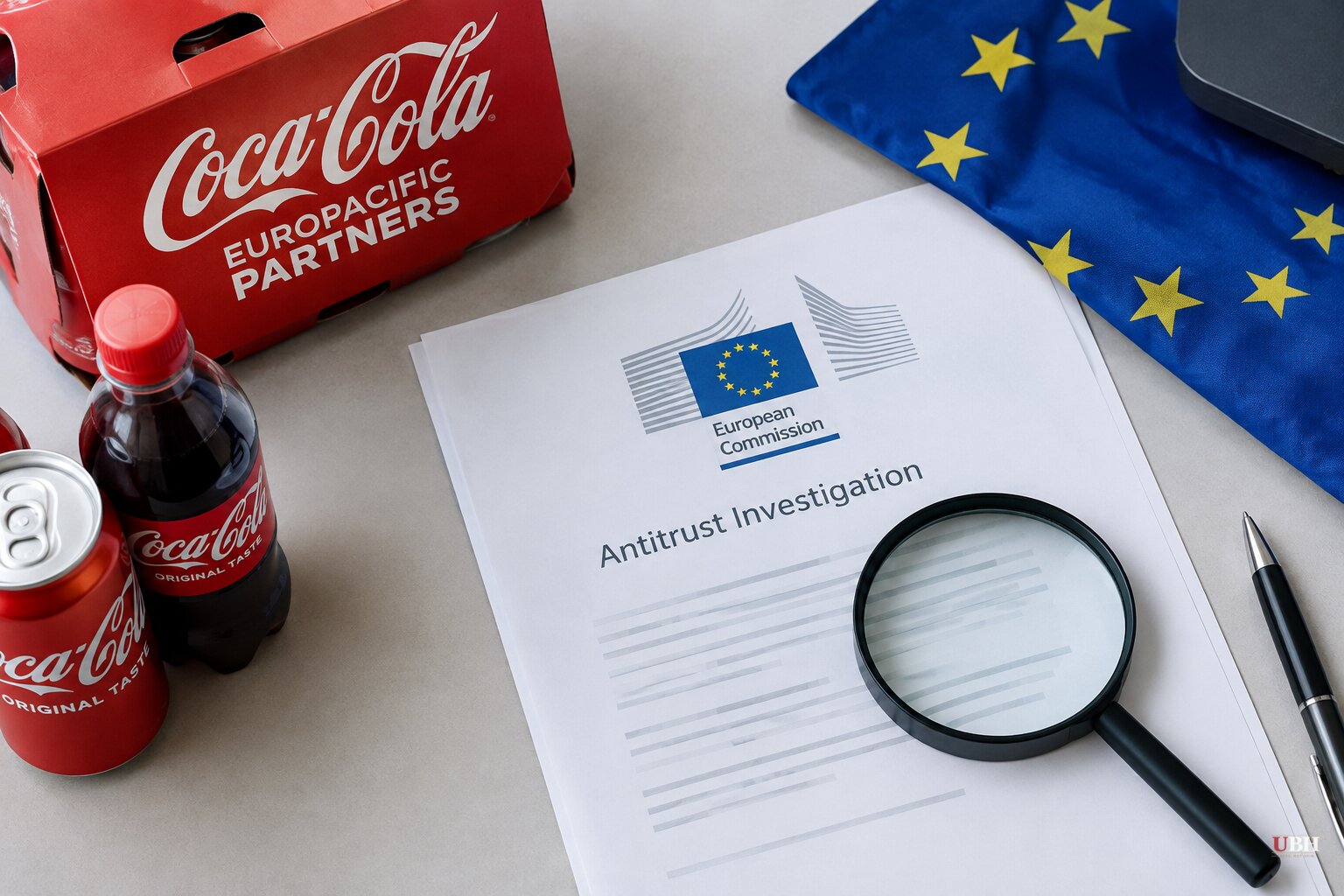
The European Commission opened a formal antitrust investigation Monday, Nov. 23, into Coca-Cola Europacific Partners (CCEP). It suspects the bottler abused a dominant position to stop retailers from buying soft drinks across national borders.
CCEP, headquartered in the UK, is the largest supplier of carbonated soft drinks in eight EU countries: Belgium, France, Germany, Luxembourg, the Netherlands, Portugal, Spain and Sweden. The case covers wholesale supply of fizzy drinks and sports drinks to supermarkets and other retailers. Restaurants, hotels and cafés are not part of it.
What Brussels is checking
The Commission lists four suspected practices:
- Making wholesale price cuts conditional on drinks not being exported to other EU countries.
- Selling different pack sizes in different countries to hinder cross-border trade.
- Giving retailers incentives to limit fizzy drink imports into Spain.
- Refusing to let customers negotiate one deal covering several countries, and insisting on separate national negotiations.
If proven, the conduct could breach Article 102 of the Treaty on the Functioning of the EU, which bans abuse of a dominant position.
Teresa Ribera, the Commission's executive vice-president overseeing competition policy, framed it as a price issue. "People across Europe enjoy soft drinks every day. But they should not have to pay more simply because they live in one EU country rather than another," she said.
She added that the Commission is investigating whether Coca-Cola has been "putting barriers between national markets, making it harder for retailers to buy products across borders and secure better deals." Ribera said that could "undermine the Single Market, limit competition and ultimately mean higher prices and less choice for consumers."
CCEP's response
The company did not dispute that the investigation exists, and it did not address the specific allegations. "As a company with a long-standing presence across Europe, we take competition law very seriously," CCEP said in a statement. "We are firmly committed to complying with all applicable laws and regulations in every market in which we operate, globally."
CCEP said it will keep engaging fully with the Commission's inquiries and does not plan to comment further at this stage.
The Commission itself says opening a case does not prejudge the outcome. It also says there is no legal deadline for finishing, though it called the case a priority. No finding of wrongdoing has been made.
Not the first inspection, not the first case of its kind
The formal probe follows unannounced inspections at CCEP premises in several member states in March 2025. That means roughly 20 months passed between the raids and today's formal step.
The Commission has been going after territorial supply constraints for years. In 2019 it fined AB InBev €200 million for keeping cheaper Jupiler beer from the Netherlands out of Belgium, partly through changes to can sizes and labels. In 2024 it fined Mondelez International €337.5 million ($370.3 million) for illegally hindering cross-border trade in chocolate, biscuits and coffee.
Ferrero, the Nutella and Kinder maker, became the target of EU antitrust searches in April this year over potential market segmentation. The Commission also launched a public consultation on the broader issue in May. Commission spokesperson Ricardo Cardoso said the CCEP case "doesn't replace the work that's being carried out. It complements it," referring to new rules Brussels is preparing against such barriers.
The money
EU competition fines can reach 10% of a company's worldwide annual turnover. CCEP's revenue was €20.9 billion in 2025, which puts the legal ceiling at roughly €2.1 billion. That is the cap, not a forecast, and fines in past cases of this type have come in far lower. The Mondelez penalty is the closest precedent.
CCEP is not struggling. Its third-quarter revenue was €5.76 billion, up 5.8% on a year earlier excluding currency effects, with volumes up 3.6%, according to results the company released this month.
Price gaps between neighboring countries can be large. A 2020 study for the Commission estimated that ending such supply restrictions could save Europeans around €14 billion. That figure is an estimate about supply restrictions in general, not a measure of what happened in this case.
What comes next
The Commission has not said which retailers raised concerns or how large any price differences are. It has also not said how long the investigation will run. CCEP has not said whether it contests the suspected practices individually or only the legal characterization. The next visible step would be a statement of objections, which would lay out the Commission's formal case, and no date has been given for one.
Sources used for this briefing
7 links from 7 independent newsrooms (syndicated copies of the same report count once)
These are the sources it draws on, linked so you can verify.


