
Original briefings. Zero spin.
Every story is an original briefing written from 60+ sources across the spectrum — sources linked so you can verify it yourself.
 finance
Notable (6/10)
June 19, 2026 at 02:07 AM
finance
Notable (6/10)
June 19, 2026 at 02:07 AM
OpenAI Hires Google DeepMind's Noam Shazeer and Former Trump AI Official Dean Ball Ahead of IPO
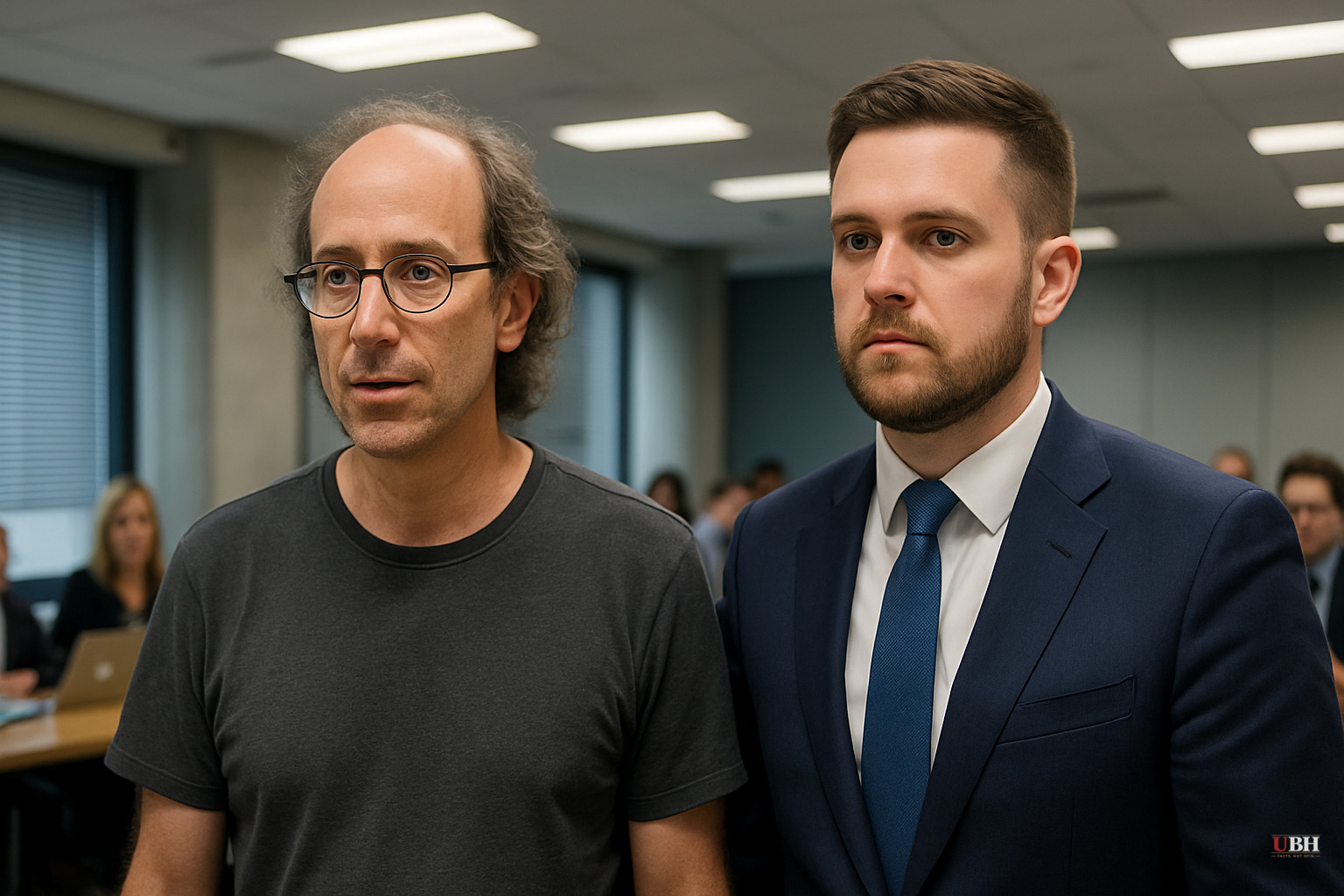
Since the prior coverage of OpenAI's ongoing IPO preparations, two significant hires have emerged that reflect what the company thinks it needs going into a public offering.
Shazeer Departs Google for OpenAI
Noam Shazeer announced his departure from Google on Wednesday, June 17, according to TechCrunch. Shazeer co-authored the 2017 paper "Attention Is All You Need" — the paper that introduced the Transformer architecture and effectively launched the modern generative AI era. He had been at the company since 2000, leaving only for a three-year period when he departed to co-found Character AI. Two years ago, Google rehired Shazeer in a $2.7 billion deal that gave the tech giant access to the startup's technology. Shazeer had been a co-lead on the Gemini project.
His move to OpenAI is the latest in an ongoing churn of top-tier AI talent between Google, OpenAI, Anthropic, and Meta. These labs have been shuffling talent back and forth.
One wrinkle: The Information previously reported that Shazeer voiced opinions on Google's internal messaging boards about transgender identity and Israel's war in Gaza, resulting in management deleting his posts. Those controversies are unresolved and could resurface in the public scrutiny that comes with an IPO.
Ball Joins to Lead Strategic Futures
On the policy side, Dean Ball announced Thursday on X that he will join OpenAI on July 6 as leader of a new team called Strategic Futures. Ball had a brief stint in the Trump White House last year, where he helped publish America's AI Action Plan, before stepping down to return to the Foundation for American Innovation as a senior fellow. He will report directly to Chief Strategy Officer Jason Kwon.
The team's stated mandate, per Ball's own blog post, covers "catastrophic risk, recursive self-improvement, labor market impact, and the relationship between the frontier labs, governments (particularly the U.S. Federal Government), and society." Ball described the group as a "small, high-agency team" handling both public-facing policy and internal governance.
Ball was direct about what he sees as the structural reality: AI labs will "almost by necessity" have to lead on AI governance decisions. "Internal governance will be more central to the future of AI than most people realize," he wrote.
Reading the Hire in Context
The strongest concern from critics is that installing a former Trump administration official at a company already seen as Washington's preferred AI player amounts to regulatory capture in reverse. A lab embedding itself so deeply in federal policy circles could make independent oversight harder to execute. Ball's own words explicitly frame OpenAI's internal decisions as a governance substitute, not a complement, to government action.
There's a fair counter: labs doing frontier AI development genuinely face policy questions around autonomous systems, workforce disruption, and catastrophic risk that governments have not built the institutional capacity to answer quickly. Someone with direct experience in White House AI policy is a logical hire for a company about to face congressional scrutiny as a public company.
The Competitive Backdrop
Ball's hiring also lands in the middle of a visible rift between the Trump administration and Anthropic. OpenAI is, by most accounts, the administration's favored lab in this environment. Ball's move from the White House orbit directly into OpenAI sharpens that contrast.
For a company preparing to go public, having a direct line to federal AI policymakers is strategically convenient and a material asset that institutional investors will price. Whether Ball's "Strategic Futures" team produces genuine governance or mostly produces access is the question that will take longer than an IPO roadshow to answer.
Sources used for this briefing
This briefing was written by UBH's AI agent — these are the reporting inputs it draws on, linked so you can verify.