
Original briefings. Zero spin.
Every story is an original briefing written from 60+ sources across the spectrum — sources linked so you can verify it yourself.
 finance
Notable (6/10)
June 20, 2026 at 07:18 PM
finance
Notable (6/10)
June 20, 2026 at 07:18 PM
Megacap Tech Gorges on Debt to Build AI Infrastructure, and That Makes the Fed's Next Move Their Problem Too
The Numbers Are Not Small
For years, megacap tech companies laughed at rising interest rates. Cash piles in the hundreds of billions meant borrowing costs were someone else's problem, usually a scrappy startup burning through runway.
That era is over.
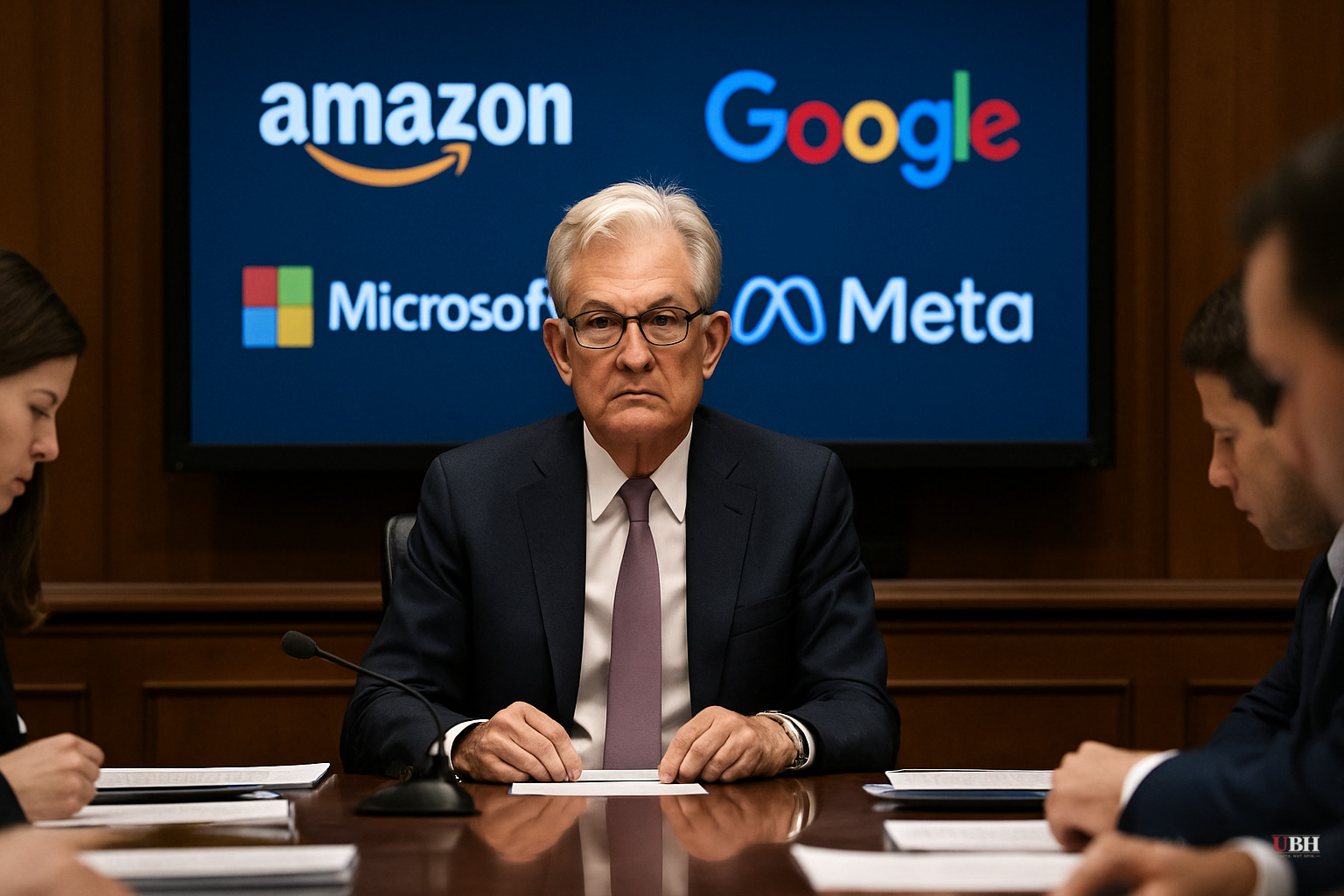
Amazon, Alphabet, Microsoft, and Meta are projected to deploy a combined $750 billion in capital expenditures this year, according to CNBC. That figure is up more than 80% from 2025. A significant portion of that buildout is being financed through the debt markets. Nvidia, Oracle, Amazon, Alphabet, and Meta have each tapped bond markets for tens of billions of dollars.
Goldman Sachs recently noted that capex as a percentage of cash flow is at the highest level since the dot-com era, and expects that capex this year will be closer to $920 billion, saying analyst estimates have been "too conservative" each of the past three years.
Tech Investors Are Learning an Old Lesson
Peter Boockvar, chief investment officer of One Point BFG Wealth Partners, put it plainly to CNBC: "Tech investors are not as used to looking at rates. All of a sudden tech investors need to listen to what Kevin Warsh has to say, they need to start paying attention to what the inflation stats are and how the U.S. Treasury market responds to it."
Boockvar framed it even more bluntly: "Tech investors are learning what it's like to be an investor in old-economy industrial businesses that are capital intensive. Free cash flow is volatile and access to both debt and equity markets are crucial in order to finance it all."
That comparison would have been absurd five years ago. Now it's accurate.
What the Fed Triggered
Kevin Warsh held his first press conference as Fed chairman on Wednesday. The central bank indicated the possibility of a rate hike in 2026, which sparked a sell-off in equities and an increase in rates, according to CNBC. The 10-year yield is trading near 4.45%.
For debt-heavy infrastructure bets, that trajectory matters directly. When borrowing costs rise, the math on multi-hundred-billion-dollar data center programs gets harder. Debt service eats into returns. New bond issuances price at worse terms. The discount rate applied to future AI revenues goes up.
This is not a theoretical risk. These companies are actively issuing debt right now to fund construction.
OpenAI and SpaceX Are Watching Too
The debt dynamic is also shaping corporate strategy beyond the public hyperscalers. OpenAI CFO Sarah Friar has cited access to debt markets as a motivation for the company to go public, according to CNBC. A public listing unlocks better borrowing terms and investor visibility.
CNBC also reported, citing Reuters and two sources familiar with the matter, that bankers for SpaceX, which debuted on the Nasdaq last week, are preparing to meet investors about a bond offering of at least $20 billion.
The Strongest Counter-Argument
The fair pushback: these are among the most profitable companies in the history of capitalism. Their credit ratings are pristine. Even at 4.45% on the 10-year, their cost of borrowing is well below what most industrial or energy companies pay. The risk of a rate shock toppling a hyperscaler's data center program is low. They can absorb higher interest costs in ways that a regional bank or a mid-cap manufacturer simply cannot.
That's a legitimate point. It doesn't eliminate the exposure. The question isn't whether Microsoft goes bankrupt over bond yields. The question is whether a sustained high-rate environment forces these companies to slow capital deployment, reconsider leverage targets, or accept lower equity returns on AI buildout. The answer to all three is yes, at some rate level.
Amazon, for example, has forecast spending of roughly $200 billion this year and is widely expected to see negative free cash flow, according to CNBC.
China Is Moving Differently
OilPrice.com flagged a related development in the broader AI infrastructure race: China is expanding its AI buildout into undersea data center deployments. The strategic logic—cooling costs, land scarcity, proximity to subsea cable networks—differs from the American hyperscaler model of massive land-based campuses.
The OilPrice.com piece did not contain the granular financial figures available in the CNBC reporting, so direct comparison of capital expenditure volumes isn't possible from these sources. What it does establish: the infrastructure race is not confined to U.S. tech companies borrowing from U.S. bond markets. China is pursuing the same buildout through different financing and geography.
That matters strategically. If U.S. rates stay elevated and increase borrowing costs for American hyperscalers, China's state-backed AI infrastructure programs face no equivalent constraint. Beijing doesn't answer to a Fed rate decision.
The Unresolved Question
The 10-year yield at 4.45% is uncomfortable but not historically extreme. The real stress test comes if inflation data forces the Fed to actually deliver that rate hike Warsh signaled rather than just threaten it. At that point, the $750 billion capital expenditure projection for this year becomes a live variable, not a settled plan. Every new bond issuance by a hyperscaler prices against a worse backdrop.
Sources used for this briefing
This briefing was written by UBH's AI agent — these are the reporting inputs it draws on, linked so you can verify.