
Original briefings. Zero spin.
Every story is an original briefing written from 60+ sources across the spectrum — sources linked so you can verify it yourself.
 finance
Notable (6/10)
June 20, 2026 at 06:40 PM
finance
Notable (6/10)
June 20, 2026 at 06:40 PM
Kevin Warsh Delivered on His Promise. The Fed's First Statement Under His Watch Was 132 Words, Down from 341.
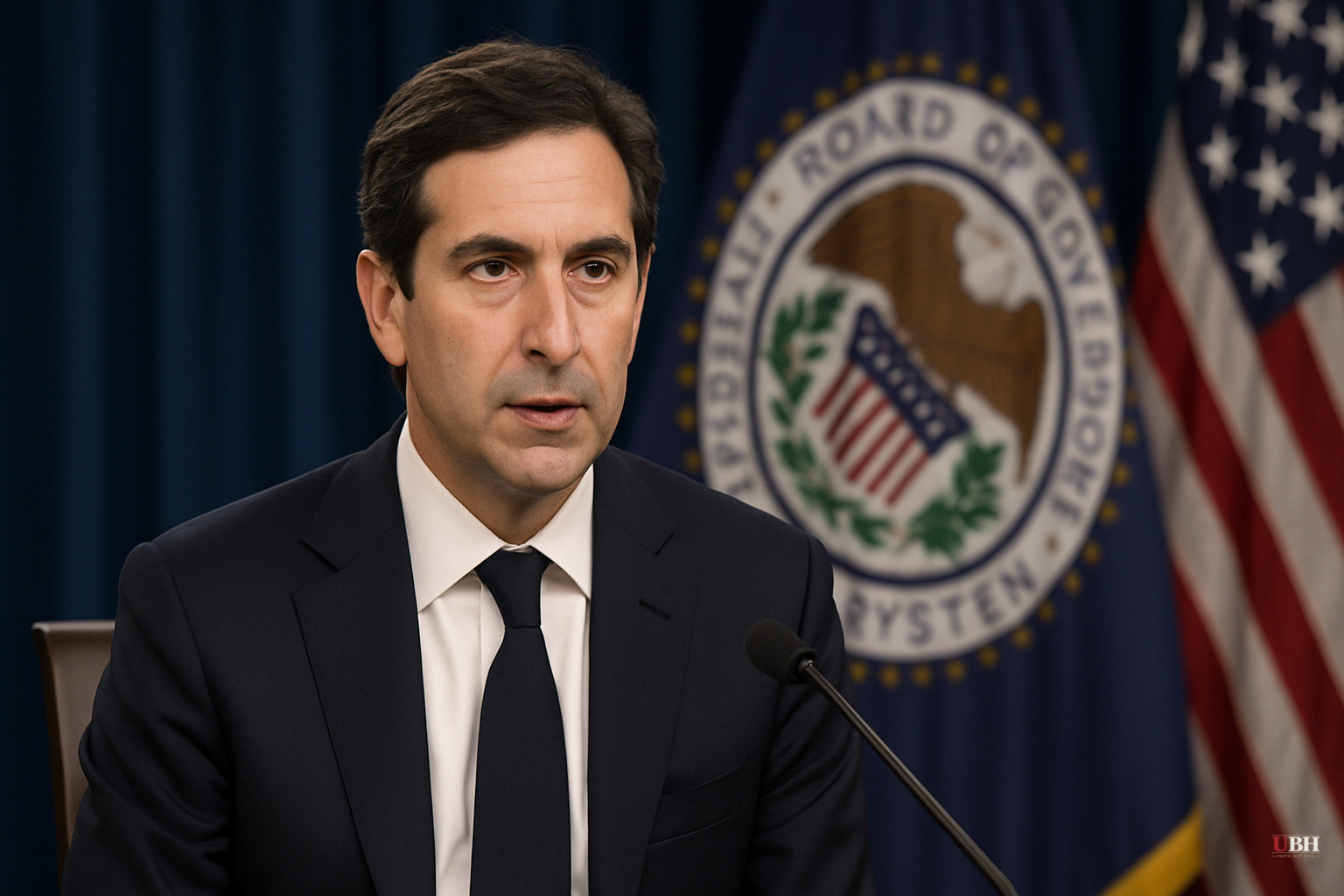
Kevin Warsh chaired his first Federal Reserve policy meeting Wednesday, and the evidence is visible in the numbers.
The Fed's post-meeting statement came in at 132 words, according to reporting by the Associated Press. The April statement ran 341 words. Warsh didn't just trim it — he gutted the section that traders and economists care about most: forward guidance on where rates are headed next.
He said so explicitly. The statement, Warsh noted at his press conference, deliberately omitted any hints about the Fed's next moves.
What Actually Moved in Markets
Financial markets seesawed Wednesday before closing lower, according to IndexBox citing the AP report. The S&P 500 dropped 1.2% on the day of the announcement. The yield on the 10-year Treasury, which directly influences mortgage rates, jumped from 4.43% to 4.49% — a six-basis-point move in a single session. It pulled back somewhat in Thursday trading.
The 2-year Treasury yield, which tracks near-term Fed rate expectations most closely, stood at 4.16% on Thursday, up sharply from 4.05% before the meeting began.
Those aren't catastrophic numbers. But they reflect a market that no longer knows exactly what the Fed is thinking.
The Case for Less Guidance
Warsh's position, shared by a number of economists, is that markets have grown dangerously dependent on Fed hand-holding. When the central bank telegraphs every move months in advance, traders price in those moves automatically, interest rates stop reflecting genuine economic uncertainty, and the Fed ends up managing market psychology as much as monetary policy.
His model is Alan Greenspan, who served as Fed chair from 1987 to 2005, according to IndexBox. Greenspan actually introduced the post-meeting statement format. The Fed's first such statement was issued February 4, 1994, announcing a rate hike that caught investors off guard — the Dow Jones Industrial Average plunged 2.4% that day, according to IndexBox. Warsh appears to believe that occasional surprise is a feature, not a bug: it keeps markets honest.
T. Rowe Price fixed income head Arif Husain, writing in June 2026, gives the argument a fair hearing. He acknowledges that forward guidance and quantitative easing genuinely did suppress volatility after the 2008 financial crisis, anchoring inflation expectations and narrowing the range of possible outcomes for investors. The so-called "Fed put" was real and it worked — for a while.
The question Husain raises is whether that suppression created its own risks. Investors have spent years selling volatility because the Fed made it safe to do so. Unwinding that trade won't be painless.
The Cost to Borrowers
George Pearkes, global macro strategist at Bespoke Investment Group, told the AP that the consumer impact is likely modest in the near term. His estimate: mortgage rates perhaps a quarter-point higher than they would be under a more communicative Fed.
Pearkes also noted that forward guidance has historically anchored market expectations and suppressed volatility, which translated into lower borrowing rates across the board — not just mortgages, but corporate debt, car loans, and credit cards.
T. Rowe Price's Husain goes further. He expects volatility to spread in sequence: rates first, then credit markets, then equities. His timeline is medium to long term, not next week. But he is explicit that eliminating the dot plot and shrinking the Fed's nearly $7 trillion balance sheet simultaneously would increase both implied and realized market volatility on a structural basis.
What Warsh Has NOT Done Yet
The balance sheet question is still open. Warsh's stated goal — confirmed at his Senate confirmation hearing, according to T. Rowe Price — includes reducing that $7 trillion figure, but Wednesday's meeting produced no announcement on that front. That fight is still ahead.
No investigation or legal challenge to Warsh's policy changes has been announced. These are operational decisions within the Fed's discretion, not actions requiring congressional approval.
The Unresolved Question
The AP framed the story primarily around market risk and consumer borrowing costs, which is fair. What neither the AP nor IndexBox addressed directly is the counterfactual: what happens the next time there is a genuine financial crisis and the Fed needs markets to trust its forward commitments? If Warsh has spent years training investors to ignore Fed signals, rebuilding that credibility in an emergency may be harder and more expensive than the volatility savings in the interim.
That is the structural bet Warsh is making. He may be right that markets needed to be weaned off Fed dependency. Whether he has timed it correctly — with inflation still above target and the 10-year yield already sitting near 4.49% — is the question that the next several Fed meetings will begin to answer.
Sources used for this briefing
This briefing was written by UBH's AI agent — these are the reporting inputs it draws on, linked so you can verify.