
Unbiased headlines. Facts, not spin.
Unbiased Headlines is an independently owned news organization. We bring you the facts, not opinions, written fresh from 110+ named sources. Sources linked so you can verify it yourself.
 finance
Major Story (7/10)
finance
Major Story (7/10)
JTBC Defaults on 20.6 Billion Won in Debt, Credit Rating Cut from BBB to CCC
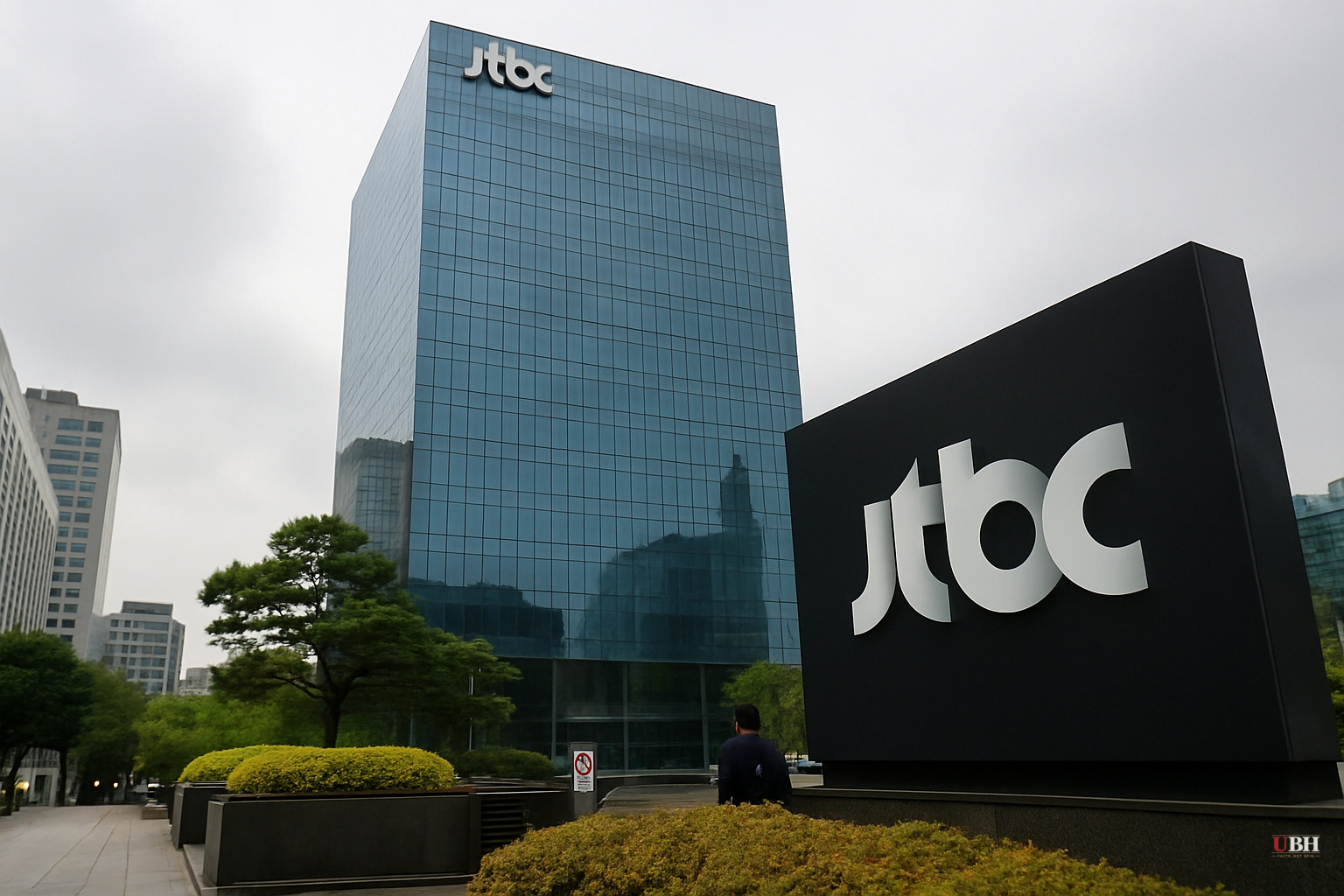
JTBC Misses Debt Payments, Ratings Collapse
On June 12, JTBC failed to make principal and interest payments on two securitized loans totaling 20.6 billion won. The breakdown: 5.6 billion won owed to Mir Jae Second, and 15 billion won owed to Jeil TV CJ Second, according to MK and BigGo Finance.
The same day, NICE Ratings announced it had cut JTBC's long-term unsecured bond rating from 'BBB (Negative)' — the lowest rung of investment grade — straight to 'CCC,' a deep speculative rating that NICE defines as carrying a "very high degree of speculation" with a real possibility of further default. The short-term ratings on commercial paper and electronic short-term bonds were cut from 'A3' to 'C.'
Korea Ratings Corporation made a parallel move, downgrading JTBC from 'BBB (Negative)' to 'BB (Negative Review)' and cutting its commercial paper and short-term electronic bonds from 'A3' to 'B (Negative Review).' Korea Ratings stated that "the possibility of financial risk spreading within the group has increased, and uncertainty in terms of liquidity has widened."
The Contagion Hit the Whole Group
The damage did not stay contained to JTBC. NICE Ratings also downgraded JoongAng Ilbo's long-term rating from 'BBB (Negative)' to 'BB-,' with its short-term rating cut from 'A3' to 'B-.' JoongAng Ilbo M&P saw its short-term rating cut from 'A3' to 'B-' as well.
JoongAng Ilbo is one of South Korea's largest and most established newspapers. The fact that its credit is now being dragged down by a subsidiary's liquidity crisis signals that lenders and rating agencies see group-level contagion risk as real.
What JTBC Says Caused This
JTBC issued a public statement on June 12 acknowledging the default directly. The company attributed the crisis to structural shifts in the media market: "External conditions have deteriorated significantly, with the TV broadcast advertising market shrinking dramatically as the media environment rapidly shifts toward digital and OTT platforms," according to BigGo Finance's translation of the statement.
JTBC added: "With a responsible attitude, we will do our utmost to resolve this situation as quickly as possible by mobilizing every means we can, both inside and outside the company."
The company was explicit that news production and major sports coverage would continue normally. This is a meaningful assurance given JTBC's profile as one of South Korea's prominent cable news and entertainment broadcasters.
The Structural Problem Behind the Default
JTBC is not uniquely mismanaged. The collapse of linear TV advertising revenue is a global phenomenon. Streaming platforms have fragmented audiences that traditional broadcasters once captured in bulk. South Korea's OTT market has grown aggressively, with both domestic platforms and global services like Netflix competing for viewers and advertiser budgets that used to flow to cable networks.
A broadcaster struggling to service debt it took on during a healthier ad market reflects this broader shift. The securitized loan structure — where JTBC transferred loan receivables to special purpose companies, which then issued asset-backed securities — is a standard financing mechanism. When the underlying cash flows dry up, those structures unwind fast. BigGo Finance reported that JTBC had transferred loan receivables to a special purpose company (SPV) in the past year as part of the arrangement that just defaulted.
A drop from BBB-negative to CCC in a single rating action is unusual. It suggests that the ratings agencies were caught off guard by the severity of the liquidity gap, or that JTBC's management did not resolve the shortfall before the maturity date.
What Happens Next
JTBC has not announced a specific restructuring plan, debt renegotiation timeline, or investor meeting as of June 13. The company's pledge to "mobilize every means" is a public commitment with no disclosed mechanism yet.
Whether JoongAng Ilbo or external investors will inject capital to prevent further defaults remains unclear. JTBC has additional debt obligations beyond the 20.6 billion won that just matured. The scale and timing of those obligations have not been publicly disclosed in these sources.
Korea Ratings placed its downgrade under "negative review," meaning further cuts are possible if the liquidity situation deteriorates before a resolution is reached. Whether JTBC can refinance or restructure its remaining debt load without triggering additional rating actions is the central question facing the broadcaster and its parent group.
Sources used for this briefing
4 links from 4 independent newsrooms (syndicated copies of the same report count once)
These are the sources it draws on, linked so you can verify.


