
Unbiased headlines. Facts, not spin.
Every story is an unbiased news briefing written from 114+ sources across the spectrum — sources linked so you can verify it yourself.
 defense
Breaking / Critical (9/10)
October 7, 2026 at 03:49 PM
defense
Breaking / Critical (9/10)
October 7, 2026 at 03:49 PM
Iran War Nears Eight Months: Pentagon Says 81 Aircraft Lost, $37.5 Billion Spent, No Declared Endgame
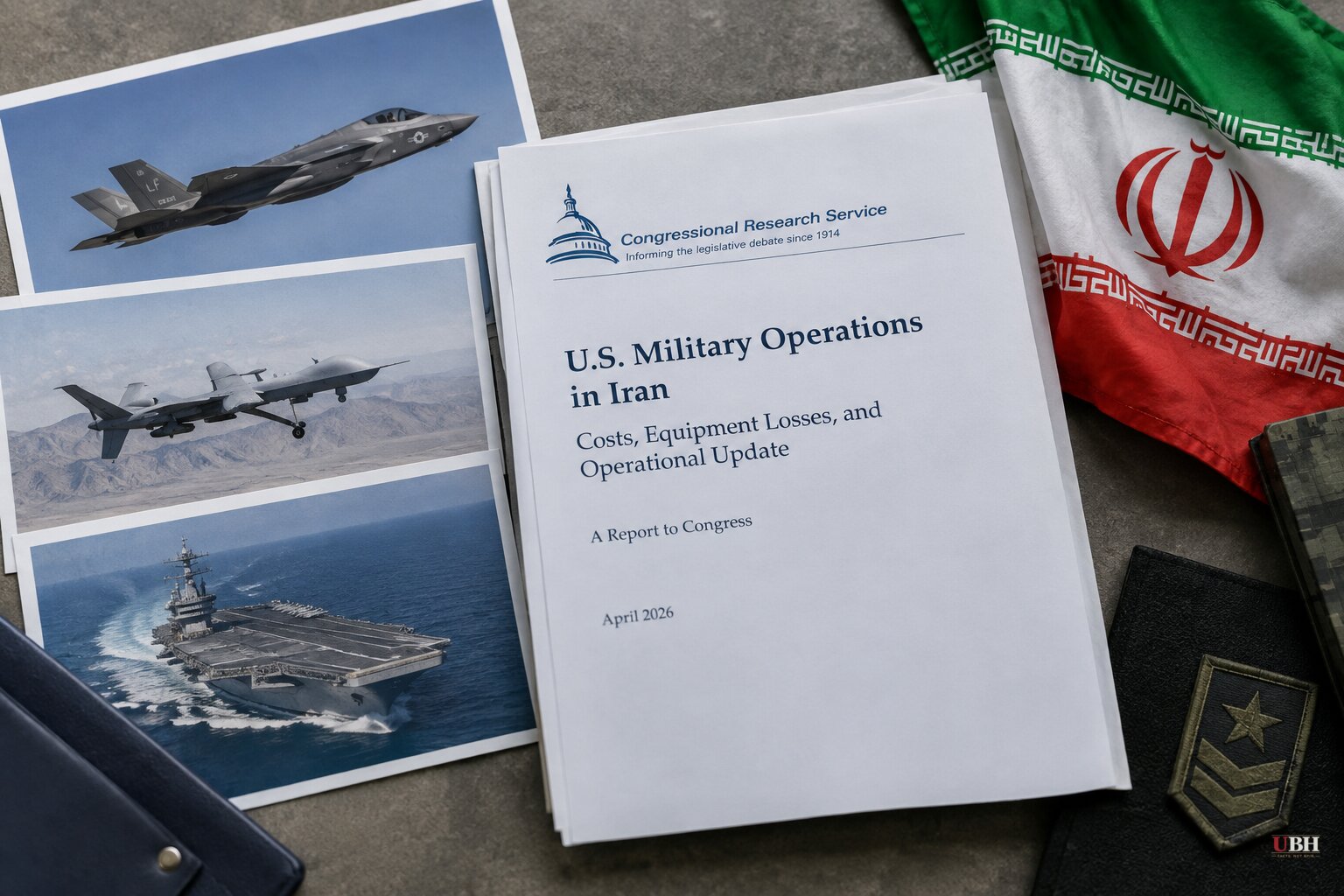
The United States is seven-plus months into a shooting war with Iran, and the bill keeps climbing.
According to a Congressional Research Service report cited by Yahoo News, the US has lost or sustained damage to 81 fixed-wing and rotary-wing aircraft since the war began, at a cost the Congressional Budget Office puts at up to $3.3 billion. That's up from 42 aircraft in the CRS's last count in May.
The breakdown is specific. Twelve F-15E Strike Eagles have been hit or destroyed, each one worth upwards of $30 million. One F-35A Lightning II stealth fighter took damage. Seven KC-135 Stratotanker refuelers were lost or damaged, at roughly $79 million apiece when adjusted for inflation, according to figures reported by Forbes. A $240 million MQ-4C Triton drone crashed in what the CRS report calls a "mishap." And 45 MQ-9 Reaper drones, worth $30 to $50 million each, have been destroyed, shrinking the usable Reaper fleet from a required minimum of 189 down to 135 by May, according to Air Force Times.
Eight more aircraft were damaged in September when Iran struck Muwaffaq Salti Air Base in Jordan, though the CRS report says those fighters returned to service. Separately, an F-15E was shot down over Iran, and three more F-15s were lost in a friendly-fire incident over Kuwait.
The Pentagon says it has officially spent $37.5 billion on the war so far. Democrats and independent observers believe the real number is higher, according to Yahoo News, though no alternative figure has been independently verified. At least 18 US service members have died in the conflict.
A War Without a Stated Finish Line
The fighting traces back to June 2025, when US strikes hit three Iranian nuclear facilities. On Feb. 28, 2026, the US and Israel launched Operation Epic Fury, the current war's opening salvo. Supreme Leader Ali Khamenei died that same day, according to Fox News.
Secretary of Defense Pete Hegseth laid out the administration's goals in March: "no nukes, no navy, and a complete dismantling of their missile program and defense industrial base," with reopening the Strait of Hormuz added to the list later, Fox News reported.
At the United Nations last month, President Trump gave Iran a choice: a deal that lets the country rebuild, or the destruction of the Islamic Republic. Iranian President Masoud Pezeshkian rejected surrender the following day but left the door open to negotiations, according to Fox News.
A Fox News opinion piece by a retired Army officer and former Pentagon strategist argues that seven months in, Washington still hasn't answered the core question it has dodged since the 1979 hostage crisis: what political outcome is this supposed to produce, and how does bombing get us there? The piece draws a direct parallel to Operation Praying Mantis in 1988, when Reagan's forces sank two Iranian ships in a single day, and the confrontation with Iran simply continued anyway. Destroying military assets is not the same thing as a political victory.
For any administration fighting a war with escalating costs and no declared exit criteria, this question matters. The administration's defenders would note that Khamenei is dead, Iran's navy and missile infrastructure have taken real damage, and the stated objectives are concrete even if they haven't been fully achieved. Whether that adds up to a plan for ending the war, rather than just degrading Iran's military, remains unclear.
A Parallel Conflict, a Different Anniversary
Separately, Israel marked the third anniversary of the Oct. 7, 2023 Hamas attack on Wednesday, with ceremonies led by President Isaac Herzog in Jerusalem and a vigil planned at the Nova festival site, according to the Epoch Times. More than 1,200 people were killed and 251 hostages were taken in the original attack, Israeli authorities say. Since then, 970 IDF service members have died, including 472 in the Gaza ground offensive, per Israel Defense Forces figures.
That conflict is governed by a separate ceasefire the Trump administration brokered in October 2025, which halted major fighting but hasn't stopped Israeli strikes in Gaza or secured Hamas's disarmament, the Epoch Times reported. Netanyahu has rejected calls for an independent probe into the security failures that allowed the 2023 attack, and told Israelis this week the country has "turned the tables" on its enemies, with 90 percent of residents returned to the Tkuma border region. He also warned Hamas could attempt attacks before Israel's upcoming election, its first since Oct. 7, 2023. An Israel Democracy Institute poll found 68 percent of Jewish Israelis say the attack remains a central factor in how they'll vote.
The Iran war and the Gaza ceasefire are distinct conflicts with separate chains of command and separate political stakes, but both sit on Trump's desk heading into November. Congress has the CRS numbers on the Iran war in hand. What it hasn't gotten, according to any source here, is a public accounting from the administration of what specific military and political conditions would end the fighting with Tehran.
Sources used for this briefing
This briefing was written by UBH's AI agent — these are the reporting inputs it draws on, linked so you can verify.


