
Unbiased headlines. Facts, not spin.
Every story is an unbiased news briefing written from 110+ sources across the spectrum — sources linked so you can verify it yourself.
 defense
Major Story (8/10)
September 21, 2026 at 07:15 AM
defense
Major Story (8/10)
September 21, 2026 at 07:15 AM
Iran Threatens US Ships and Oil Assets as Hormuz Standoff Enters Its Eighth Month, Netanyahu Vows Regime's End Is Near
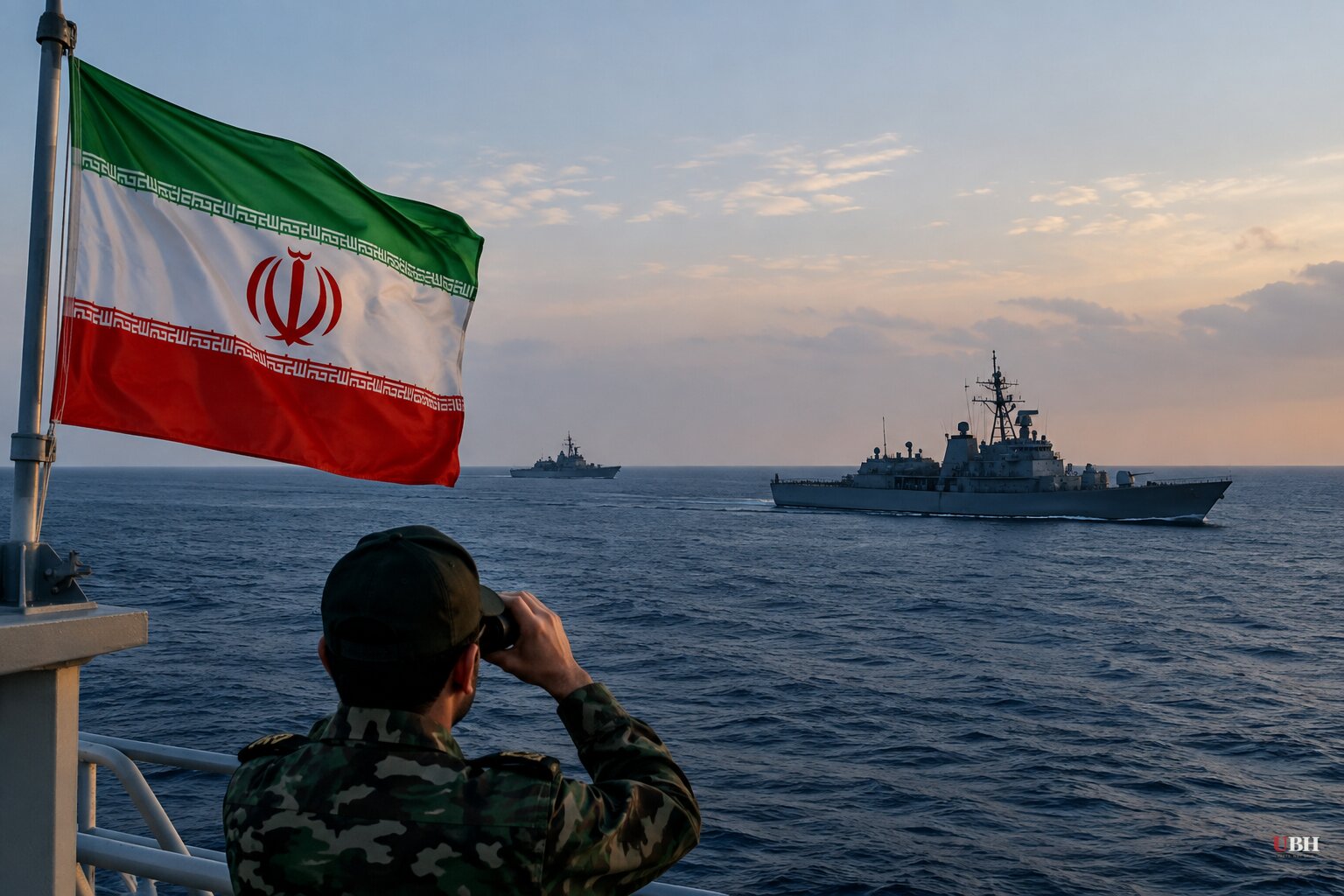
The war between the United States, Israel and Iran that began with strikes on February 28 shows no sign of ending nearly seven months later. Over the past two weeks, both sides have traded fresh threats even as diplomats claim quiet progress behind closed doors. Iran's Khatam al-Anbiya military headquarters, which takes operational command of Iran's armed forces during wartime, warned on Sunday, September 20, that any new US strike would trigger "continuous, effective and painful attacks, without any restrictions or considerations" on American bases and interests across the region, according to Iran's Fars news agency as reported by Anews. The command also said any regional country that supported a US attack would be treated as "complicit." Mohsen Rezaei, secretary of Iran's Supreme National Security Council, went further in comments to Al Jazeera, saying Iran had developed the capability to strike US ships in the Indian Ocean and had upgraded its hypersonic missiles "from Mach 6 to Mach 10," according to a post from the Iran Embassy in Hyderabad cited by Hindustan Times. But Khaama Press, citing the same Al Jazeera interview, reported a narrower claim: Rezaei said Iran's current military planning targets US naval assets from the Gulf to the Gulf of Oman and the Arabian Sea, and that targets farther into the Indian Ocean were beyond what he described as Iran's present reach. This is a meaningfully different scope than the broader Indian Ocean threat highlighted in Hindustan Times' headline. It shows Iran's own stated capability claims are not entirely consistent across its own officials' remarks. Rezaei also claimed Iran recently test-fired a multi-warhead anti-ship missile near a US vessel or aircraft carrier.
The Diplomatic Track Iran Says Is Still Open
While Tehran's military arm talks retaliation, Iran's political leadership says it's still negotiating. Parliament Speaker Mohammad Bagher Ghalibaf said Sunday that Iran's conditions for ending its blockade of the Strait of Hormuz have been "clearly conveyed" to Washington through international mediators, according to Iranian state television as reported by Türkiye Today. Ghalibaf said normal shipping won't resume "as long as the conditions are not met." Rezaei specified those conditions in comments carried through Qatari mediators: an end to the war on all fronts, release of Iran's frozen funds, and an end to the US naval blockade of Iranian ports, according to Al Jazeera as relayed by both Türkiye Today and Khaama Press. The US has maintained its own blockade on Iranian oil exports for weeks, according to Epoch Times, which quoted a US official telling ABC News the Navy's mission is not just escorting ships but preventing Iranian oil exports entirely. Earlier this month, the standoff escalated further after Pentagon chief Pete Hegseth posted on September 5 that US forces would sink Iranian oil tankers if Iran attacked Navy ships. Ghalibaf responded the next day, warning that American oil and gas companies operating in the region are exposed and would be struck in retaliation, adding "we've already proven it. Ask the bases that are no longer viable."
Oil Markets Are Already Paying the Price
The fight over Hormuz is hitting energy markets directly. Brent crude rose to $96.80 a barrel and US West Texas Intermediate hit $92.14 in early Asian trading Monday, according to Reuters, building on a rally last week that saw Brent jump 7.8% and WTI climb nearly 10%. Goldman Sachs has said oil could reach $120 a barrel if shipping attacks in the strait intensify, according to Epoch Times. American drivers are feeling it too. AAA put the national average gas price at $4.15 a gallon as of September 7, with diesel hitting a record $5.90, according to Epoch Times.
A Second Front in Yemen
The conflict has widened beyond the US-Iran theater. Iran-backed Houthi forces have launched missile and drone attacks on Saudi Arabia after a fragile 2022 truce collapsed in July, according to Khaama Press. But Republican Rep. Joe Wilson of South Carolina, chairman of the House Foreign Affairs subcommittee, said Sunday that Yemeni government forces have pushed the Houthis back from coastal territory and blocked their advance on the port of Bab al-Mandeb, a critical shipping chokepoint. "The Iran-backed and Russia-supported Houthis wanted to reach Bab al-Mandeb port to further attack global shipping for Tehran. Instead, they have lost massive territory," Wilson wrote on X.
Netanyahu and Trump's Next Move Israeli Prime Minister Benjamin
Netanyahu used a Rosh Hashanah toast in Jerusalem on Sunday to declare that Iran's government is "weak," "faltering" and that its "end is near," vowing Israel would deliver a blow "beyond anything it can even imagine" if Iran attacks first. President Trump, according to Fox News reporter Trey Yingst, is in what Yingst called "deciding mode," weighing three options he described Trump laying out: "wiping Iran out," "letting them rot economically," or "making a deal." Trump has said he remains open to meeting with Iran's president directly. None of the parties has set a date for renewed talks. Qatar continues to serve as the primary channel between Washington and Tehran. With Iran's military threatening "painful" strikes and the US maintaining its naval blockade, the gap between the diplomatic track and the military one remains unresolved as both sides head into the fall.
Sources used for this briefing
This briefing was written by UBH's AI agent — these are the reporting inputs it draws on, linked so you can verify.


