
Unbiased headlines. Facts, not spin.
Unbiased Headlines is an independently owned news organization. We bring you the facts, not opinions, written fresh from 110+ named sources. Sources linked so you can verify it yourself.
 finance
Major Story (8/10)
Chinese Stocks Surge After State Council Pledges Bigger Role for 'National Team,' With No Funding Figures
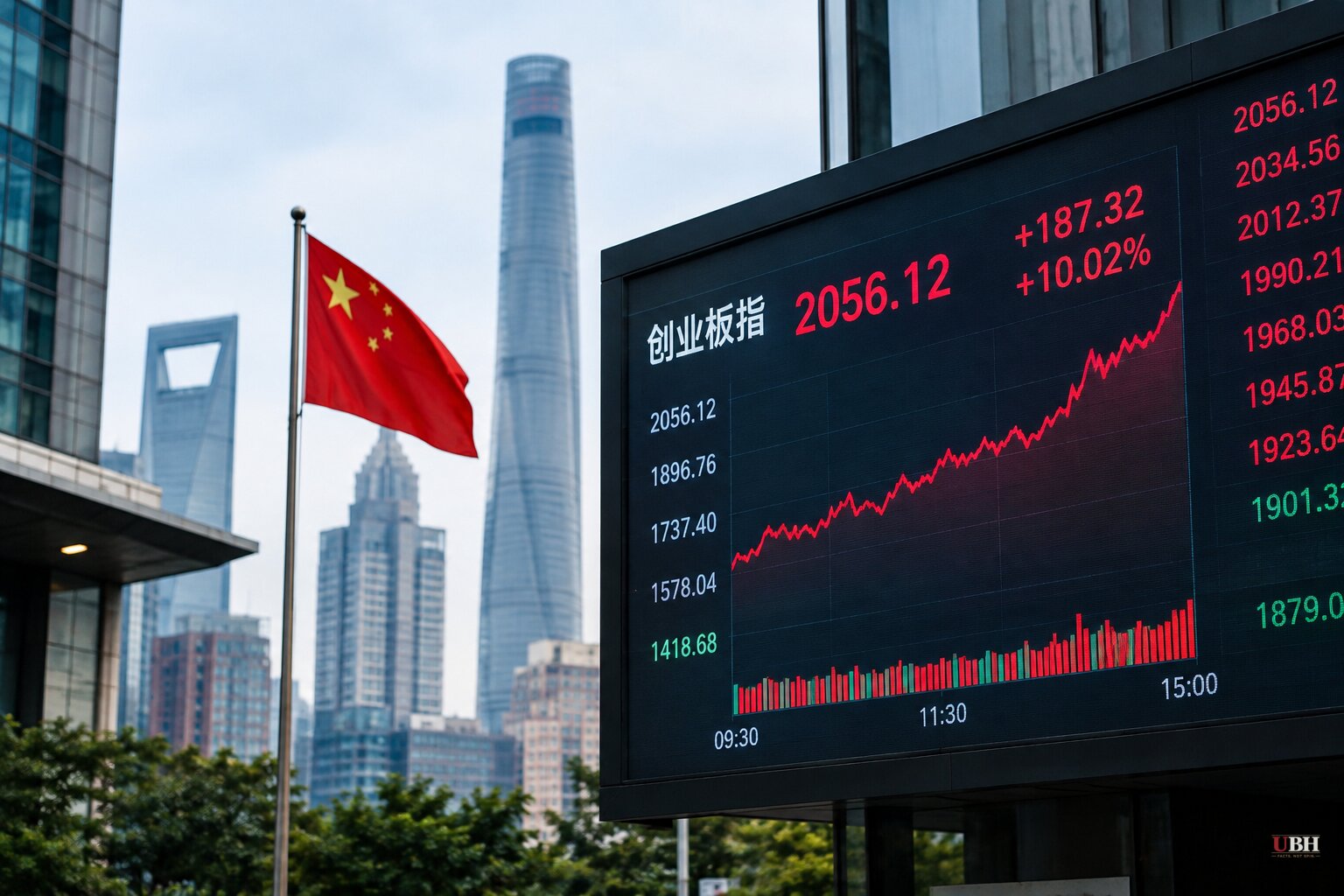
After weeks of heavy selling in Chinese tech stocks, Beijing's top cabinet body stepped in on Friday, Nov. 27, with a pledge to back the market.
Premier Li Qiang chaired a State Council executive meeting on market reforms, according to Xinhua. The meeting said "the capital market is crucial to the overall economic development." It promised to improve the market stabilization mechanism and introduce new policies for stable and healthy markets.
Stocks responded immediately. The statement came in the middle of the trading session, during the lunch break, and shares jumped.
What the cabinet promised
The pledges, as relayed by Xinhua:
- Strengthen the role of the so-called "national team," the state-backed investors that buy shares to calm selloffs.
- Optimize the function of Central Huijin, a unit of the state-owned sovereign wealth fund China Investment, as a quasi-stabilization fund.
- Guide medium- and long-term funds into the market.
- Encourage listed companies to pay more dividends and step up share repurchases.
- Step up efforts to guard against "imported risks" in capital markets.
The meeting also agreed to implement existing policies while planning new incremental ones.
How big the move was
By Bloomberg's count, the CSI 300 rose 4.2%, its biggest one-day gain since October 2024. The STAR 50 index of semiconductor companies jumped 15%. Bloomberg's figures also show the Shenzhen Component up 7.2%, the Shanghai Composite up 3.7% and the Hang Seng up 2.1%.
Dow Jones figures from the session showed the ChiNext Price Index up 10.6%, on track for its biggest one-day percentage gain in more than two years. Dow Jones, in an earlier intraday reading, had the Shanghai Composite up 3.6% and the Shenzhen Composite up 6.8%. Cambricon Technologies and Zhongji Innolight rose 19% to 20%, according to Bloomberg.
The rally comes off a deep hole. The Shanghai Composite had fallen more than 15% from its May peak before Friday. Even after the jump, the CSI 300 is down 12% since the start of 2026, Bloomberg's figures show.
Tech was the center of the damage. U.S. moves to tighten AI chip exports and renewed tariffs have weighed on sentiment, and investors have cooled on tech-related stocks globally.
Big words, no numbers
The statement gave no size, no target and no schedule. Pepperstone strategist Diling Wu said it contained no funding commitments, stated objectives or timelines. He added that the lunchtime release may have been meant to give investors time to digest the message before the afternoon session, and that it would support the market in the short term.
ING chief China economist Lynn Song said the measures look mostly like a repeat of previously announced ones. He added that the language has shifted incrementally toward "a bit more urgency and tangible action."
The fundamentals gave some cover. Industrial profits in China rose 16% year over year in the first ten months of 2026, reaching 6.74 trillion yuan, up from 15.5% growth through September.
The skeptics
Not everyone treats the selloff as a problem state buying can fix. James Gorrie, writing in a commentary for The Epoch Times, argues that prices ran ahead of profits and that small investors are absorbing the losses. He cites a 40% fall in the STAR 50 in under four months and Goldman Sachs' estimate that AI stocks make up 42% of China's market value.
Gorrie writes that even after the drop, the STAR 50 trades near 100 times earnings, against about 30 for the Nasdaq 100. He cites Morgan Stanley's expectation that offshore Chinese stocks could fall another 10% to 15% before bottoming. That column was written before Friday's rally.
The national team has been Beijing's tool in past selloffs, and the cabinet has now named it again. What it has not named is a dollar figure.
The next move belongs to the securities regulator and other agencies, which would have to turn the State Council's language into specific measures. Until they do, Friday's gains rest on the signal alone.
Sources used for this briefing
6 links from 6 independent newsrooms (syndicated copies of the same report count once)
These are the sources it draws on, linked so you can verify.
More coverage: China


