
Unbiased headlines. Facts, not spin.
Unbiased Headlines is an independently owned news organization. We bring you the facts, not opinions, written fresh from 110+ named sources. Sources linked so you can verify it yourself.
 finance
Notable (6/10)
China, Japan, South Korea and ASEAN Set Up Cross-Border Payments Group With Stablecoin Rules on the Agenda
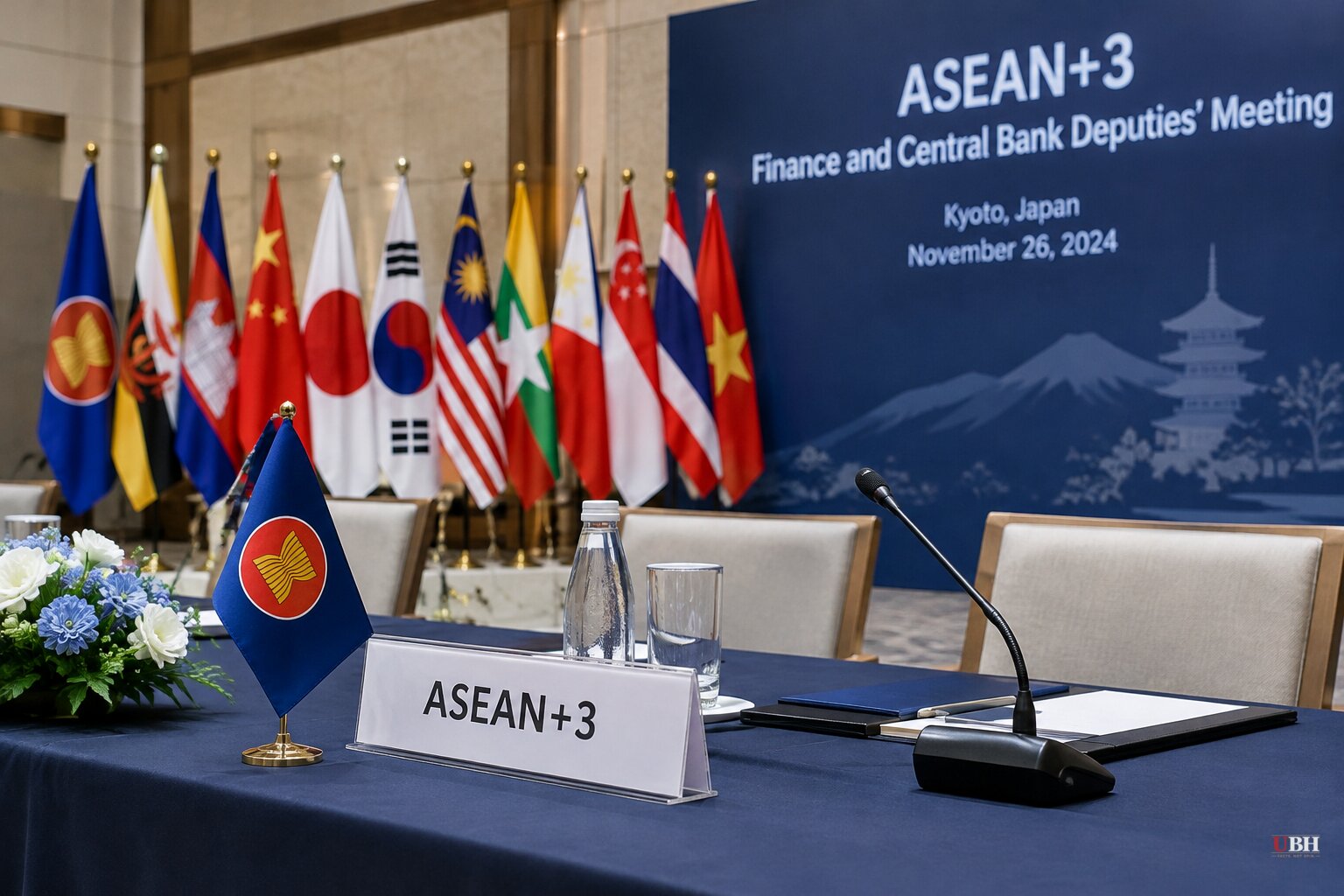
Deputy finance ministers and central bank officials from China, Japan, South Korea and the 11 ASEAN nations agreed in Kyoto this week to set up a joint program on cross-border digital payments, with a dedicated working group that will take up stablecoin regulation.
Japan's Ministry of Finance released the joint statement on Thursday, Nov. 26, after a two-day meeting of the ASEAN+3 deputies. The new initiative is called the AMRO Cross-Border Digital Payments Program. AMRO is the ASEAN+3 Macroeconomic Research Office, the bloc's economic surveillance body, and it will oversee the effort.
What the group is supposed to do
The working group has two jobs. One is to examine how retail and wholesale payment systems in member economies could be linked. The other is to work through regulatory questions around digital assets, with stablecoins singled out.
Stablecoins are tokens built to hold a steady value, typically by tracking a currency such as the U.S. dollar.
According to a Nov. 18 consultancy notice, AMRO's first phase of research will map retail payment connections between countries and the obstacles to expanding them. The use cases include international remittances, tourism payments, cross-border e-commerce and person-to-business transactions. The assessment will compare national regulations, consumer protection rules, technical infrastructure and the commercial terms that govern payment providers.
Limits on its authority
The group is built for policy dialogue and gap analysis. It cannot force Tokyo, Beijing, Jakarta or any other capital to adopt uniform crypto rules. Officials have not announced common stablecoin regulations or a timetable for an integrated payment network.
How it got here
The Kyoto decision follows the ASEAN+3 finance ministers and central bank governors meeting in Samarkand, Uzbekistan, on May 3. Their joint statement named digital payments as a new area of regional cooperation. It told deputies to arrange continued discussions on payment connectivity and "regulatory approaches to stablecoin," with the cooperation framework to be finalized before the end of 2026.
The ministers also said tokenization should be explored through payment infrastructure based on local currencies. They added that new technology should stay consistent with international regulatory standards and be weighed against risks to monetary sovereignty, financial stability and capital flow management.
That last point carries the policy weight. Crypto Briefing reports that AMRO has voiced concern that dollar-denominated stablecoins could undermine the use of local currencies in the region. Better regional payment links could also give users an alternative to dollar tokens.
Where the plumbing stands now
AMRO economists Dong He and Runchana Pongsaparn said in a May 8 publication that retail payment connectivity has advanced considerably, particularly through QR code payments and instant payment systems. Several economies already let travelers pay abroad through their existing mobile banking apps in local currency.
Bigger transfers are another matter. The economists wrote that international transfers involving financial institutions, and large commercial transactions, still face delays from differences in regulation, settlement infrastructure and foreign exchange markets. They identified tokenized bank deposits, stablecoins and central bank digital currencies as possible tools for improving wholesale settlement.
AMRO also published a research paper on May 4 examining stablecoins and central bank digital currencies in international transactions. It found opportunities to fix inefficiencies in conventional payment networks through regional connectivity.
Separate crisis-lending news
The same meeting welcomed a new emergency lending facility under the $240 billion Chiang Mai Initiative, the region's financial safety net. The mechanism took effect in November and is meant to speed up financing during crises, including natural disasters and pandemics.
What comes next
The initiative is due for review when ASEAN+3 finance ministers and central bank governors meet in Nagoya, Japan, in May 2027. Until then, the working group's output will be research and recommendations. Whether any member economy turns those recommendations into binding stablecoin rules is an open question, and nothing in the Kyoto statement commits one to do so.
Sources used for this briefing
7 links from 7 independent newsrooms (syndicated copies of the same report count once)
These are the sources it draws on, linked so you can verify.


