
Unbiased headlines. Facts, not spin.
Unbiased Headlines is an independently owned news organization. We bring you the facts, not opinions, written fresh from 110+ named sources. Sources linked so you can verify it yourself.
 finance
Major Story (7/10)
Event date: November 20, 2026 ·
Goldman Sachs Expects $100 Billion More Automated Stock Selling Next Week After $70 Billion Last Week
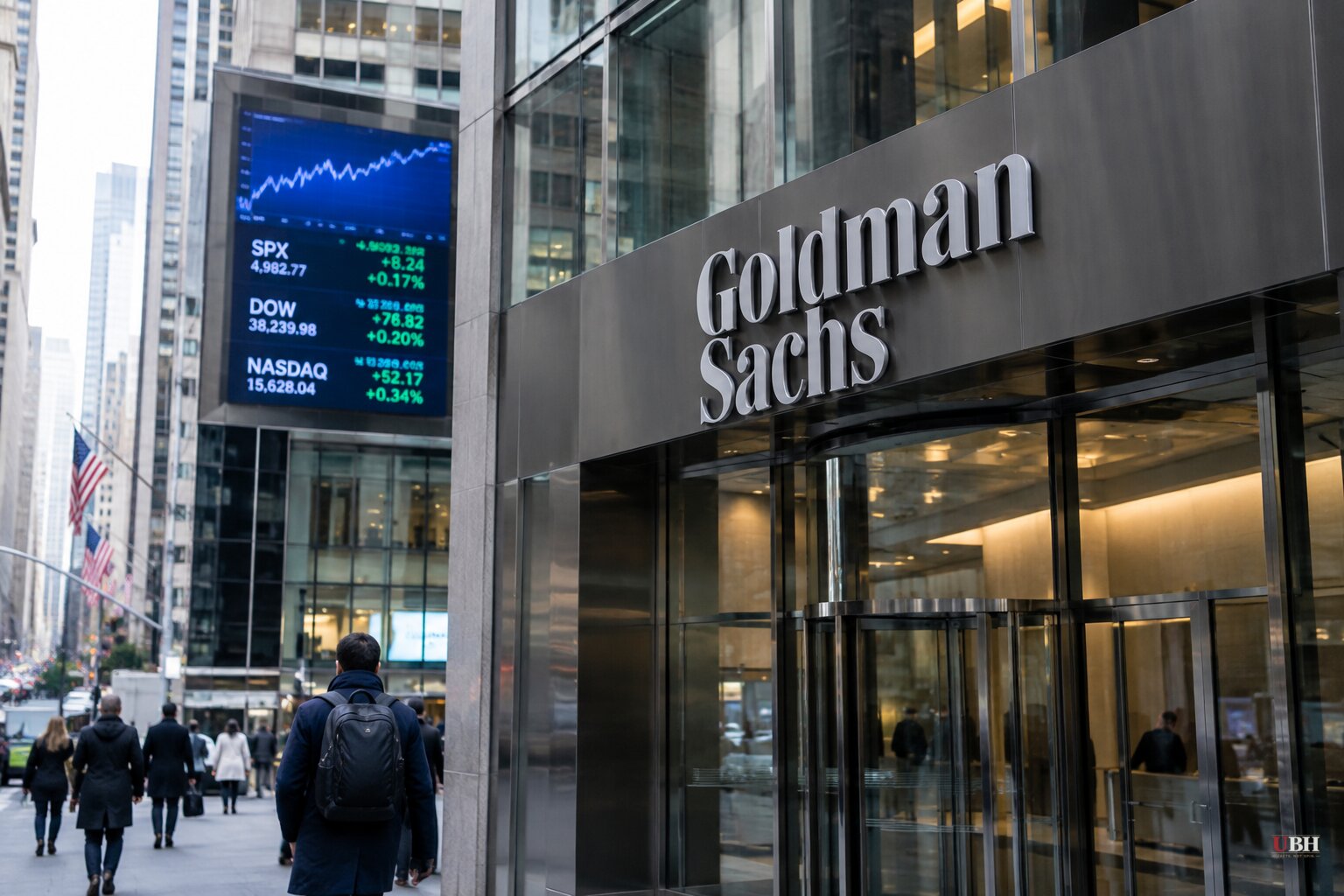
Rules-based funds are still selling stocks, and Goldman Sachs says they are not close to finished.
A note to clients from Goldman's trading desk, led by Paul Leyzerovich and dated Wednesday, Nov. 25, put numbers on it. "The systematic macro space is still in sell mode," the desk wrote. It estimated about $70 billion of global equity sales in the last week and $100 billion more over the next, "after which point it rounds out and turns into small repurchases in early December in the baseline scenario."
Who is selling
Much of it comes from commodity trading advisors, or CTAs, which trade on price trends and volatility signals. They sold $57 billion of equities over the past month and have flipped to a net short position of roughly $19 billion in U.S. stocks, according to Goldman.
Volatility-targeting funds are also adding to the selling as price swings widen, the desk said.
These models cut exposure when their inputs turn negative and keep cutting until the inputs change. That is why Goldman can forecast flows a week out. If the rules and the market conditions are known, the next move is roughly calculable.
The Cboe Volatility Index hovered near 24 in the latest reading, down from above 30 the day before Thanksgiving. It hit 35.89 last Friday, Nov. 20, and remains above its long-term average of 19 to 20.
How the rout got here
The damage was concentrated in AI and chips. On Nov. 20 the S&P 500 fell 3.7% to 6,910.39 and the Dow lost 949.73 points, or 1.93%, to 48,147.33. Both closed more than 10% below their recent highs, which is the textbook definition of a correction.
The Nasdaq Composite dropped 5.28% to 22,617.73 and erased its 2026 gains. Nvidia fell 14% that day. AMD, Broadcom and Micron each lost roughly 13% to 14%.
The selling also spread beyond stocks. Bitcoin slid below $60,000 and gold futures dropped nearly 4% as Treasury yields fell.
The session followed Anthropic's market debut on Thursday, Nov. 19, when shares rose 17%. They gave back 8.5% the next day.
Goldman's basket of AI-focused stocks is down 32% since early October. S&P 500 stocks outside the AI trade are down 6% over the same stretch. The S&P 500 sits about 12% below its Oct. 6 peak.
Positioning versus fundamentals
There are two readings of what the selling means.
Richard Saperstein, chief investment officer at Treasury Partners, called it "an AI repricing," pointing to slowing data center buildouts, reduced funding sources for AI projects and slower tech earnings growth. Goldman's strategists make a related point: investors want proof that AI spending turns into earnings. Industry capital spending on AI is projected at roughly $1.1 trillion for 2027.
The other reading is mechanical. When systematic funds are dumping stock on preset rules, price drops can reflect positioning more than any change in the companies being sold. Strategists cited by MarketWatch said this week's early tech rally, which faded by Wednesday, looked less like a bottom and more like forced buying by systematic and leveraged funds caught on the wrong side of the swing.
Both can be true at once. The gap between the AI basket's 32% drop and the 6% decline elsewhere suggests the market is repricing one sector's story, not abandoning equities wholesale.
Goldman says it is too early to buy
Goldman's strategists told clients the market has not reached the levels that typically mark a bottom. Their Panic Index reads 9 out of 10. They say high fear alone does not mark a low when positioning is still heavy.
They are watching three signals: evidence that AI spending is producing earnings, a more dovish Federal Reserve, and a real contraction in investor exposure. According to Goldman, none has appeared.
Hedge funds are heading into year-end in capital-preservation mode rather than chasing the market, said Vincent Lin, Goldman's co-head of prime broking insights and analytics. Nomura's Charlie McElligott has voiced a similar view.
Stock futures pointed higher into today's session, Friday, Nov. 27, according to MarketWatch. Regular trading has not opened yet. Goldman's note makes clear that a bounce does not by itself change the selling forecast.
What the baseline allows
The desk's framework runs both ways. More downside would mute the expected early-December buying but would not trigger continued heavy selling, partly because so much has already been sold. A big enough rally could give those December purchases a "V-shape," the desk wrote.
That is the short-covering risk for anyone betting against the market. With CTAs net short $19 billion in U.S. stocks, a turn in prices would force them to buy back shares.
The test comes over the next week. If the $100 billion lands as Goldman projects, the baseline calls for the funds to flip to modest net buying in early December.
Sources used for this briefing
7 links from 7 independent newsrooms (syndicated copies of the same report count once)
These are the sources it draws on, linked so you can verify.


