
Unbiased headlines. Facts, not spin.
Unbiased Headlines is an independently owned news organization. We bring you the facts, not opinions, written fresh from 110+ named sources. Sources linked so you can verify it yourself.
 finance
Major Story (8/10)
Event date: November 24, 2026 ·
Trump's Portfolios Traded Nvidia Shares 44 Times Through September, Disclosures Show; Records Stop Before Huang Saga
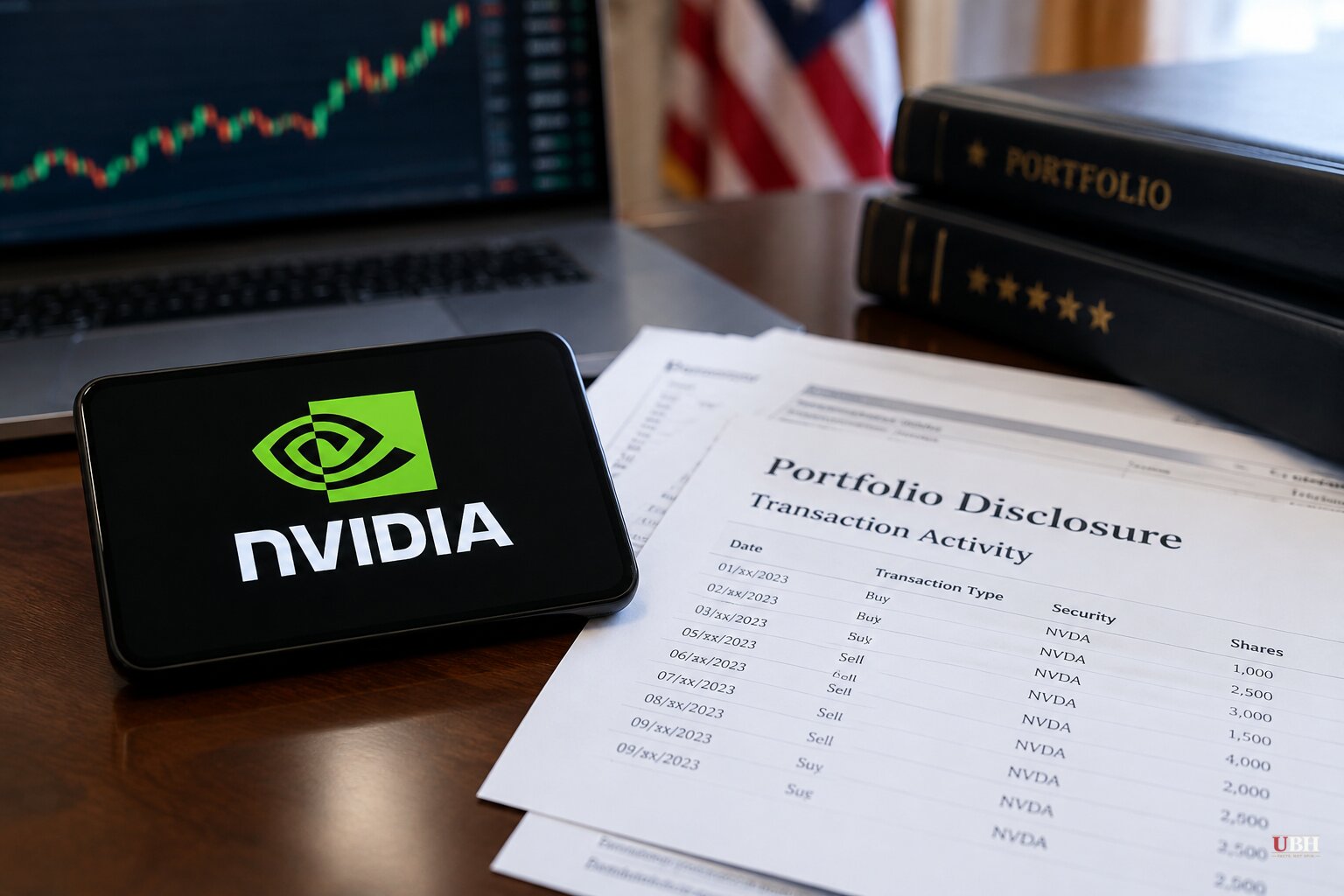
Since Jensen Huang resigned as Nvidia CEO on Nov. 12 and was reinstated by the board on Monday, Nov. 23, the story has widened from one company's boardroom to the president's own brokerage statements.
What the disclosures show
President Trump's investment portfolios bought or sold Nvidia stock at least 44 times between January and September, according to his filings with the Office of Government Ethics. Purchases totaled between $5.2 million and $17 million. Sales totaled between $4.4 million and $12 million.
The filings report ranges, not exact figures, so a precise trading volume can't be calculated. At the end of 2025, the portfolios held between $12.5 million and $58 million in Nvidia shares.
The Washington Post, citing its own review of the filings, reported that the stake grew to as much as $62 million before the scandal broke.
Nvidia now makes up more than 6% of the S&P 500, according to State Street. It is the second-largest company in the index behind Apple, whose shares Trump's accounts also trade frequently.
The disclosures cover January through September. They say nothing about the stretch that followed: Huang's Nov. 12 resignation, the sell-off, and Monday's rebound.
Nvidia shares jumped 31% on Monday, adding roughly $1 trillion in market value. The stock is still below where it traded before reports about Huang's personal life began circulating.
The White House has said the stock and bond portfolio is managed independently by third parties. Neither Trump nor his family, it says, "has any ability to direct, influence or provide input regarding how the portfolio is invested or when investments are bought or sold."
That is the strongest defense of the trading record, and it is the administration's on-the-record position. Nothing in the filings shows Trump directing a trade. Nothing in them covers the days when the stock moved most.
Trump's role in the reinstatement
Trump told U.S. media he "made the deal" to "convince" Nvidia's board to bring Huang back. The board said it had "received input from senior levels of the United States government" that Huang posed "no national security risk."
On Truth Social on Monday, Trump wrote that the Attorney General had confirmed the government has no evidence Huang engaged in unlawful conduct. National Review argued that claim is less definitive than the president makes it sound.
On Tuesday, Nov. 24, Trump told the New York Post he would be willing to pardon Huang but doubted one would be needed. He urged Huang not to invoke the Fifth Amendment in Congress. "I've always found him to be 100% aboveboard," Trump said.
No charges against Huang have been announced.
The national security questions
Huang acknowledged being unfaithful to his wife. He has not addressed the espionage allegations. Those center on a woman identified in media reports as Alice Huang, a former executive at Singapore-based Megaspeed. U.S. intelligence officials are alleged to suspect her of working for China. Beijing has dismissed the accusations as unsubstantiated.
The Justice Department is investigating whether Megaspeed violated export-control laws, and the FBI is examining the alleged intelligence operation. Nvidia's board has announced an independent investigation. The company has said it has no reason to believe national security or its trade secrets were compromised.
Separately, federal prosecutors indicted Super Micro Computer's senior vice president of business development, who also sits on its board, along with a sales manager in Taiwan and a contractor. The indictment alleges a scheme beginning "in or about 2024" to ship servers built around Nvidia GPUs to China without a license. Super Micro is a different company from Megaspeed. The indictment does not allege that anyone at Nvidia knew.
National Review has argued that Huang's May 2025 statement that there was "no evidence of any AI chip diversion" was misleading, pointing to Nvidia's compact GB10-based DGX Spark systems. Nvidia has not been charged with anything.
The Washington Post also reported that Huang traveled with Trump on Air Force One on his last China trip. It reported that Trump allowed some advanced Nvidia chips to be sold in China, and that Commerce Secretary Howard Lutnick held off on restricting a company suspected of diverting Nvidia chips there.
Critics
Ty Cobb, a former White House special counsel, went furthest. On MS NOW's The Beat on Tuesday, he called Trump's involvement "treasonous" and said Trump "made at least $15 million yesterday, if not more." He also said he believes the Nvidia board "violated every tenet of fiduciary duties," and that some directors may later say they were extorted.
Cobb did not cite a document for the $15 million figure. The filings reviewed cover only through September. The White House's position is that Trump has no say in how his portfolio is traded.
Both Republican and Democratic lawmakers have raised concerns about Huang's conduct, Nvidia's compliance with chip export controls, and Trump's part in getting Huang reappointed.
Rep. Ro Khanna, D-Calif., a prominent advocate for restricting lawmakers' stock trading, is also drawing attention. A congressional trade tracker, Trade With Congress, flagged a Nvidia sale in his disclosures that it said came before the scandal broke. Khanna has said neither he nor his family directly made trades. In a newsletter he said his household's investments sit in a diversified trust, set up by his in-laws before his marriage and run by an independent third-party trustee.
What comes next
Huang is scheduled to sit for an interview with the House Foreign Affairs Committee on Tuesday, Dec. 1. He is set to appear at a public hearing before the Senate Banking Committee on Thursday, Dec. 3.
Whether Huang answers or takes the Fifth is unknown. So is what, if anything, Trump's portfolios did between Nov. 12 and Nov. 23. Trading in that window will not be public until Trump files his next periodic disclosure.
Sources used for this briefing
7 links from 7 independent newsrooms (syndicated copies of the same report count once)
These are the sources it draws on, linked so you can verify.
More coverage: Nvidia and Donald Trump


