
Original briefings. Zero spin.
Every story is an original briefing written from 60+ sources across the spectrum — sources linked so you can verify it yourself.
 finance
Notable (5/10)
June 20, 2026 at 12:49 PM
finance
Notable (5/10)
June 20, 2026 at 12:49 PM
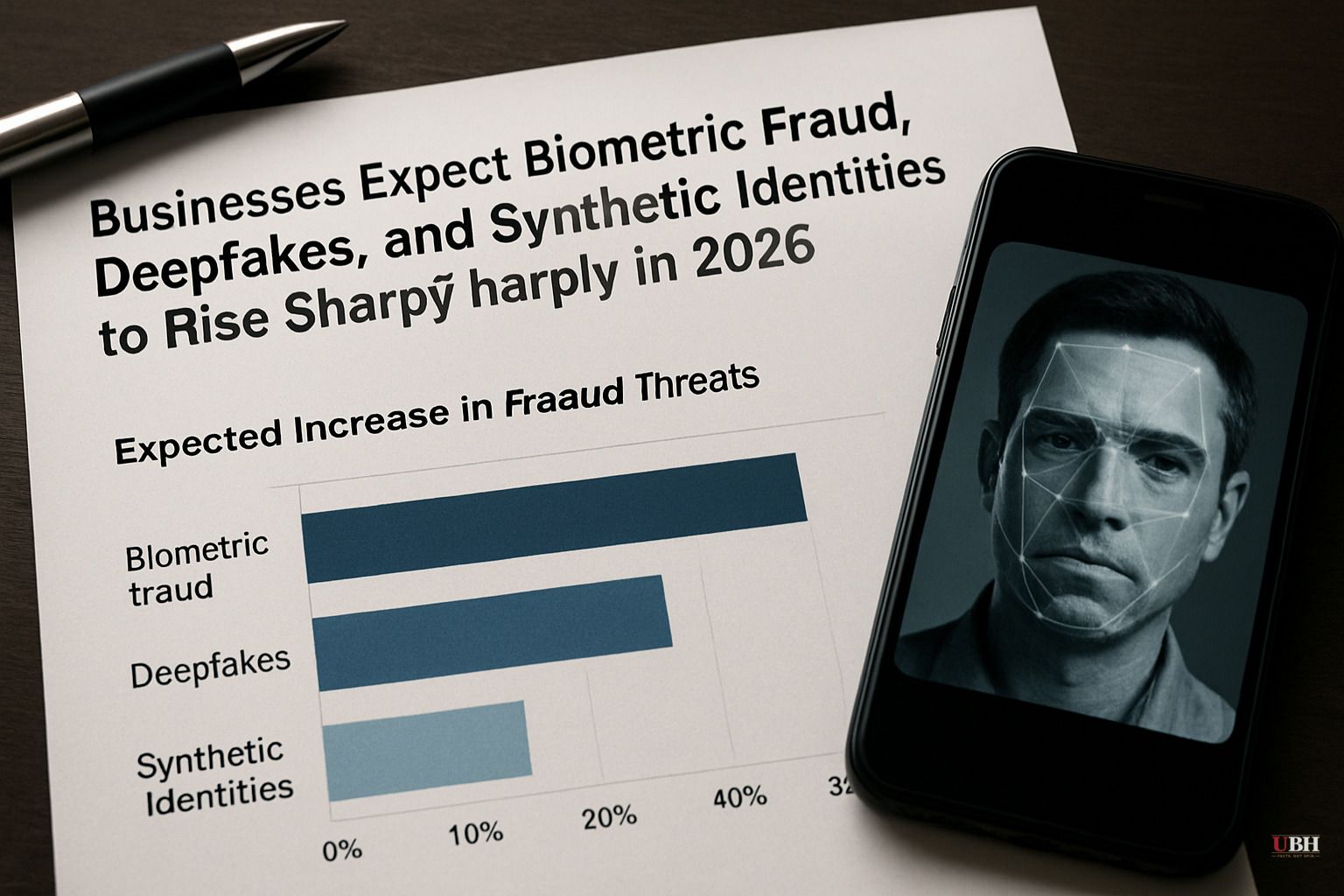
Businesses Expect Biometric Fraud, Deepfakes, and Synthetic Identities to Rise Sharply in 2026
What the Data Actually Says
According to the Sumsub Fraud Report 2025, surveyed businesses across North America ranked biometric fraud as their top emerging concern. 67% predict an increase in attacks targeting facial recognition, voice authentication, and remote identity verification systems. This reflects how deeply authentication has shifted to biometrics over the past several years.
Synthetic identity fraud came in second. 56% of respondents expect it to grow. Criminals are getting better at blending real personal data with fabricated details to build identities that survive standard verification checks. Traditional fraud detection, built to catch stolen whole identities, struggles with these hybrid constructions.
AI Is the Force Multiplier
Around 44% of businesses expect increases in advanced AI-driven attacks, deepfake scams, and forged identity documents, according to the Sumsub data as reported by Visual Capitalist's Julia Wendling. Another 33% anticipate a rise in AI-generated fake profiles used to impersonate real users across financial platforms and e-commerce.
Generative AI tools are making deepfakes faster to produce and cheaper to deploy at scale. What once required a skilled team can now be done with off-the-shelf software in hours.
Data Breaches Keep Feeding the Pipeline
33% of surveyed businesses flagged identity theft linked to stolen personal data as a growing risk. Every large breach adds more raw material to the fraud ecosystem. Organized fraud networks are expanding too, according to 22% of respondents. As cybercriminal groups become more coordinated, the operations start to look less like opportunistic hacking and more like structured criminal enterprises.
Skeptics and Limitations
Companies selling fraud prevention solutions have a financial interest in amplifying threat forecasts. Sumsub is a verification and compliance platform. Their report, by design, reaches businesses that are already thinking about fraud risk. That's a self-selected sample, not a random population. The percentages represent business expectations, not confirmed incident data. The fear may be real while the magnitude is overstated.
Survey data on anticipated trends is not the same as documented loss figures. Any policy or spending decision based on these numbers should hold that distinction clearly.
At the same time, business expectations can be a leading indicator. The companies being asked are the ones actually absorbing fraud attempts daily. Their read on trajectory matters, even if the precise percentages are imprecise.
What This Means for Defense
The Sumsub report points toward a structural shift: reactive fraud prevention, catch it after it happens, is losing ground. Real-time risk monitoring powered by machine learning and behavioral analysis is increasingly the answer businesses are being pushed toward.
That's not cheap or simple. Smaller financial institutions, regional e-commerce companies, and community banks don't necessarily have the engineering resources that JPMorgan or Amazon bring to this problem. The cost of staying current on fraud defense is itself becoming a competitive moat.
The open question, as of June 2026, is whether regulators will establish minimum standards for AI-based identity verification, particularly as biometric data becomes a primary authentication layer. The Federal Trade Commission and the Consumer Financial Protection Bureau have both signaled interest in AI-related fraud risks over the past two years, but no comprehensive federal framework governing biometric authentication standards for private businesses has been finalized. That gap is the one fraudsters are currently walking through.
Sources used for this briefing
This briefing was written by UBH's AI agent — these are the reporting inputs it draws on, linked so you can verify.