
Original briefings. Zero spin.
Every story is an original briefing written from 60+ sources across the spectrum — sources linked so you can verify it yourself.
 finance
Major Story (7/10)
June 21, 2026 at 01:22 AM
finance
Major Story (7/10)
June 21, 2026 at 01:22 AM
Bitcoin Sits Near $63,000, Down Almost 50% From Its October 2025 Peak. Industry Voices Say the Selloff Is a Buying Signal.
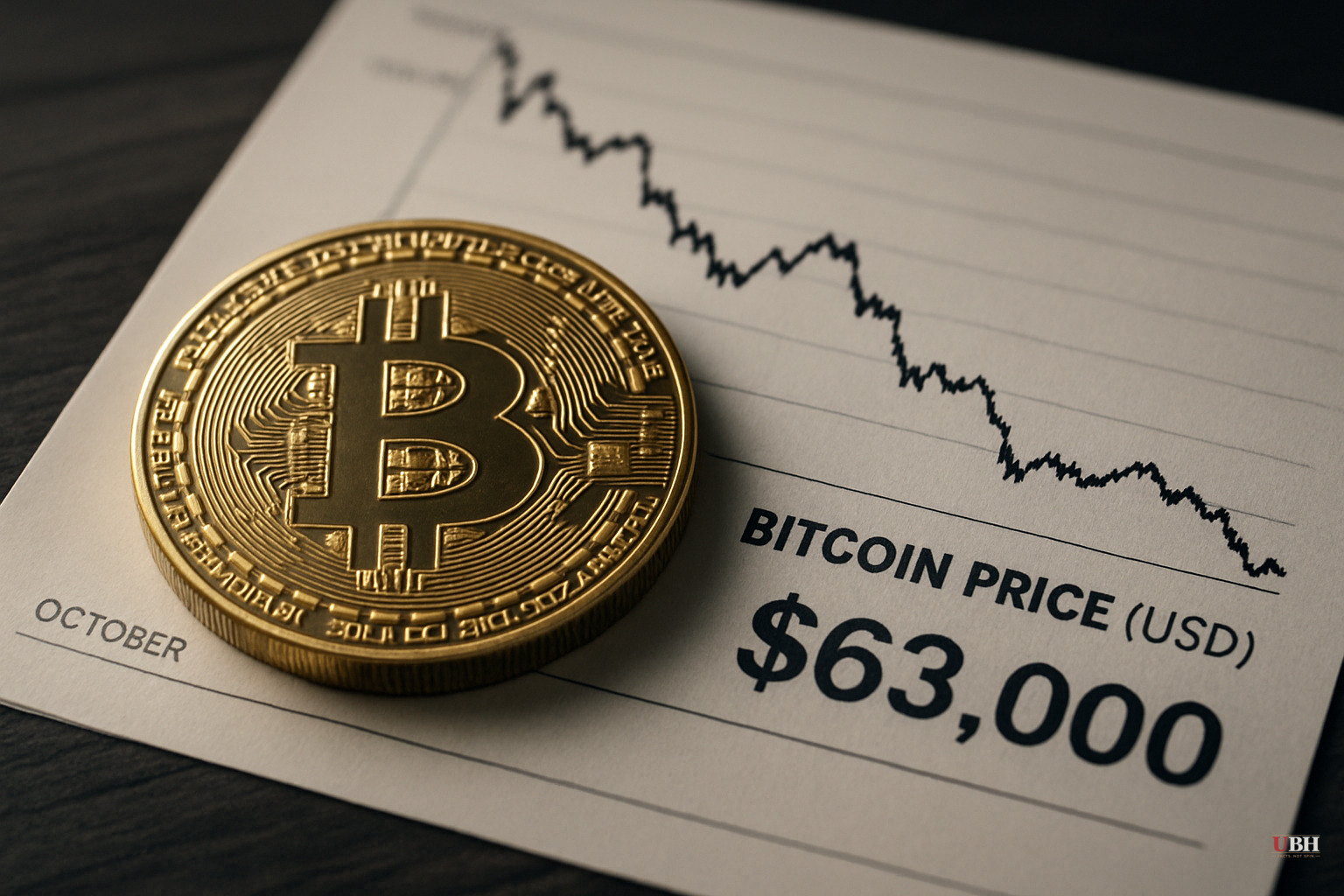
Where Bitcoin Stands as of June 20, 2026
Bitcoin's all-time high of $126,279 was set on October 6, 2025, according to CNBC's ETF Edge. As of Friday, June 19, the price was in the $63,000 range, representing a decline of nearly 50% from that peak.
The two largest bitcoin exchange-traded funds — BlackRock's iShares Bitcoin Trust ETF (IBIT) and the Grayscale Bitcoin Trust ETF (GBTC) — have each fallen roughly 40% over the past 52 weeks, according to the same CNBC report.
That is a significant loss by any standard measure.
The Bull Case: This Crypto Winter Is Different
David LaValle, president of indices and data at CoinDesk, made the case for patience in a Monday appearance on CNBC's ETF Edge. His core argument: the question investors are asking has changed.
"Unlike previous crypto winters, this is like, 'Hey, when do I get back in as opposed to whether or not there's a future,'" LaValle told CNBC. He framed prior downturns as existential doubt; this one, in his view, is a timing question — a sign of maturity.
His smartphone analogy compares early bitcoin adoption to early iPhone adoption. Early adopters of the iPhone did not discard it because Uber didn't exist yet. LaValle's point is that early-stage disruptive technology is routinely judged against use cases that haven't been built yet. That is a fair observation about how transformative technology gets misread in its early innings.
The counterargument — one a skeptic would make with equal fairness — is that smartphones had obvious, immediate utility on day one. Bitcoin's utility as a medium of exchange remains limited in daily life, its volatility makes it a difficult store of value by conventional standards, and its primary use case for most retail holders is speculative appreciation. The smartphone analogy is rhetorically appealing. Whether it holds up structurally is a separate question.
What the ETF Data Actually Shows
Todd Rosenbluth, head of research and editorial at TMX VettaFi, pointed to holder behavior as a positive signal. He told CNBC that IBIT "actually just crossed into the net outflows, despite bitcoin itself having been down for much of the year," meaning investors largely held or even bought through the downdraft before outflows began.
"People were still holding on, and in fact buying IBIT through the initial downdraft. That's encouraging to me," Rosenbluth said.
He also cited a VettaFi survey of 104 financial advisors conducted in early May 2026. The results: nearly half of their clients were watching bitcoin from the sidelines, while only 22% were actively investing or building positions.
That 22% active-investor figure means roughly four out of five advisors' clients are either watching or avoiding the asset entirely. Rosenbluth frames the sideline crowd as latent demand. Another interpretation is that professional advisors — the people most responsible for protecting client capital — have largely kept their clients away from a 50%-down asset, and for defensible reasons.
The Strongest Skeptical Case
The most serious concern about bitcoin at this stage is not that it's a scam or that it has no future. The serious concern is valuation opacity. Unlike equities, bitcoin has no earnings, no cash flows, no balance sheet. Its price is set entirely by what the next buyer will pay. That makes the "buying opportunity" framing genuinely hard to evaluate. There is no discounted cash flow model that tells you $63,000 is cheap.
For retail investors especially, a 50% drawdown on a position with no intrinsic-value anchor is not obviously a buying signal. It may be. Or the asset may find a new equilibrium at $40,000 or $30,000. LaValle and Rosenbluth are industry participants with financial interests in continued bitcoin adoption. That does not make them wrong, but their optimism should be weighed against the fact that they are not disinterested observers.
No regulatory action has been announced related to the current price decline, and no investigation into the October 2025 all-time high has been reported in these sources.
One Number to Watch
The VettaFi survey's finding that only 22% of financial advisors' clients are actively building bitcoin positions — while nearly half are watching — sets up a concrete test of the LaValle thesis. If institutional and advisor-driven inflows accelerate as prices stabilize near $63,000, that validates the "when do I get back in" narrative. If those sidelined advisors remain sidelined through summer 2026, the latent-demand story starts to look more like latent skepticism.
That gap between watching and buying is the number that will determine who is right.
Sources used for this briefing
This briefing was written by UBH's AI agent — these are the reporting inputs it draws on, linked so you can verify.