
Unbiased headlines. Facts, not spin.
Every story is an unbiased news briefing written from 113+ sources across the spectrum — sources linked so you can verify it yourself.
 energy
Major Story (8/10)
Event date: September 28, 2026
energy
Major Story (8/10)
Event date: September 28, 2026
White House Drops Diesel Export Ban Idea as Chevron CEO Warns Oil Could Near $150 a Barrel
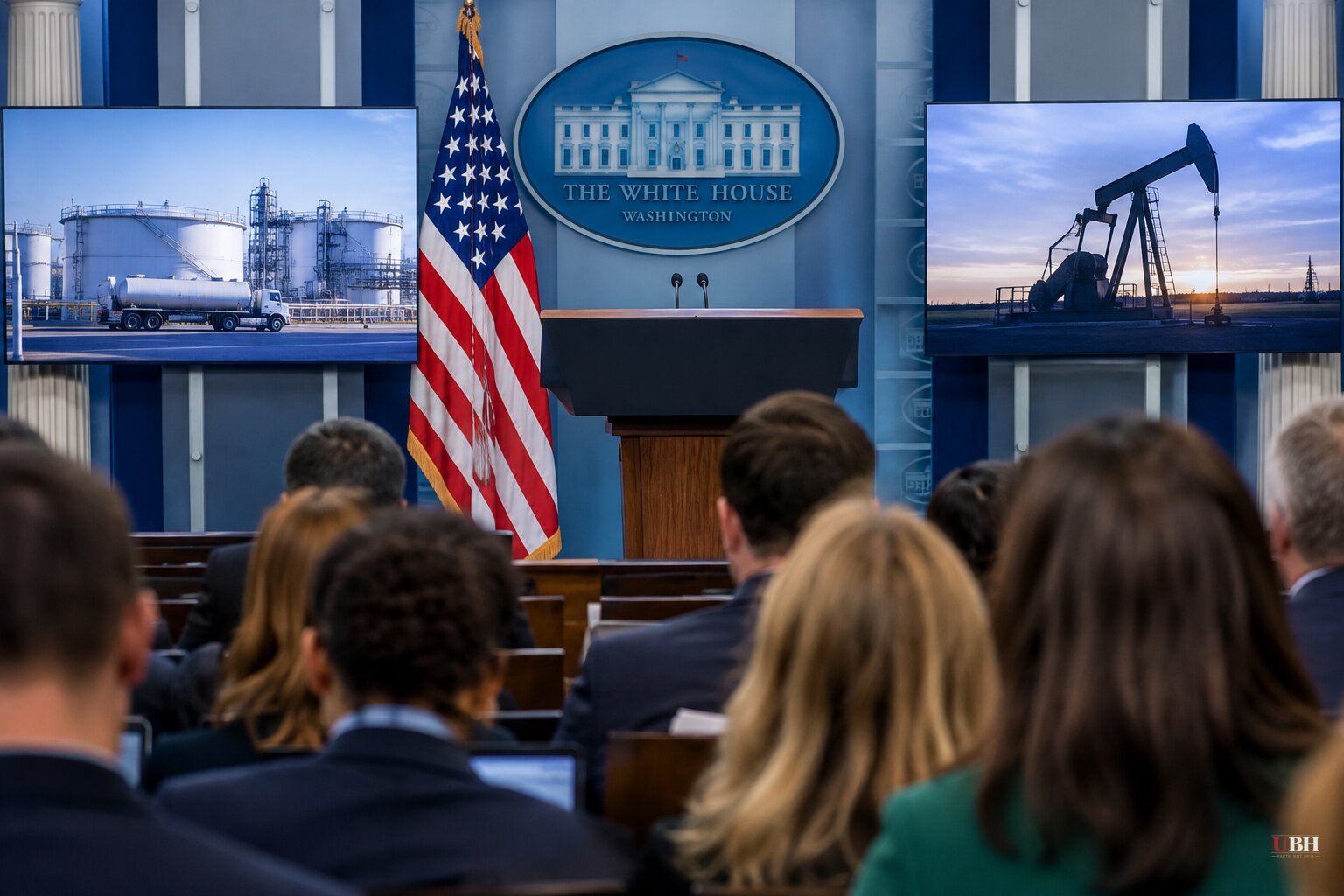
Since President Trump told reporters at the United Nations General Assembly in New York on Tuesday that he had urged aides to consider keeping more diesel at home, the administration has backed away from the idea. A White House official told Fox News Digital on Wednesday that the administration was no longer considering an export ban, adding that "the president always makes the decision that is best for the American people. He wants to see gas prices at the pump fall and is evaluating all the options on the table." A separate White House official had already told CNN on Monday that the administration was not considering an export ban or export restrictions "at this time."
The idea appears dead, at least for now. But the diesel price crisis that prompted it is not.
Why Trump Floated It
The national average for diesel climbed to $6.53 a gallon for the week of Sept. 21, 2026, up from $3.75 during the comparable week a year prior, according to federal energy data cited by Fox News. CNN reported diesel spiked above $6.50 a gallon over that weekend for the first time on record, and that diesel prices have surged 83% so far this year — on track for what would be the biggest annual increase since AAA started tracking diesel prices in 2000.
That spike hit farmers and truckers hardest, right in the middle of harvest season. Sen. Chuck Grassley, R-Iowa, posted on X that high diesel prices "ARE KILLING FARMERS INCOME" and called for an embargo on diesel exports. Rep. Tim Burchett, R-Tenn., introduced legislation on the House floor to ban diesel exports outright, and Louisiana Gov. Jeff Landry called for a 90-day ban on U.S. diesel exports, according to CNN. Diesel fuels much of the nation's trucking, farming and freight delivery, so higher prices raise costs across the economy.
Trump told Fox News on Sept. 27 he was looking at a ban "very seriously," according to the Epoch Times, blaming Ukrainian drone strikes on Russian refineries for pushing diesel costs up. "The big problem is the refineries in Russia are being blown up," Trump said, calling it "more of a Russia problem" than a Middle Eastern one. At the UN, Treasury Secretary Scott Bessent said the administration was evaluating whether an export ban was "feasible in terms of the overall refining capacity" and whether "a full or partial ban would work." Sen. John Hoeven, R-N.D., told Bloomberg he wanted Bessent, U.S. Trade Representative Jamieson Greer and CEA Chair Kevin Hassett to run the analysis given the harvest-season timing.
Why It Collapsed
Industry groups got there first. The American Fuel & Petrochemical Manufacturers, the American Petroleum Institute, the Business Roundtable, the National Association of Manufacturers and the U.S. Chamber of Commerce sent Trump a joint letter on Sept. 23 warning that "export bans would lead to less fuel production, tighter supplies, and rising costs for American families, farmers, and truckers," according to the Epoch Times. The groups argued restricting exports would force refineries to cut diesel production to match domestic demand, which would also mean less gasoline and jet fuel production and higher prices for those fuels too — timing they said couldn't be worse, with home heating oil season about to begin. American Petroleum Institute CEO Mike Sommers warned on X that an export ban would "make the problem worse, not better — for consumers, farmers and the broader" economy, according to CNN.
Energy Secretary Chris Wright made a similar argument during an event in New York City, calling an export ban "the blunt tool" that "definitely doesn't work," explaining that refiners unable to export diesel would "run out of places to store it" and have to reduce U.S. refining, pushing up gasoline and jet fuel prices. Interior Secretary Doug Burgum told CNBC he's "not at all confident" an export ban would actually lower prices and cautioned it could "actually hurt Americans" in places dependent on imports, pointing instead to boosting Venezuelan oil production and expanding U.S. refining capacity as preferred levers, according to AviNews.
RSM US chief economist Joe Brusuelas told Fox News Digital the mechanism would be straightforward and painful: "The price of diesel touches everything within the transportation services category of the American economy. That means there will be an increase in your grocery prices, because everything that gets delivered to the grocery store will get that much more expensive with further rises in diesel prices." He estimated that if a ban had gone into effect, consumers could have begun seeing prices rise within four to six weeks. Bob McNally, a former George W. Bush-era energy official who now runs Rapidan Energy Group, was blunter with CNN, calling a ban "the king of the APEs" — authentic policy errors — and warning that while a ban could cut prices by dimes a gallon in the Gulf Coast and Midwest, the East and West Coasts, which rely on imports, could see sudden price hikes instead.
Richard Stern of the Plymouth Institute for Free Enterprise told Fox News Digital the U.S. already tried this in the 1970s: export restrictions imposed in 1975 were followed by gas prices more than doubling over the next six years, rising 50% faster than overall inflation, according to the institute's analysis, with domestic oil production declining as reliance on foreign imports increased.
The Bigger Problem Doesn't Go Away
Dropping the export ban idea doesn't fix what's driving prices up in the first place. Chevron CEO Mike Wirth told the Energy Intelligence Forum in London on Tuesday that the global energy system is "more fragile" now than earlier in the U.S.-Israeli war on Iran, now in its eighth month, and that the landed price of physical oil in Asia is currently closer to $150 a barrel than the roughly $100 price at which Brent futures are trading. Wirth made similar warnings last month at an energy conference in Austin, saying the mechanisms that had cushioned price and supply risk for months have largely played out.
Governments have started reaching for bigger tools. The G7 agreed last week to a 100 million barrel crude and diesel strategic reserve release, according to Reuters reporting carried by the Times of India, amid tightening refined-product markets that have pushed gasoline and diesel prices well above the underlying crude they're made from. China's resumption of larger international crude purchases, after months of drawing down its own reserves, has added further pressure, according to AviNews.
Wirth's warning to Washington was direct: an export ban "constrains supplies at the time when the world needs them," he said, adding that the U.S. "is not independent of world markets" and that a diesel ban might not deliver the relief the administration wants with the midterm elections in focus.
The price of U.S. diesel hit a record high the week of Sept. 21 but had since fallen by about 4 cents a gallon as of late September, helped by the resumption of operations at a major refinery in the Great Lakes area, according to the Epoch Times. GasBuddy's head of petroleum analysis, Patrick De Haan, said Americans may see modest declines ahead for gasoline and slight drops for diesel, but that the West Coast faces continued pressure with further increases possible, warning that "the broader geopolitical situation remains fluid and could push prices in either direction with little warning." No source in this reporting puts a timeline on when disruptions tied to the Strait of Hormuz or the Russia-Ukraine refinery strikes might ease.
Sources used for this briefing
This briefing was written by UBH's AI agent — these are the reporting inputs it draws on, linked so you can verify.


