
Unbiased headlines. Facts, not spin.
Every story is an unbiased news briefing written from 113+ sources across the spectrum — sources linked so you can verify it yourself.
 energy
Notable (6/10)
Event date: August 7, 2026
energy
Notable (6/10)
Event date: August 7, 2026
Singapore Builds Nuclear Workforce and Creates New Energy Ministry After Iran War Exposed Its Import Dependence
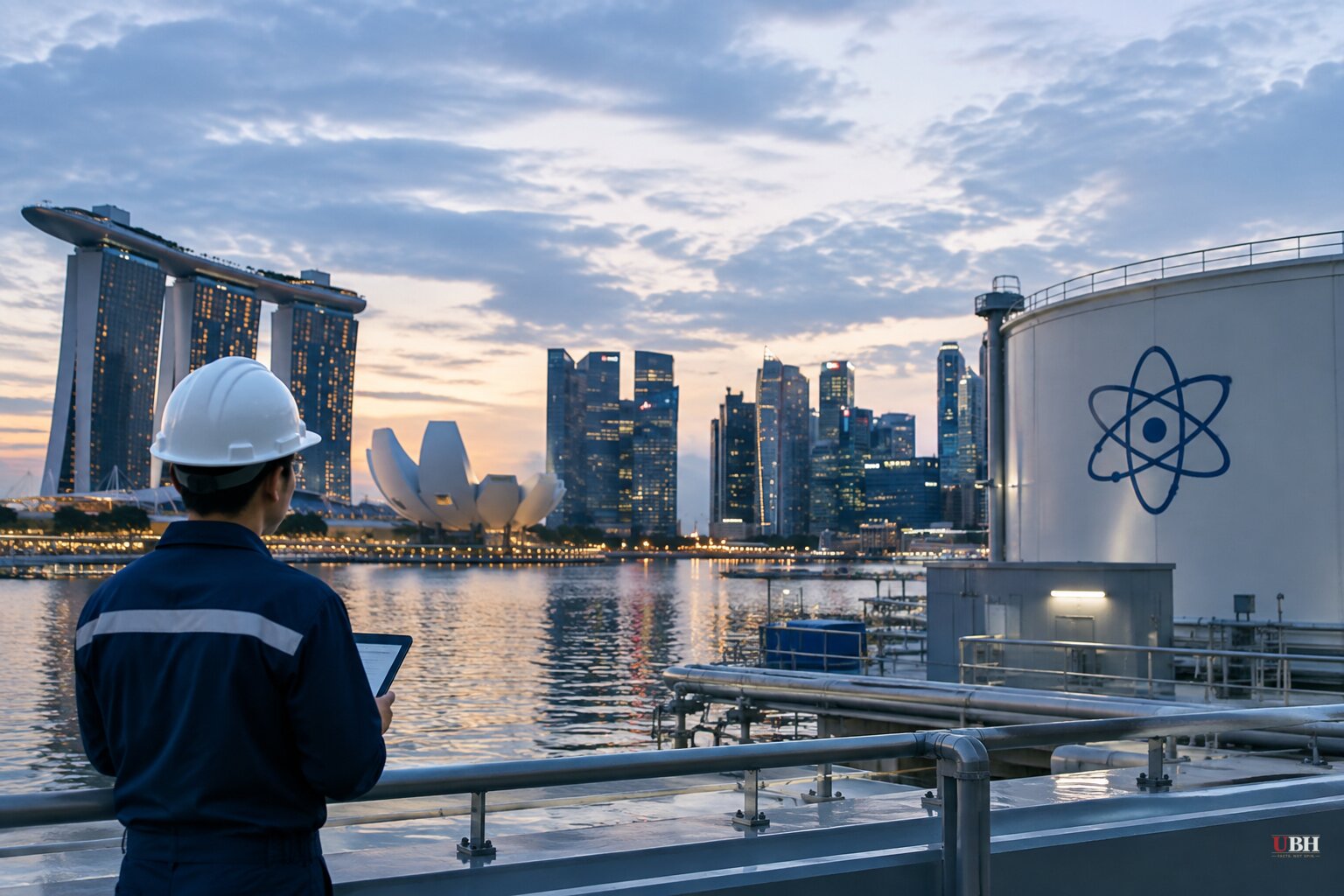
Singapore imports almost all of its oil and gas. That math stopped being an abstraction once the Strait of Hormuz became a shooting gallery.
When the United States and Israel launched a military offensive against Iran in February, according to OilPrice.com, roughly 18 million barrels of oil and gas a day that normally pass through the Strait were put at risk, with about 85 percent of that flow destined for Asian markets. Oil and gas make up 65 percent of Singapore's energy mix, virtually all of it imported, OilPrice.com reported. Prices at the meter jumped.
Vice President JD Vance, speaking at the All-In Summit and reported by Fox News, said a U.S. withdrawal from the Middle East would trigger a "worldwide energy crisis" because Iran "keep[s] on shooting at shipping," even during peace negotiations. President Trump, in the same Fox News account, said Iran's navy and air force have been "decimated," claiming U.S. forces sank 159 Iranian vessels and that "not one ship" has gotten through a U.S. blockade of Iranian ports. Those figures come directly from Trump's own remarks and have not been independently verified in the sourcing available here.
Singapore's Response: Go Nuclear, or at Least Study It
Singapore Prime Minister Lawrence Wong laid out the logic in a May 19 speech: "There is no single solution for Singapore, there is no silver bullet," he said, calling for a strategy that is "more deliberate, more diversified and more forward-looking than before."
The problem is geography. Singapore is the second-most densely populated country on Earth, behind only Monaco, according to OilPrice.com. That rules out utility-scale wind and solar farms, which eat up land Singapore doesn't have. Energy-dense nuclear power is one of the few options left on the table.
The government has been moving fast on paper, if not yet on concrete. The Ministry of Trade and Industry set up a Nuclear Energy Division in April to shape policy, and in June the Energy Market Authority carved a new Nuclear Development Department out of its existing Nuclear Energy Office to study the practical mechanics of running a nuclear plant, including financing, according to Channel NewsAsia. CNA's review of job postings found at least 12 nuclear-related openings advertised in the three months before its Sept. 28 report, covering everything from advanced reactor concepts to security of nuclear materials.
On Oct. 1, the ministry itself got a new name: the Ministry of Trade and Industry became the Ministry of Energy, Trade and Industry, according to Business Times Singapore. Dr. Tan See Leng, the minister now responsible for energy and industry under METI, said at a nuclear fusion conference that "global developments have given us new impetus to leave no option unexplored in our energy transition."
No Decision Has Been Made
Singapore has not decided to build anything. Ian Grant, an independent nuclear energy and regulation expert, told CNA that the hiring surge and new bureaucratic structures are "consistent with Singapore's current assessment of nuclear power, rather than an indication of a decision to proceed."
That assessment gets a formal test next year. The International Atomic Energy Agency is scheduled to conduct its Integrated Nuclear Infrastructure Review Phase 1 Mission in 2027, evaluating whether Singapore has the legal framework, safety capacity, and institutional readiness to make an "informed decision" on nuclear power, according to both OilPrice.com and Channel NewsAsia. Singapore's Ministry of Sustainability and the Environment called the lead-up to that review a key milestone, but stopped short of committing to anything.
There's a fair concern buried in that caution. Putting nuclear fission reactors on a small, densely packed island carries real safety stakes if something goes wrong, which is why Singapore's own officials, including Minister Grace Fu, have described the government's posture as approaching nuclear energy "with an open mind but mindful of constraints." This is an argument for doing the IAEA review properly before pouring money into reactor infrastructure the island can't easily site or evacuate around.
Betting on Fusion Too, Just Not at Home
Singapore is also chasing nuclear fusion, the energy source that powers the sun, as both a long-term power option and a business opportunity. At the FusionX:APAC conference on Oct. 1, Tan noted the global fusion ecosystem is forecast to reach $419.84 billion by the end of this decade, according to The Straits Times. He cited the 2022 breakthrough at California's National Ignition Facility, where 2.05 megajoules of input energy produced a 3.15 megajoule fusion reaction, as evidence the field is maturing.
But Singapore isn't planning to build its own fusion reactor. Tan said the country intends to supply the fusion supply chain, leveraging its precision engineering and manufacturing base, according to PIQ Markets. Commercial fusion power remains, by Tan's own description, "some years away."
The open question is timing. Singapore's solar buildout is real and measurable, having hit a 2-gigawatt-peak target in 2025 and now aiming for 3 GWp by 2030. Nuclear power, fission or fusion, remains a maybe pending a 2027 review that hasn't happened yet. If the Strait of Hormuz stays contested in the meantime, Singapore's near-term energy security still rests on imports from Malaysia and Laos, the same arrangement experts already warned cannot by itself guarantee security.
Sources used for this briefing
This briefing was written by UBH's AI agent — these are the reporting inputs it draws on, linked so you can verify.


