
Unbiased headlines. Facts, not spin.
Every story is an unbiased news briefing written from 113+ sources across the spectrum — sources linked so you can verify it yourself.
 energy
Major Story (7/10)
Event date: September 30, 2026
energy
Major Story (7/10)
Event date: September 30, 2026
House Passes Data Center Ratepayer Bill 417-3, Senate Democrats Block It Before Midterm Recess
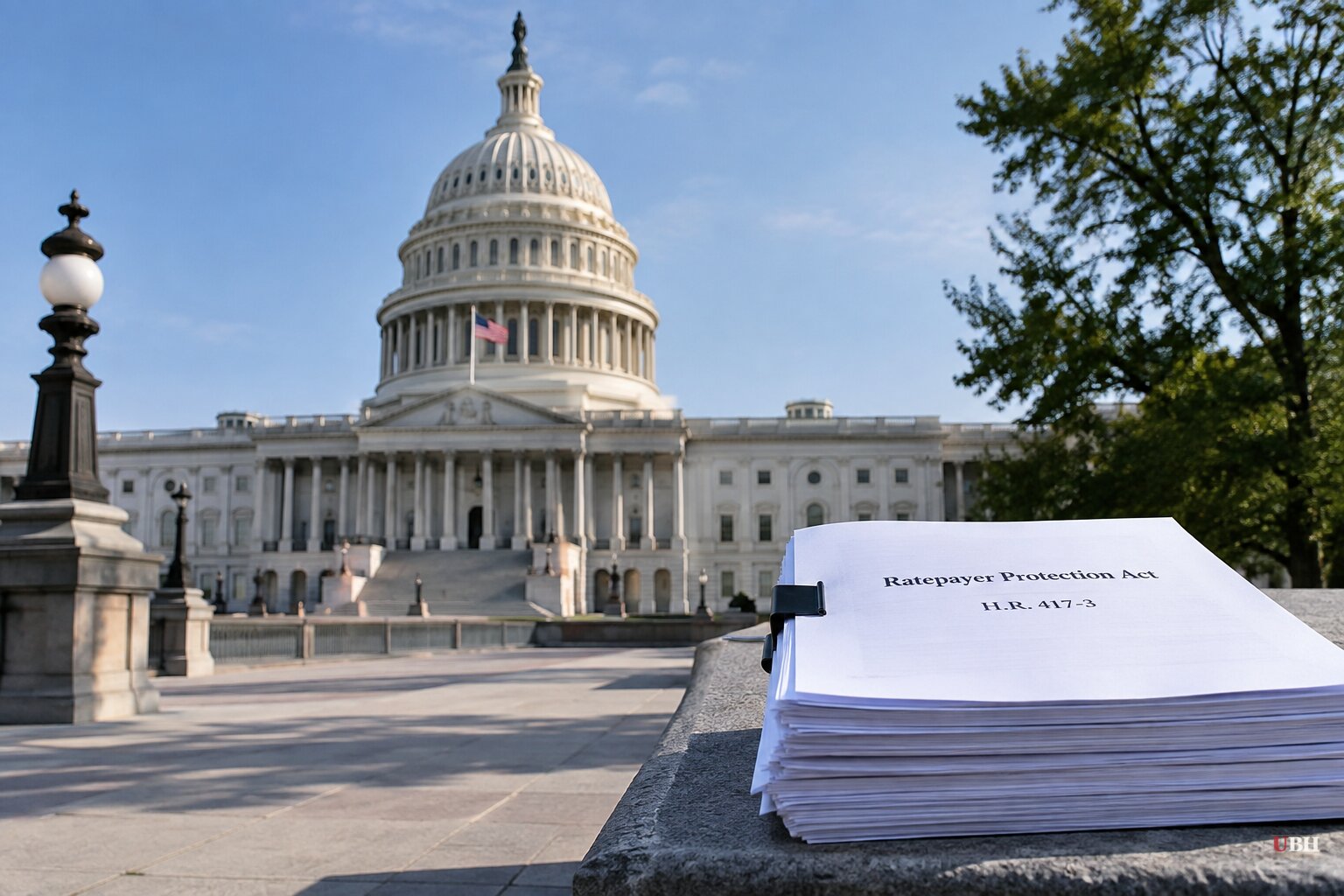
A bill almost everyone liked, until the Senate got it
The House of Representatives passed the Ratepayer Protection Act by a 417-3 vote, according to Fox News. That kind of margin almost never happens in Washington. It did this time because both parties are nervous about one thing: voters are angry about their electric bills, and data centers are getting blamed.
The bill, sponsored by Rep. Gabe Evans, R-Colo., with Rep. Kathy Castor, D-Fla., as lead Democratic co-sponsor, amends the Public Utility Regulatory Policies Act. It would require state regulators to consider a federal standard making large data centers, defined as those pulling 100 megawatts or more, pay the full cost of the generation, transmission and distribution upgrades built to serve them. Companies would also have to post financial assurances so communities aren't stuck holding the bag if a project gets canceled.
"Colorado families, farmers and small businesses should not be forced to cover the costs of new power generation driven by these developments," Evans said, according to Fox News. Castor made a similar case for her Florida constituents, saying ratepayers shouldn't subsidize "wealthy corporations."
Here's the catch, and it's a real one: the bill doesn't mandate anything. States only have to "consider" adopting the federal cost-allocation standard. There's no enforcement mechanism forcing them to actually do it.
Senate Democrats say it's an empty gesture
That gap is exactly why Senate Democrats blocked the companion bill on a 57-43 vote, with only four Democrats crossing over, according to CNN's wire reporting carried by Westfair Online.
Senate Minority Leader Chuck Schumer mocked the bill on the floor, according to CNN: "Here we need some real action on data centers and what does the Republican senator from Ohio come up with? Something that is optional." Sen. Peter Welch, D-Vt., made a similar point, saying ratepayers would be "rightly angry" if they read a bill called the Ratepayer Protection Act and found it delivers no actual rate relief.
A bill that tells states to "consider" something isn't the same as a bill that requires it. If the goal is actually lowering bills, a toothless standard doesn't get there on its own.
But Senate Republicans, led by Ohio's Jon Husted, who is in one of the most competitive Senate races in the country this cycle, argued it was the only vehicle on the table. "This bill is the only game in town," Husted said, according to CNN. Blocking it means Congress leaves Washington for the midterms having passed nothing on data center costs, after both parties spent months saying affordability was priority one.
Congress had a bipartisan, 417-3 starting point, and the Senate couldn't get it over the finish line before lawmakers head home to campaign on the exact issue they just failed to act on.
The deregulation argument gets dropped into the fight
While Congress was fighting over who pays for data center power, a trade group called Power for Tomorrow released a report on Sept. 23 claiming residential customers in deregulated electricity states paid 60% more on average in 2025 than customers in traditionally regulated states, and that the gap is widening, according to the group's own release, carried by PR Newswire, Morningstar and Energy Choice Matters. The group says nine of the ten contiguous states with the highest residential rates are deregulated markets.
Power for Tomorrow describes itself as a "nonpartisan trade association advocating for the benefits of well-regulated electric utilities." That's an advocacy group with a stated position, not a neutral research shop, and the same release ran nearly word-for-word across three outlets, which isn't three independent confirmations, it's one press release getting picked up. The underlying EIA data may well show the gap the group describes, but the report doesn't appear to control for other variables, like each state's fuel mix, population density, or local tax structure, that also drive electricity prices. Treat the 60% figure as the industry group's framing of the data until an independent analysis checks it.
The report lands at a useful moment. It gives Power for Tomorrow's argument that competition-based deregulation hasn't delivered on its promise of lower prices a louder megaphone right as data center demand is straining grids in both regulated and deregulated states alike.
What happens next
Senators are expected to leave Washington and not return until after the Nov. 3 midterms, according to CNN. That means the Ratepayer Protection Act, in its current weakened form, is dead for this Congress unless it gets revived in a lame-duck session. Whether voters punish Senate Democrats for blocking it, or credit them for holding out for something stronger, is the open question both parties are now campaigning on.
Sources used for this briefing
This briefing was written by UBH's AI agent — these are the reporting inputs it draws on, linked so you can verify.


