
Unbiased headlines. Facts, not spin.
Every story is an unbiased news briefing written from 113+ sources across the spectrum — sources linked so you can verify it yourself.
 energy
Major Story (8/10)
Event date: October 2, 2026
energy
Major Story (8/10)
Event date: October 2, 2026
Europe's Gas Prices Hit 3-Year High, Utilities Swing Back to Coal as Brussels Weighs Delaying Methane Rules
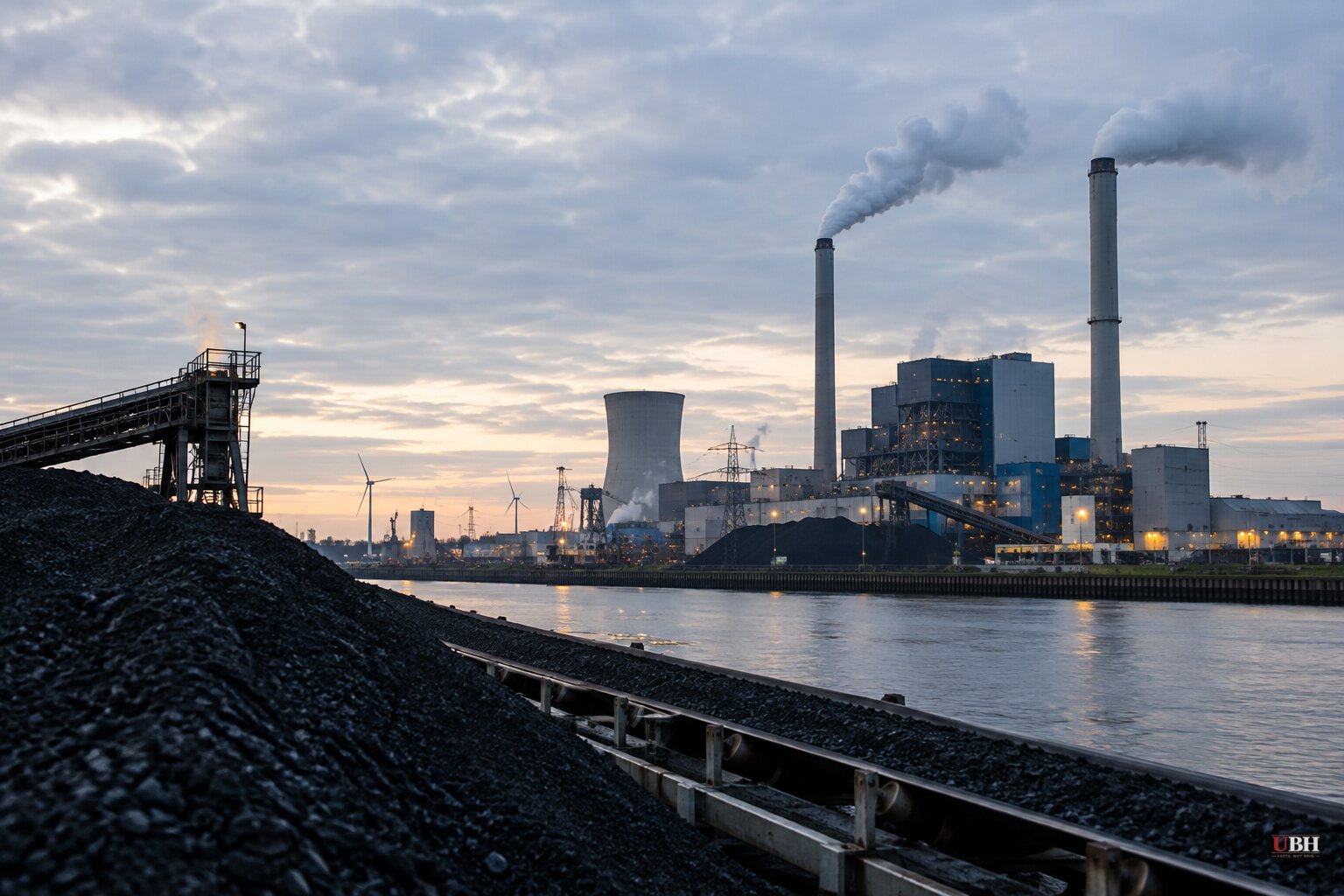
Since the Strait of Hormuz closure roughly six months ago triggered what one European diplomat called the continent's third energy crisis in four years, gas prices have kept climbing. This month the Dutch TTF benchmark, Europe's main gas price marker, pushed above €80 ($90.98) per megawatt hour, the highest level in three years, according to OilPrice and Energy News Beat. That price move has flipped the economics of European power generation: coal and lignite plants are now more profitable to run than gas plants for the first time since at least 2024, Energy News Beat reported.
The shift is showing up in utility dispatch decisions across the continent, and especially in Germany, the EU's largest economy and biggest gas consumer. Analysts at Veyt told Reuters, as cited by OilPrice, that coal is expected to stay cheaper than gas for power generation through next year and potentially until March 2028, because longer-dated gas futures signal traders expect supply constraints to persist. Energy News Beat reports European coal-fired generation is projected to jump roughly 27 percent in the fourth quarter of 2026 as gas-fired output falls.
There's a hard ceiling on how far this can go. A decade of EU phase-out policy gutted the coal fleet: Eurostat data show coal's share of EU electricity generation fell from more than a third in 1990 to a record-low 9.2 percent in 2025, with coal under 5 percent of generation in 19 of the bloc's 27 countries. Germany itself still drew about 21 to 22 percent of its electricity from coal in 2025 even after closing its last nuclear plants in 2023, per Energy News Beat's breakdown of Eurostat figures, with renewables supplying near 59 percent. ICIS analyst Florian Boehnke told Reuters that most of Germany's remaining coal capacity is now constrained by physical plant availability, not price: "Even if the price of gas reaches €100/MWh, the power sector could not react that much more."
Brussels moves to delay methane rules
The price spike is now colliding with EU climate policy. A landmark methane regulation set to take effect in January would require oil, gas, and coal companies importing into the EU to monitor, report, and verify methane emissions. According to Inside Climate News, French President Emmanuel Macron wrote to the European Commission on September 18 urging it to postpone the reporting requirements and ease other fuel rules given rising costs tied to the Iran war.
Dan Jørgensen, the EU's Commissioner for Energy and Housing, said the bloc has already spent an extra €100 billion on energy this year because of the price spike. At a meeting of EU energy ministers in Dublin, Jørgensen proposed postponing the import-related portions of the methane rule for one year, Inside Climate News reported. He stressed any pause would be "targeted and temporary" and would not abandon the EU's emissions-reduction goal, but added that a typical winter already leaves close to 50 million Europeans unable to adequately heat their homes. "This winter might be even worse, so we take it very, very seriously," he said.
The pressure isn't only coming from Paris. Companies have told regulators their energy imports would fail to comply with the new rule because suppliers won't provide the required methane data in time, and Bloomberg reported the United States, Europe's largest LNG supplier, warned it could redirect cargoes elsewhere if the regulation isn't eased. Research firm Wood Mackenzie has separately flagged that the methane regulation risks worsening the energy crisis if it goes into effect as written. No final decision has been made. Methane intensity requirements for imports, a separate and later piece of the rule, are still scheduled to take effect in 2030.
Delaying methane verification rules, even temporarily, removes one of the few levers the EU has to pressure suppliers on a gas that the IEA and most climate scientists rank as the second-largest driver of global warming after carbon dioxide. IEA Executive Director Fatih Birol has said Europe and the world are facing a major energy security risk. Loosening environmental rules under price pressure is exactly the kind of short-term scramble that same framing warns against.
The coal rebound isn't confined to Europe. PIQ Markets notes that emerging economies in Asia, particularly the Philippines and Indonesia, are also expanding coal capacity after the Hormuz closure disrupted their own gas and LNG supplies. Coal remains the world's single largest source of electricity generation and its biggest contributor to global warming, even as wind and solar edged out all fossil fuels combined to supply 30 percent of EU electricity in 2025, according to Energy News Beat's citation of EU generation data.
The European Commission has not set a date for a final ruling on Jørgensen's one-year delay proposal. Whether it moves forward will determine how much methane-reporting leverage Brussels keeps over U.S. LNG suppliers heading into a winter that Jørgensen himself has called potentially worse than usual.
Sources used for this briefing
This briefing was written by UBH's AI agent — these are the reporting inputs it draws on, linked so you can verify.


