
Unbiased headlines. Facts, not spin.
Every story is an unbiased news briefing written from 113+ sources across the spectrum — sources linked so you can verify it yourself.
 energy
Major Story (8/10)
October 5, 2026 at 05:12 AM
energy
Major Story (8/10)
October 5, 2026 at 05:12 AM
Pentagon Pulls All Bombers From UK Base After Foiled Iran-Linked Plot as Gulf Oil Exports Near Prewar Levels
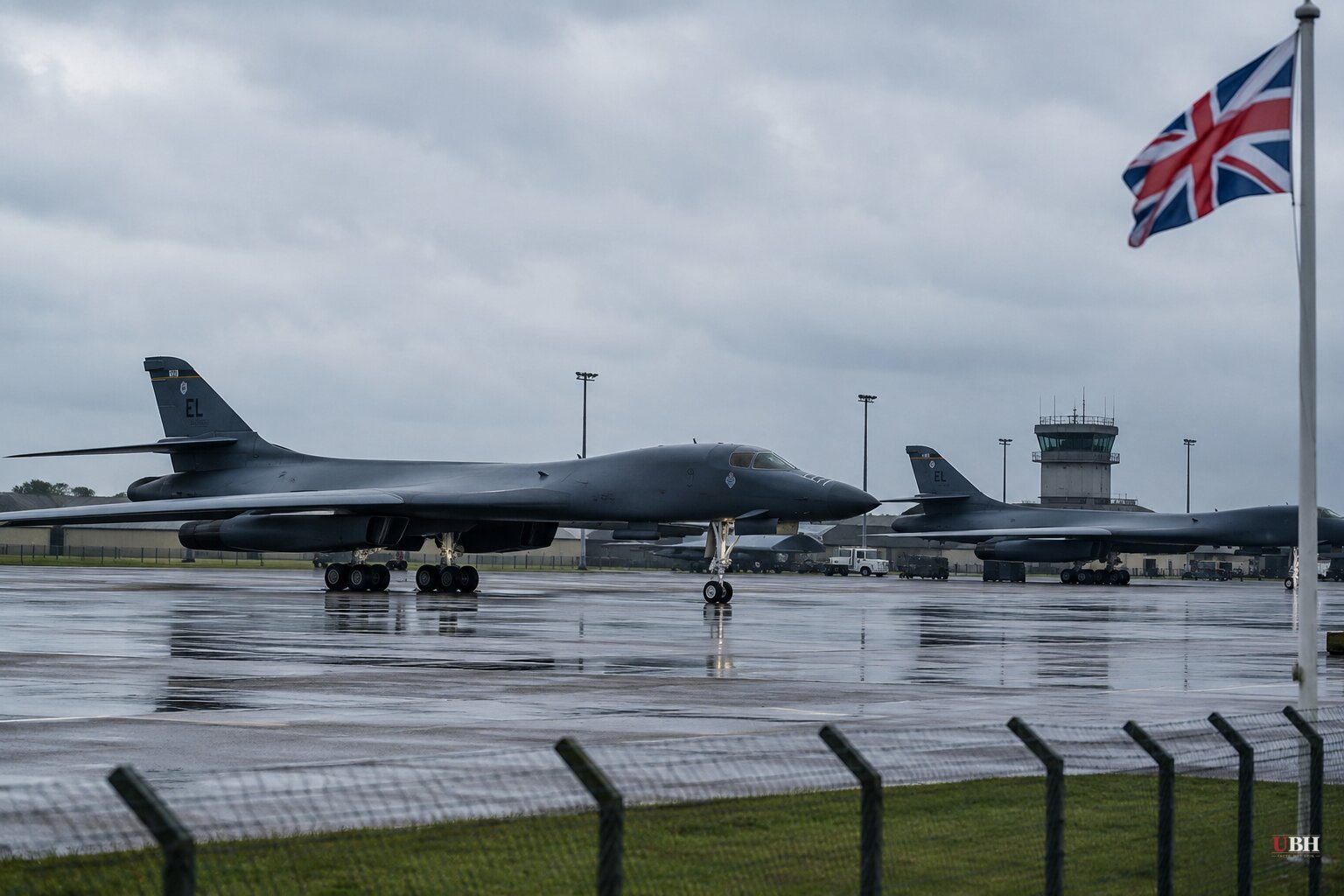
Since the USS Theodore Roosevelt and 2,000 Marines started heading toward the Middle East on October 1, the Iran standoff has moved on two fronts: a scare in Britain and a batch of oil data showing the U.S. blockade isn't crushing the broader regional oil trade the way Washington hoped.
Bombers Out of England
The Pentagon confirmed it withdrew all bomber planes from a UK airbase, according to Korea Times World. Fortune reported the Air Force removed its bombers from the British base and redeployed them to the United States after officials said they foiled a planned terror attack linked to Iran. The War Zone described it as a "hasty departure" by B-1B bombers.
The move follows the release on bail of a dual UK-Iranian national suspected in a plot against a U.S.-run military base, according to Global News Canada. No charges or formal findings have been disclosed publicly establishing the full scope of that plot, and British authorities have not released additional detail beyond the bail decision. The New York Times framed the UK base as an "ambitious target" for what it called gig-economy style warfare, meaning loosely organized plots rather than a state-directed strike.
Oil Flows Bounce Back, But Through a Different System
Middle East crude exports reached about 17.5 million barrels per day, or 98% of prewar levels, according to JPMorgan. Goldman Sachs put Persian Gulf producer exports even higher, at 19 million barrels per day, while the Epoch Times, citing the same bank, reported a separate Goldman estimate of 23.3 million barrels per day for overall Persian Gulf exports, roughly matching 2025 averages. The two Goldman figures measure different things: producer exports versus total Gulf exports. The gap is wide enough that both should be treated as directional estimates rather than precise counts.
Kpler, a marine tracking firm, said Gulf crude exports excluding Iran hit at least 16.5 million barrels per day in September. Kpler also found the export system itself has changed. About 40% of crude now leaves the Gulf without crossing the Strait of Hormuz at all, up from 17% before the war, as Saudi Arabia and the UAE lean harder on pipelines. Of the oil that did cross Hormuz in August, more than 70% changed tankers offshore, a process analysts call the "Hormuz Shuttle." Alexander Stahel, founder of Burggraben Holding, said on X that Iran "is unable to stop the Hormuz Shuttle" and has effectively "lost control" of the strait.
Saudi Arabia's exports climbed to about 5.2 million barrels per day, up from 2.9 million in August, and Iraq hit roughly 2.5 million barrels per day, up from near zero in April and May, according to Kpler data cited by the Epoch Times. Saudi Arabia is expanding pipeline capacity to the Red Sea toward 7 million barrels per day, and the UAE finished a second pipeline to the Port of Fujairah, with regional pipeline capacity projected to exceed 14 million barrels per day by the end of 2028.
Still a War Zone
None of this means the Gulf is calm. Attacks on commercial ships have risen in recent days, according to Fortune, and the Houthis claimed a major attack on a Saudi oil refinery, according to The Independent. The Independent also reported Tehran is warning it won't reopen Hormuz to normal traffic until unspecified conditions are met. In response, Yemen's government launched an offensive aimed at seizing all territory from the Iran-backed Houthis, according to Investing.com and Defense News.
Inside Iran, the country's top security official acknowledged a dire economic crisis, according to The New York Times, a rare admission from a regime Trump administration officials have repeatedly said is on the brink.
Trump's Claims
Speaking at a Peterbilt factory in Denton, Texas, Trump said "for the most part" Iran's leadership "is gone" and that the U.S. is "trying to be nice" to whoever remains in charge while it figures out who to negotiate with, according to Fox News. He predicted the war would end "right after the election, but maybe before," and claimed Iran's navy no longer exists, saying "all 159 ships are lying beautifully at the bottom of the sea." Those casualty figures have not been independently verified by any source reviewed here, and Fox News did not report an outside confirmation of the number.
Separately, the Justice Department charged Ashton Hamed Ellaboudy, a 51-year-old Department of Energy employee from Richland, Washington, with attempting to provide material support to the Houthis. Prosecutors allege Ellaboudy bought precursor chemicals and drone parts, helped modify solar generators and communications equipment for an undercover FBI source posing as a Houthi representative, and traveled to Yemen in 2025 using an official passport from his prior work with the Army Corps of Engineers. He faces up to 20 years in prison if convicted, and the allegations remain unproven pending trial.
The Escalation Risk Nobody's Ignoring
Esfandyar Batmanghelidj, founder and CEO of the Bourse & Bazaar Foundation, argued Iran's leverage over the region's energy trade isn't limited to Hormuz traffic counts. He said Iran retains the ability to destroy oil infrastructure, including drilling and refining capacity, and warned Tehran could escalate further if "Trump isn't feeling enough pain to take the diplomatic off-ramps being put in front of him," according to Fortune. A government facing collapsing currency, admitted economic crisis, and a naval blockade has little to lose by hitting infrastructure it can no longer profit from exporting.
Trump has already rejected one Iranian offer, a seven-day ceasefire that would have fully reopened the strait in exchange for lifting the U.S. blockade and unfreezing Iranian assets. Sources told the Wall Street Journal, as reported by Fortune, that Trump plans to resume bombing Iran after the midterms rather than return to the table. Whether the bomber withdrawal from the UK reflects a genuine security threat at home or simply a redeployment ahead of that next phase is a question the Pentagon has not yet answered publicly.
Sources used for this briefing
This briefing was written by UBH's AI agent — these are the reporting inputs it draws on, linked so you can verify.


