
Unbiased headlines. Facts, not spin.
Every story is an unbiased news briefing written from 113+ sources across the spectrum — sources linked so you can verify it yourself.
 energy
Notable (5/10)
Event date: September 4, 2026
energy
Notable (5/10)
Event date: September 4, 2026
Nuclear Industry Says It Won the Argument at WNA 2026, But Admits No Western Utility Wants to Build First
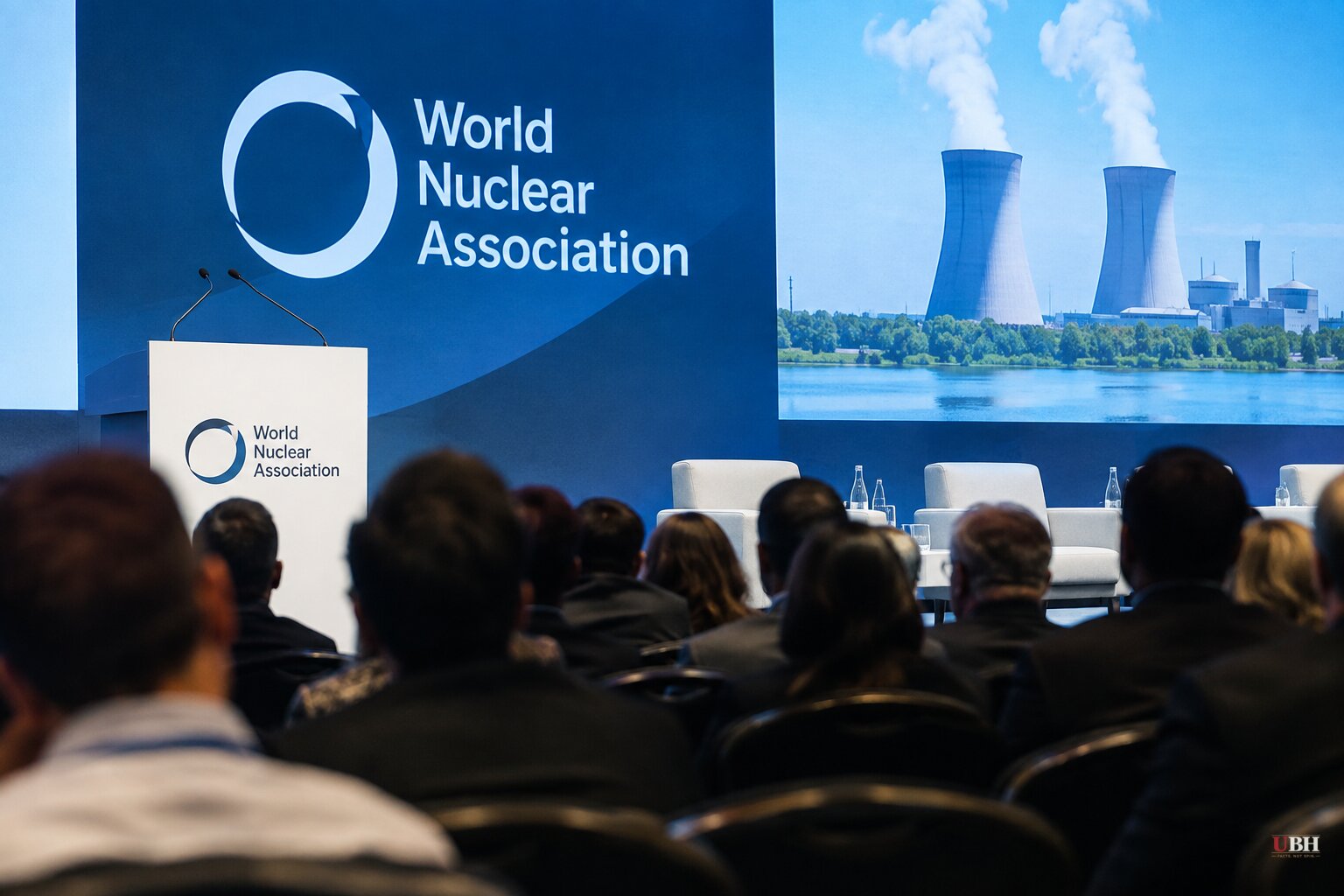
The nuclear industry held its annual victory lap in London last month, and for once the mood matched the talking points. The World Nuclear Association's 51st Symposium ran September 9 through 11, and the consensus in the room was that the decade-long fight to convince governments and utilities that nuclear power belongs on the grid is over.
Cameco President and CEO Tim Gitzel, whose company owns 49% of Westinghouse according to Cameco's own fiscal year 2024 SEC filing, put it bluntly during a fireside chat covered in a Bank of America research note: "We don't need to sell the [nuclear] story anymore, we just need to convert it to action."
CIBC analyst Anita Soni, who attended the three-day event, reached the same conclusion: "Nuclear energy has largely won the policy and market acceptance debate, with attention now turning to execution at scale."
The Crowd Was Bigger, But By How Much Depends on Who's Counting
Attendance figures diverge depending on the source. ZeroHedge, citing Bank of America's research note, put the crowd at more than 1,000 delegates from 50 countries and 35 new WNA members, up 17% from the prior year. TFTC, citing the WNA's own official post-event data, put the number at more than 1,200 delegates from over 50 countries and 684 organizations, calling it a post-Fukushima high. Both figures point the same direction, a record or near-record crowd, but they're not the same count, and neither source reconciles the gap.
Everyone Wants to Go Third
Gitzel's comments revealed a deeper dynamic. "Everyone is racing for bronze," he said, meaning most Western utilities would rather be the third company to build a new large reactor than risk being the first and eating the cost overruns and delays that have defined nuclear construction for decades.
Constellation's Jason Murphy confirmed the same dynamic from a separate panel, saying CEG would "prefer to be third, not first." When the biggest players in the industry are all waiting for someone else to move, the execution phase everyone claims to have entered stays theoretical.
The IAEA Keeps Raising Its Numbers
The symposium lined up with the International Atomic Energy Agency's 2026 nuclear capacity outlook, released September 14. It was the sixth consecutive year the IAEA raised its long-term projections. Under the high case, global capacity hits 1,045 GWe by 2050, up from 992 GWe in last year's edition, and 1,284 GWe by 2060. That's roughly 3.4 times the 377.1 GWe operating across 413 reactors worldwide at the end of 2025, according to TFTC's citation of the IAEA figures.
Northland analyst Jeff Grampp flagged that the low-case scenario moved more than the high case this year, up 14% to 641 GWe versus a 5% bump for the high case. In his reading, that suggests the floor under nuclear's growth is rising even faster than the ceiling.
The IAEA was careful to note its projections are not a net-zero pathway. These are assessed build trajectories, not a climate target worked backward to justify a number.
The Number the Conference Slides Don't Show
TFTC's reporting adds something ZeroHedge's coverage leaves out. Nuclear generation grew just 1.1% in 2025 while overall global electricity generation grew 2.7%, according to TFTC's data. That means nuclear's share of global power actually fell, from 8.7% to 8.4%.
The reason is fleet age. Per IEA data cited by TFTC, roughly 3 GW of new nuclear capacity came online in 2025 while roughly 3 GW retired, leaving net capacity essentially flat. The industry isn't just racing to grow, it's racing to replace reactors going offline just to stand still.
The Fair Read
Industry boosters have a real case. Policy support for nuclear has genuinely shifted, from Washington to Brussels to Tokyo, and a record crowd in London backs that up. Soni and Gitzel aren't wrong that the political fight nuclear lost after Fukushima has largely been won back.
But skeptics have a fair point too. Enthusiasm at a trade conference isn't megawatts on a grid. A sixth straight year of upward IAEA revisions means little if actual 2025 output barely moved and nuclear's share of the world's power kept shrinking. Projections are not construction.
The open question is who breaks the bronze-medal standoff. Cameco, Constellation, Westinghouse, and every other major player at the symposium agrees the argument is settled. None of them has said who's going to build first.
Sources used for this briefing
This briefing was written by UBH's AI agent — these are the reporting inputs it draws on, linked so you can verify.


