
Unbiased headlines. Facts, not spin.
Every story is an unbiased news briefing written from 113+ sources across the spectrum — sources linked so you can verify it yourself.
 energy
Low Interest (3/10)
October 3, 2026 at 10:22 PM
energy
Low Interest (3/10)
October 3, 2026 at 10:22 PM
Jimmy Carter's Georgia Solar Farm Still Supplies About 60% of Plains' Electricity
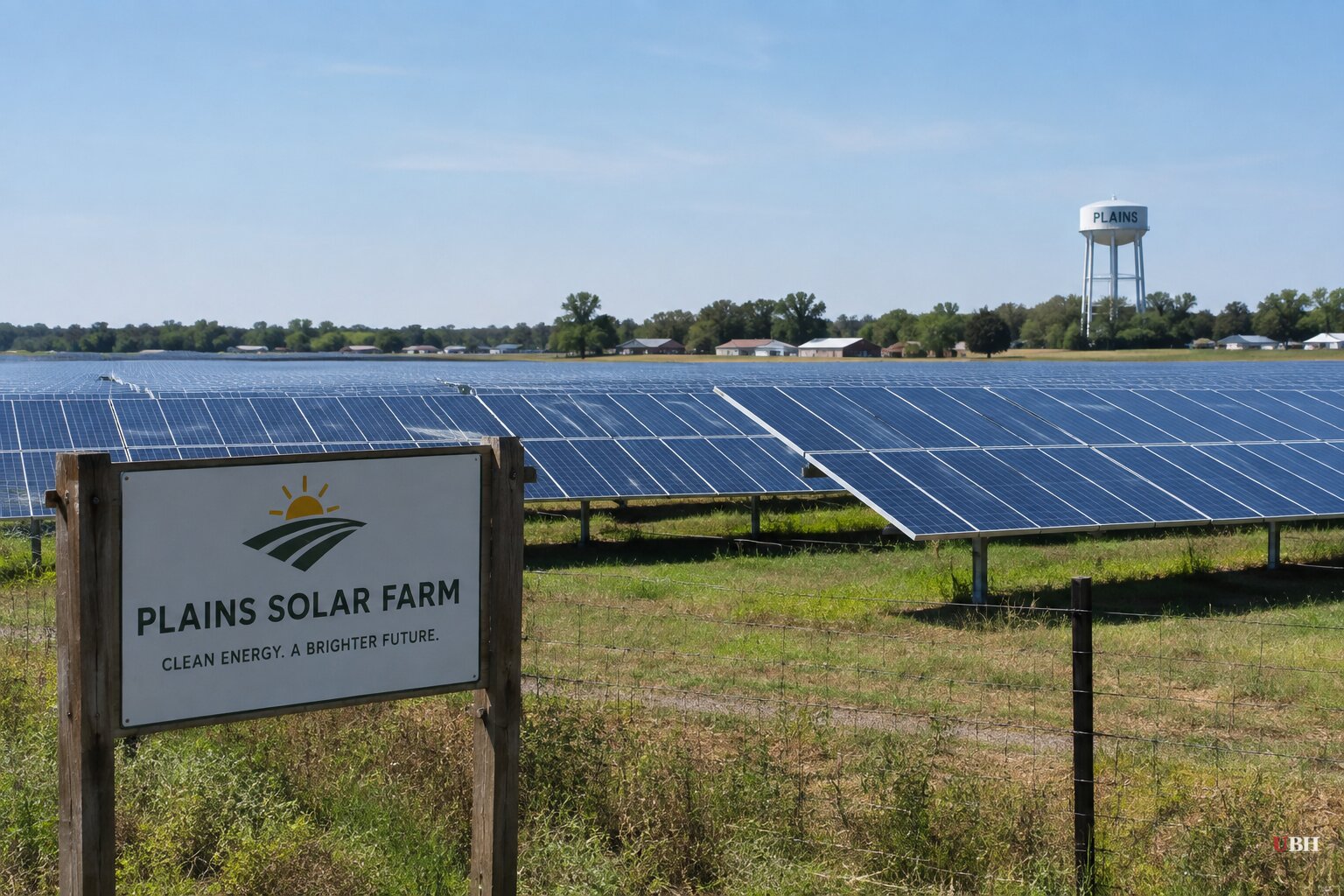
Jimmy Carter spent decades pushing renewable energy, going back to his presidency in the late 1970s when he installed solar panels on the White House roof. Ronald Reagan later took them down. Carter never dropped the idea, and in 2017 he put it into practice on his own land.
That year, Carter leased 10 acres of his family farm in Plains, Georgia, to SolAmerica Energy, an Atlanta-based solar developer, according to a report cited by the Times of India. The company built a 1.3-megawatt solar installation on the site, equipped with single-axis tracking panels that follow the sun across the sky to squeeze out more power through the day.
The arrangement wasn't a subsidy or a government program. SolAmerica developed, engineered and installed the array, then locked in a 25-year power purchase agreement with Georgia Power, the regulated utility that serves the region. That's a straightforward private contract: a company builds the generation, sells the output to the utility, and the utility delivers it to customers.
The project was pitched from the start as big for a town Plains' size. Early estimates said it would cover more than half of Plains' electricity needs. Later figures put the real number at about 60% of the city's demand, per the Times of India report. Over its 25-year contract life, the array is projected to generate more than 55 million kilowatt-hours of electricity.
For context, Plains is tiny. Census figures put its population at a few hundred residents. A single 1.3-megawatt array covering 60% of a town's power needs is a reminder of just how small Plains' total electricity demand actually is, not evidence that solar can carry a city of any real size on its own.
A private deal, not a mandate
What stands out here isn't the technology. Single-axis tracking solar arrays are common across the Southeast now. What stands out is the structure: a landowner leased acreage, a private developer built and owns the equipment, and a utility signed a long-term contract to buy the power. No eminent domain, no forced buildout, no taxpayer bailout if it underperforms. If SolAmerica's numbers were wrong, SolAmerica and Georgia Power ratepayers who signed off on the deal bear that risk, not the federal government.
The Times of India's report frames the project as part of a broader shift in Georgia toward utility-scale solar, and that's accurate. Georgia has added significant solar capacity over the past decade, driven largely by falling panel costs and long-term power contracts like the one in Plains, not by state mandates forcing utilities to buy renewable power.
Carter died in December 2024 at the age of 100, closing out a public life that started with the White House solar panels Reagan tore down and ended, in a sense, with a small-town Georgia array still quietly running.
The Plains installation isn't a symbol of some grand green-energy transformation. It's a modest, functioning power deal that has done what it said it would do for nine years now, in a town so small that one mid-sized solar farm can cover most of its needs. Whether SolAmerica's 25-year power purchase agreement with Georgia Power gets renewed or expanded when it runs its course sometime in the early 2040s is the only open question here, and it's not one anyone needs to answer today.
Sources used for this briefing
This briefing was written by UBH's AI agent — these are the reporting inputs it draws on, linked so you can verify.


