
Unbiased headlines. Facts, not spin.
Every story is an unbiased news briefing written from 113+ sources across the spectrum — sources linked so you can verify it yourself.
 energy
Notable (6/10)
October 3, 2026 at 02:50 PM
energy
Notable (6/10)
October 3, 2026 at 02:50 PM
Trump Administration Preps $4 Billion Loan for Vistra to Upgrade Three Nuclear Plants
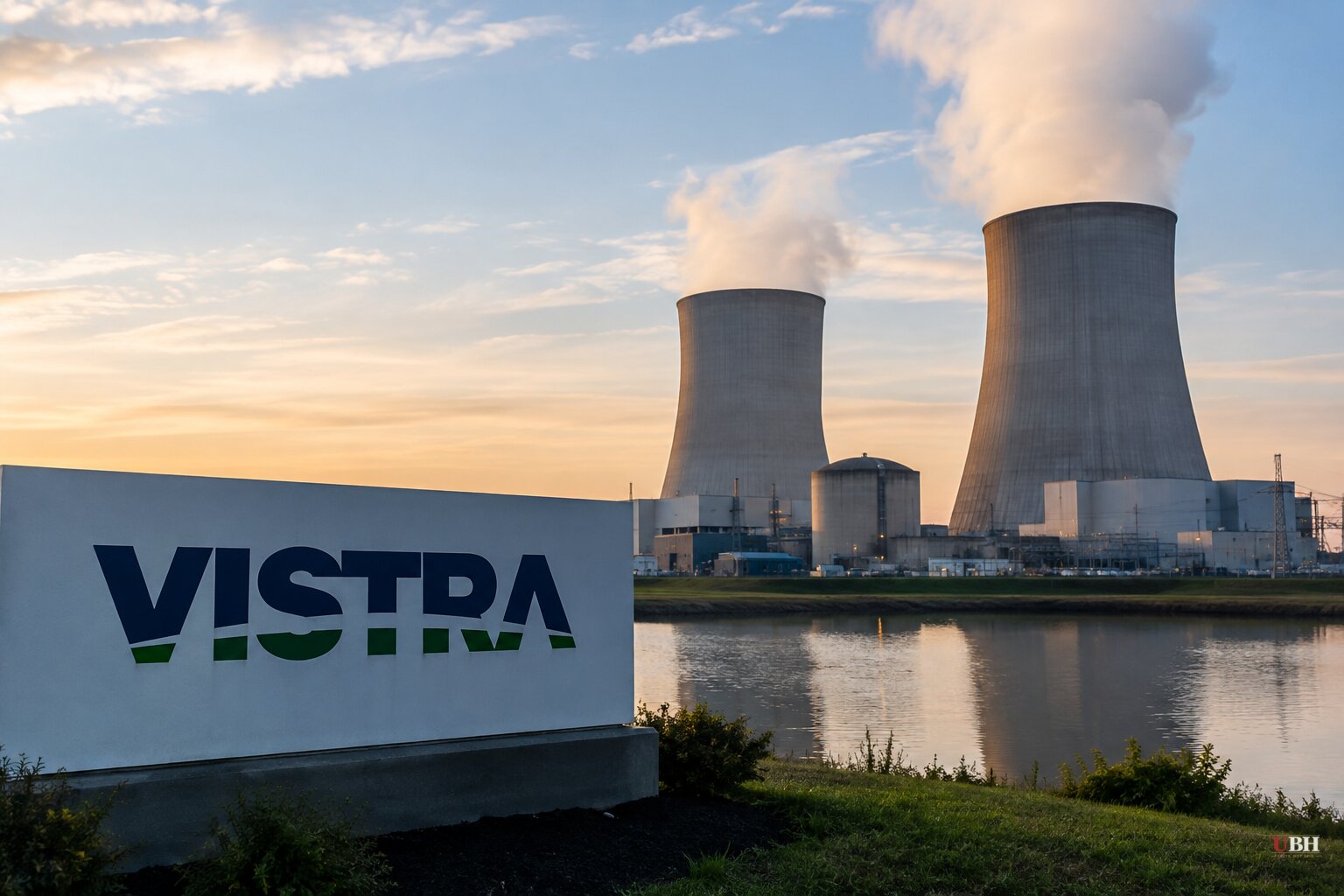
The Trump administration is preparing a roughly $4 billion federal loan package for Vistra Corp. to upgrade three of its nuclear plants, according to people familiar with the matter cited by Bloomberg. US Energy Secretary Chris Wright is expected to make the announcement as soon as Monday, October 5, during a planned visit to Vistra's Perry nuclear complex northeast of Cleveland, Bloomberg reported.
The money would target Vistra's two Ohio plants, Perry and Davis-Besse, plus the Beaver Valley facility in Pennsylvania, according to Bloomberg and Energy Connects. Perry runs a single reactor at about 1.3 gigawatts. Davis-Besse, east of Toledo, is one unit at 900 megawatts. Beaver Valley, northwest of Pittsburgh, has two units totaling roughly 1.9 gigawatts.
Neither the Energy Department nor Vistra had responded to requests for comment as of Friday, October 2, according to Bloomberg and Energy Connects. The exact size of the planned capacity expansion at each site has not been disclosed.
Market reaction was mixed, not a rally
Vistra shares swung around on the Friday report. The stock fell as much as 3.6% during the session before paring losses, closing down 0.9% at $138.56 by 3:48 p.m., according to Energy Connects and Briefs. MarketBeat described shares recovering from session lows on the loan headlines, but the stock remains below both its 50-day and 200-day moving averages and is down substantially over the past year, per MarketBeat's data. Vistra's most recent quarterly results also missed analysts' revenue and earnings estimates, MarketBeat reported.
The stock stopped falling when traders priced in the possibility of cheap federal financing. Confirmation of the loan, and whether it actually moves the needle on output, will be the key test.
Why nuclear, why now
Electricity demand is rising fast as data centers, especially those built for AI, need round-the-clock power. Vistra supplies the PJM Interconnection, the nation's largest grid, which stretches from Illinois to Washington, D.C., and serves about 67 million people, according to Bloomberg. PJM is already struggling to keep up with data-center load growth.
President Trump has set a goal of quadrupling US nuclear capacity by 2050. Building new large reactors is slow and expensive: only three have been completed in the US this century, and none are currently under construction, Energy Connects reported. Upgrading existing plants is one of the few ways to add meaningful capacity on a shorter timeline, which is the administration's stated logic for backing Vistra's upgrades rather than waiting on new builds.
A much bigger bet on federal land in Utah
The Vistra loan is part of a broader administration push on nuclear power that extends well beyond one company's balance sheet. NPR reported that Valar Atomics, a startup whose founder has said he wants to "make nuclear great again," is seeking to build what it calls "Project Beehive" on more than 9,000 acres of Bureau of Land Management land near Price, Utah, plus about 650 acres of state land, according to state records reviewed by NPR.
The plan calls for roughly 456 small reactors generating a combined 9.6 gigawatts, alongside fuel production and waste storage facilities, per documents NPR reviewed. For context, the entire state of Utah currently produces only about 4 gigawatts of electricity on average, with peak summer capacity around 10 gigawatts, NPR reported. Nonnuclear construction could begin by the end of this year under the company's proposed timeline, with reactors coming online starting in 2028.
The BLM's Utah office confirmed to NPR that it has received Valar's application and is reviewing it for completeness, with the required National Environmental Policy Act process, including public comment, still ahead. Valar told NPR it is committed to public engagement and that no construction will begin before permits and approvals are secured.
Local critics have raised real concerns worth taking seriously. Neal Clark of the Southern Utah Wilderness Alliance told NPR he is alarmed that the project is "pushing this forward on significant acreage of public lands" with state backing. Lexi Tuddenham of the Healthy Environment Alliance of Utah said the opposition cuts across political lines and that her immediate goal is simply making sure the public knows the project exists before permitting decisions get made.
These are fair questions about scale and process on land the public owns, not reflexive NIMBYism. Nine thousand acres and 456 reactors is a massive footprint for a project still in its application-review stage, and the NEPA process NPR describes is the actual mechanism for airing those concerns, not a formality to be waved through.
What happens next is concrete and dated. Wright's announcement on the Vistra loan is expected as soon as Monday, October 5. The BLM has not yet completed its completeness review of Valar's Utah application, and the public comment period required under NEPA has not begun. Both processes, one financial and one environmental, will determine whether Trump's nuclear quadrupling target is a serious build-out or a headline that outruns the permitting.
Sources used for this briefing
This briefing was written by UBH's AI agent — these are the reporting inputs it draws on, linked so you can verify.


