
Unbiased headlines. Facts, not spin.
Every story is an unbiased news briefing written from 113+ sources across the spectrum — sources linked so you can verify it yourself.
 energy
Major Story (7/10)
Event date: September 3, 2026
energy
Major Story (7/10)
Event date: September 3, 2026
Tajikistan Confirms Iranian Oil Imports Since August as Sanctioned Iranian Airlines Keep Landing in NATO Member Turkey
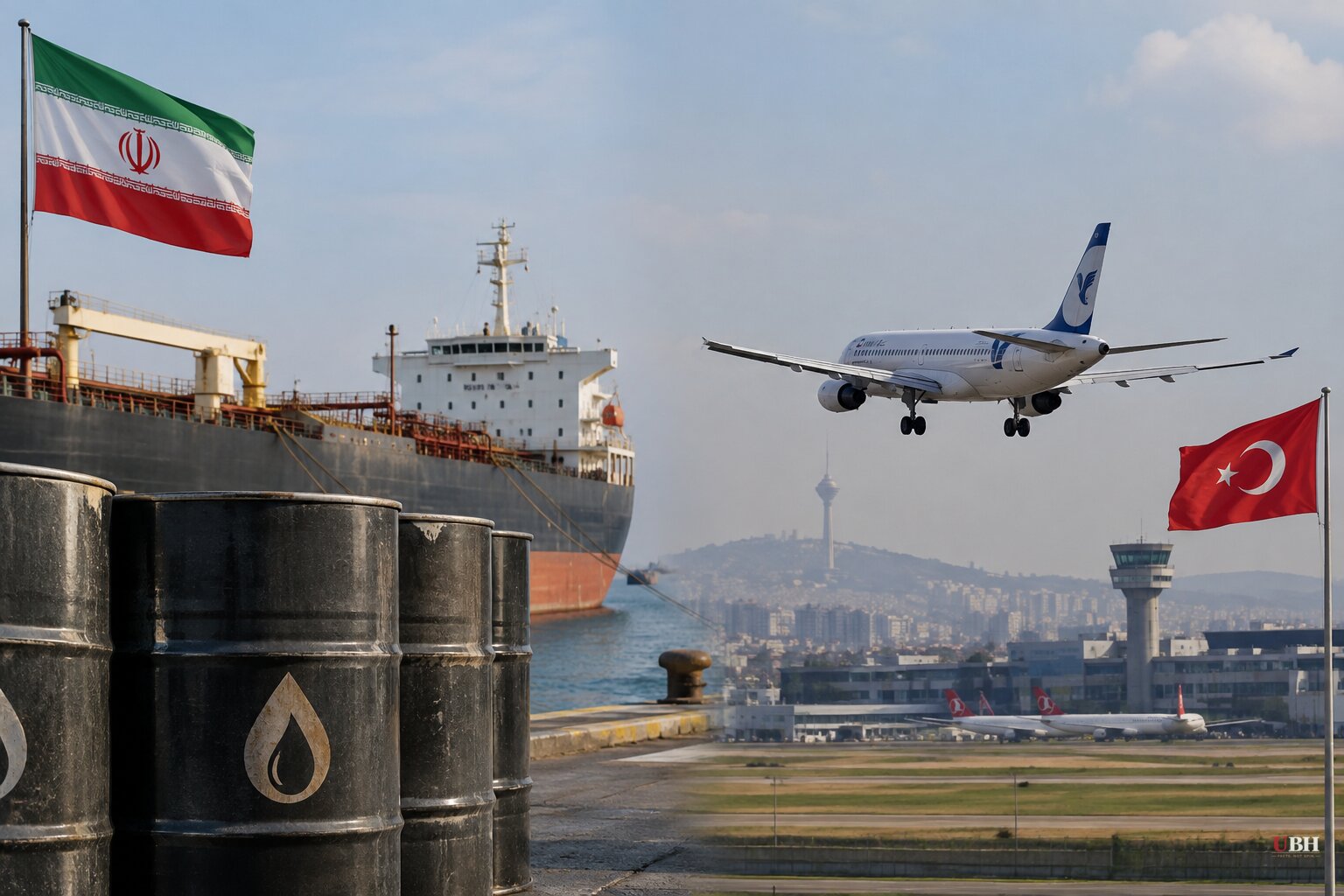
Since Iranian crude loadings hit zero in September, Tehran has found at least one new customer: landlocked Tajikistan, which says it has been receiving Iranian oil and petroleum products since late August. The gap between zero exports on paper and actual barrels moving shows how sanctions leakage and sanctions enforcement are two different problems.
Tajikistan's Energy and Water Resources Ministry told the Asia-Plus news agency the deliveries followed talks with Tehran on expanding oil and gas cooperation. The ministry hasn't disclosed volume, price, or transport route. Dushanbe has asked Iran to supply up to 2.55 million tons of crude and refined products annually, but that's a requested figure, not what's actually arriving.
The motive is straightforward. Russia supplied more than 91 percent of Tajikistan's petroleum-product imports in the first half of 2026, according to figures cited by RFE/RL and OilPrice.com, and Ukrainian drone strikes on Russian refineries have squeezed that supply. Tajik political analyst Parviz Mullojonov said the search for Iranian oil is driven by Dushanbe's need for alternatives. Edward Lemon, president of the Oxus Society for Central Asian Affairs, said the deal reflects warming ties between Dushanbe and Tehran, two countries that have signed more than 200 agreements since establishing relations in 1992, with bilateral trade hitting $438 million in 2025, up 28 percent.
Treasury spokeswoman Gigi O'Connell told RFE/RL the department won't comment on specific sanctions allegations but warned that Iran's petroleum and petrochemical sectors carry elevated risk for anyone involved. Lemon noted Tajikistan's energy relationship with Iran remains small next to Russia or China, which will likely shape how seriously Washington treats it. Still, he said, "Tajikistan could of course become one of those countries."
A Sanctions Net With Fewer Holes, On Paper
The Tajikistan deal lands as Treasury runs its broadest Iran sanctions push in years. Compliance attorney Michael Volkov, writing for Corporate Compliance Insights, laid out how Operation Economic Outcast, launched in late August, expanded Executive Order 13902 to five new sectors: aviation, digital assets, gold, shipping and technology. Those join financial services, petroleum, petrochemicals, construction, mining, manufacturing and textiles already under the order.
The mechanism requires no US person, no US-origin goods, and no dollar clearing. A foreign company operating entirely outside the United States can be designated solely for knowingly facilitating a transaction in a covered sector. OFAC also suspended five general licenses covering educational activities, personal remittances, conference services, and sports and academic exchanges. Volkov called it the most consequential Iran sanctions development of the year, following the collapse of a June memorandum of understanding between Washington and Tehran that had briefly raised hopes of a deal.
Turkey Is the Gap Treasury Hasn't Closed
That net has a visible hole. Treasury designated all 27 remaining active Iranian airlines on September 8 under EO 13902, and Treasury Secretary Scott Bessent set a September 23 wind-down deadline, warning that after that date Iranian airlines would be "shut down around the world," according to the Foundation for Defense of Democracies.
FDD's September 28 report, authored by researchers Ahmad Sharawi and Sinan Ciddi, found the pressure campaign pushed Iranian carriers out of Iraq, the UAE and Oman. But 83 flights operated by sanctioned Iranian airlines landed in Turkey in the five days after the deadline, according to flight data the group analyzed. Fox News reported the finding puts a spotlight on whether Washington will enforce sanctions against companies servicing those carriers inside a NATO member state.
The timing is awkward. Trump has publicly pushed to restore Turkey's access to the F-35 program, which Ankara lost in 2020 after buying Russia's S-400 air-defense system. During a July visit to Turkey, Trump said his administration would lift the 2020 sanctions and was weighing an F-35 sale, though Fox News noted the State Department says Erdoğan hasn't met the legal requirements Congress has tied to the S-400 purchase. Erdoğan said on September 24 he expects Washington to take "concrete steps" toward Turkey's reinstatement.
No source establishes any formal link between the F-35 negotiations and the continued Iranian airline traffic into Turkish airports. FDD's report documents the flights and the enforcement gap. It does not claim the administration is deliberately overlooking them to smooth the jet deal. Turkey's position as a NATO ally with its own legitimate air-defense and economic interests is the straightforward explanation Ankara and Washington's own diplomatic posture would offer for why sanctions enforcement looks different there than in Iraq or Oman.
What remains unresolved is whether Treasury will designate any Turkish entities providing fuel, ground handling, or landing services to the sanctioned carriers. That decision, not the F-35 talks, is the next concrete marker to watch.
Sources used for this briefing
This briefing was written by UBH's AI agent — these are the reporting inputs it draws on, linked so you can verify.


