
Unbiased headlines. Facts, not spin.
Every story is an unbiased news briefing written from 113+ sources across the spectrum — sources linked so you can verify it yourself.
 energy
Major Story (8/10)
Event date: October 1, 2026
energy
Major Story (8/10)
Event date: October 1, 2026
Iranian Oil Loadings Hit Zero in September as Gulf Rivals Push Exports Past Pre-War Levels
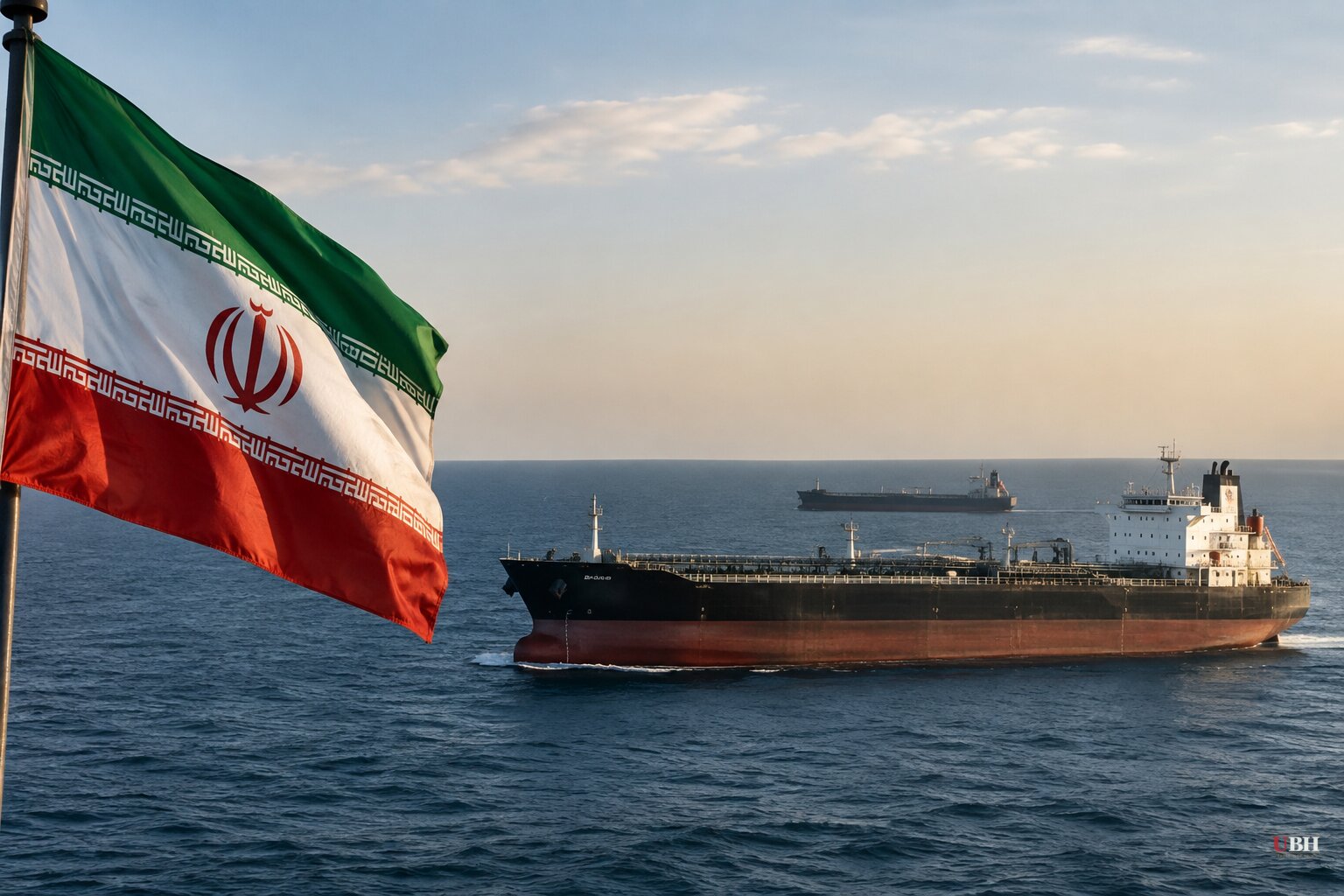
Since the US naval blockade of Iranian crude took effect April 13, Iran's exports have gone from a wartime lifeline to functionally nothing. Tanker-tracking firms now confirm Iran loaded zero barrels for export in September, the first calendar month of total shutout since the US-Israel war on Iran began in late February.
Kpler, the commodities intelligence firm, told Iran International that Iran hasn't loaded a new cargo at its terminals since mid-August, and no Iranian cargo has crossed the blockade line toward Asia since mid-July. TankerTrackers data backs that up, showing Iran's loading terminals sitting idle through all of September.
Homayoun Falakshahi, senior analyst at Kpler, said the halt has forced Iran to cut crude production down to roughly what the country needs for itself, about 1.8 million barrels a day. That's close to half of Iran's pre-war output.
The numbers tell the collapse story clearly. Loadings at Kharg Island, Iran's main export terminal, ran 1.8 million barrels a day in March, according to OilPrice.com. A 60-day memorandum starting June 17 let Iranian cargoes briefly pass, pushing loadings back up to 740,000 b/d in June and 890,000 b/d in July. When that window closed in August, loadings slumped to 250,000 b/d, then flatlined at zero in September.
China, Iran's only remaining major crude customer, had been drawing down Iran's floating storage to keep barrels flowing even while loadings stalled. That cushion is gone too. China's Iranian crude arrivals fell from 980,000 b/d in August to 475,000 b/d in September, and stopped entirely on September 26, according to OilPrice.com. Falakshahi said most of the roughly 15 million barrels still floating in Asian waters have already been sold, meaning there's no fresh Iranian oil left to deliver.
While Iran's exports flatlined, everyone else in the Gulf ramped up. Kpler data cited by Iran International shows regional Arab crude exports averaged 16.5 million barrels a day in September and spiked to 19.5 million b/d in the final week of the month, actually surpassing the roughly 17 million b/d pre-war baseline. CNN reported total Middle East crude flows, through Hormuz and around it, are back to 98% of pre-war levels according to JPMorgan, achieved through military-escorted tanker shuttles and what CNN described as 'dark' transits of the strait.
Matt Smith, director of commodity research at Kpler, told CNN that with volume through Hormuz this strong, 'it is clear Iran is losing its influence over it.' Strait traffic last week averaged 13.1 million barrels a day, CNN reported, about 80% of the 17.1 million b/d pre-war average.
None of this has brought oil prices down. BigGo Finance reported WTI trading near $90 a barrel and Brent settling around $98, even as Middle Eastern supply nears full recovery. JPMorgan says global oil inventories have fallen roughly 2 billion barrels since the war started, and the firm's head of global commodities strategy, Natasha Kaneva, told clients two weeks ago, 'For the first time since the start of the Iran conflict, we don't have a baseline view. We simply don't know how to model this.'
The Epoch Times framed the zero-export milestone differently than the trade press, tying it directly into Trump's midterm campaign messaging on inflation and poverty numbers rather than treating it as a supply-risk story. That's a fair point to note. The administration can accurately claim the blockade achieved its stated goal of choking off Iranian export revenue. The tradeoff that framing leaves out is the one CNN and JPMorgan are flagging: squeezing Iran to zero hasn't lowered prices for American consumers and has left the market running on inventory drawdowns and naval escorts that can't continue indefinitely.
That's the genuine fork in this story. Supporters of the blockade can point to Iran's production cut to domestic-only levels as proof the pressure campaign is working. Critics can point to $90 WTI, a 2-billion-barrel inventory drain, and Tehran's lost oil revenue as exactly the kind of desperation that raises the odds of a Hormuz escalation nobody can currently price in. Kpler's Falakshahi didn't say which way Iran moves next. Neither does anyone else quoted in this story.
Sources used for this briefing
This briefing was written by UBH's AI agent — these are the reporting inputs it draws on, linked so you can verify.


