
Unbiased headlines. Facts, not spin.
Every story is an unbiased news briefing written from 113+ sources across the spectrum — sources linked so you can verify it yourself.
 energy
Major Story (8/10)
Event date: September 29, 2026
energy
Major Story (8/10)
Event date: September 29, 2026
Hormuz LNG Traffic Hits Wartime High in September, Still Roughly 80% Below Normal as Europe's Gas Storage Falls to 15-Year Low
Best Month of the War Is Still a Bad Month
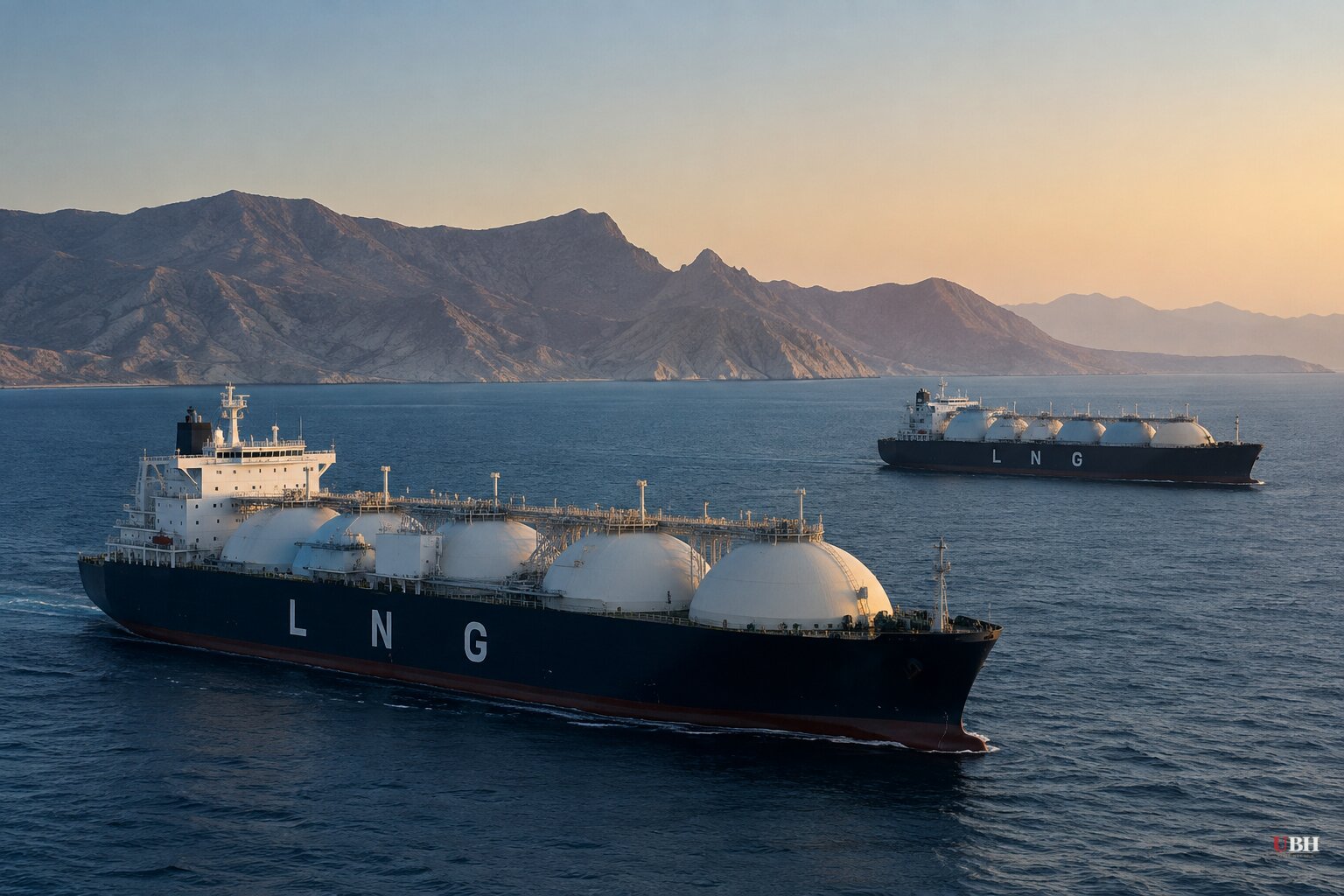
Since the US-Iran war began on February 28, LNG traffic through the Strait of Hormuz has crawled from near zero toward something closer to functional, but it's nowhere close to normal. September produced the highest monthly cargo count of the war, according to analytics firms S&P Global Energy and Kpler, yet even that record still left the waterway running at a fraction of its pre-war pace.
S&P Global's senior principal analyst Eric Yep counted 19 cargoes in September, 13 from Qatar and six from the United Arab Emirates, up from 15 in June. Kpler's independent tracking put the number at 21. Business Today, citing Kpler data via Bloomberg News, reported roughly 17 confirmed exits. The spread between those counts, 17 to 21, is itself a symptom of the war. Most vessels that make it through now do so with their Automatic Identification System transponders switched off, a practice called a dark transit that is technically illegal under the Safety of Life at Sea Convention but increasingly common as ship operators weigh detection risk against Iranian mines, drone strikes, and speedboat patrols.
Whatever the exact count, it is a sliver of what used to cross the strait. Before the war, roughly 86 LNG vessels made the transit every month. September's 17 to 21 cargoes represent somewhere between one-fifth and one-quarter of that baseline. Qatar's exports tell the starker version of the story. ICIS data cited by Business Today shows Qatar exported just 18 LNG cargoes in the first six months of the war, versus 509 in the same period a year earlier.
Where the Gas Is Actually Going
Tracked vessels in September carried Qatari LNG to India, Pakistan, and China rather than Europe. The GasLog Skagen, loaded at Qatar's Ras Laffan terminal, was tracked off Sri Lanka after last appearing inside the Gulf on September 20. Al Ghashamiya delivered a Qatari cargo to India. Shandong Redwood carried LNG to Pakistan. That Asia-first routing matters for Europe, which depends on roughly 80% of its gas coming from outside the EU, according to EU Today.
Crude oil flows have fared better than LNG. CNN reported that oil and petroleum product flows through Hormuz averaged 13.1 million barrels per day last week, about 80% of the 17.1 million barrels that moved daily before the war, according to Kpler. Total Middle Eastern crude flows, through and around the strait, are back to 98% of pre-war levels, according to JPMorgan. Kpler's director of commodity research, Matt Smith, said the volume shows "Iran is losing its influence" over the chokepoint. That recovery has leaned on military-escorted shuttle convoys and a return of Saudi oil that had been diverted to the Red Sea after Houthi fighters attacked a major Saudi pipeline earlier in September.
JPMorgan's head of global commodities strategy, Natasha Kaneva, told clients two weeks ago that her team has stopped trying to model where this goes next. "For the first time since the start of the Iran conflict, we don't have a baseline view," she said, according to CNN. Global oil inventories have fallen by around 2 billion barrels since the war started, per JPMorgan, even as the market has avoided a price spike past its 2008 record.
Europe's Bill and the Diplomatic Freeze
EU Energy Commissioner Dan Jørgensen told an informal meeting of EU energy ministers in Dublin that Europe has "surpassed €100 billion" in additional energy spending this year "without receiving one extra molecule of gas or oil." The EU's oil import bill rose 55.8% in the second quarter compared with a year earlier, even though the physical volume imported grew just 1.2%, according to EU Today.
Germany's Federal Network Agency, led by Klaus Müller, has already conceded the country's 80% pre-winter storage target is out of reach. German storage sat at 57.15% on September 25, about 20 percentage points below last year, against a legal requirement of roughly 70% by November 1. EU-wide storage stood around 70% on September 23, with an 80% target due between October 1 and December 1.
Goldman Sachs Research expects European LNG prices to average €70 per megawatt-hour in the fourth quarter, assuming a gradual improvement in Gulf LNG exports, with a potential drop to €50/MWh if flows ramp faster, or further upside if they don't. Prices have already climbed about 70% since July.
A diplomatic path to faster relief closed, at least for now, on September 26, when President Trump rejected an Iranian proposal to reopen the strait within seven days, according to Reuters and Al Jazeera. No detailed public explanation for the rejection appears in that reporting. Iran's currency, the rial, crossed 2.5 million to the dollar on September 30, a new record low set just 27 days after its previous record, according to the Associated Press, as Secretary of State Marco Rubio said Tehran is heading toward economic "cataclysm."
Iran's Islamic Revolutionary Guard Corps, through spokesperson Hossein Mohebbi, has since published a 25-page letter addressed to American voters ahead of the November 3 midterms, blaming Trump and US support for Israel for the war and the rial's collapse.
The open question heading into winter isn't whether Hormuz traffic improves further. It's whether Europe's storage gap closes before cold weather arrives, and whether the military-escorted oil shuttle that JPMorgan credits with restoring 98% of regional crude flows can keep pace once inventories, now down roughly 2 billion barrels since February, run thinner still.
Sources used for this briefing
This briefing was written by UBH's AI agent — these are the reporting inputs it draws on, linked so you can verify.


