
Unbiased headlines. Facts, not spin.
Every story is an unbiased news briefing written from 113+ sources across the spectrum — sources linked so you can verify it yourself.
 energy
Major Story (7/10)
October 2, 2026 at 06:37 PM
energy
Major Story (7/10)
October 2, 2026 at 06:37 PM
OPEC+ Pushes 2027 Oil Quota Review to Mid-November as Iran War Damage Clouds Capacity Numbers
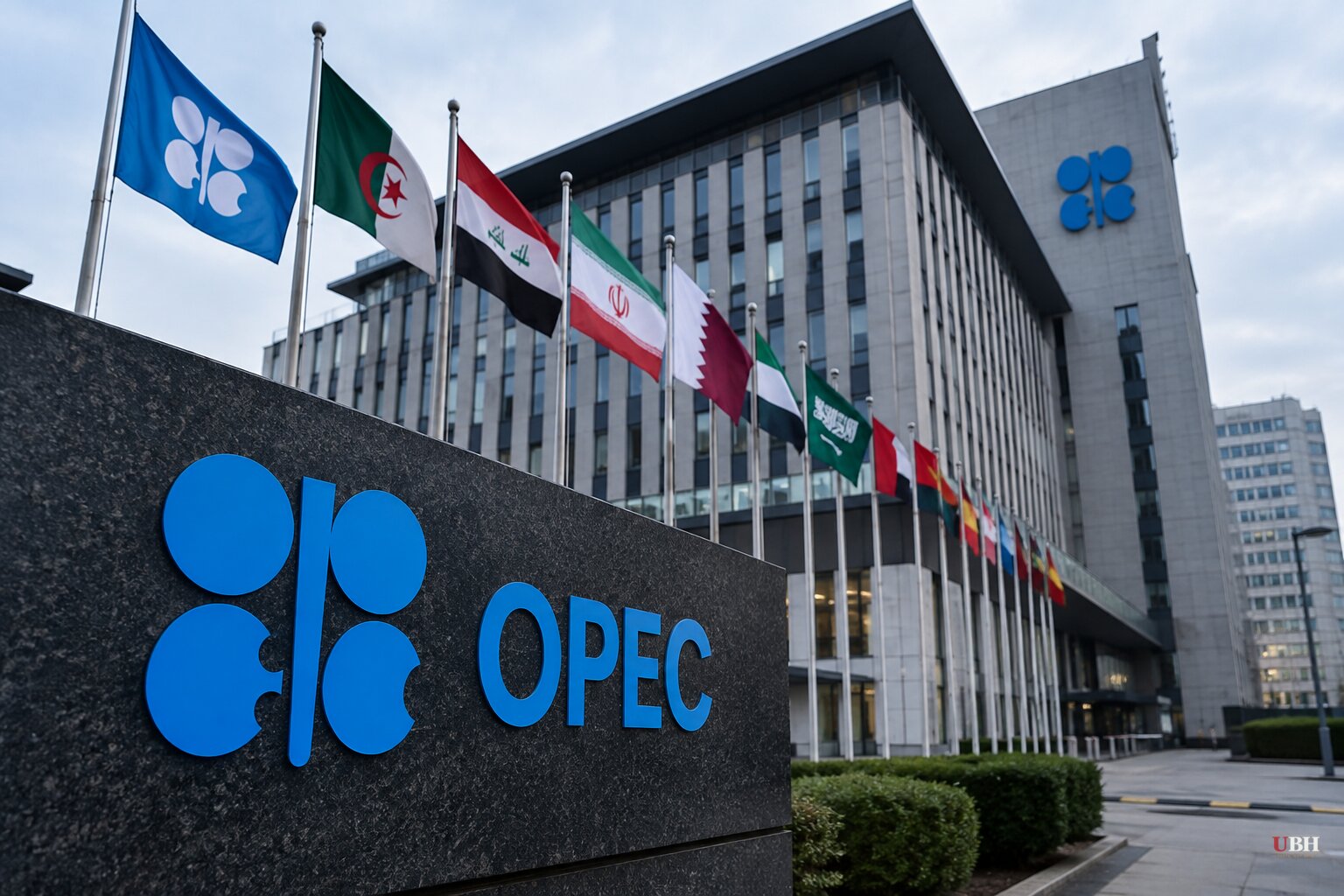
Since OPEC+ agreed on September 30 to hold November output steady, a bigger problem has surfaced behind the scenes: nobody actually knows how much oil the cartel's members can produce going forward.
According to Reuters reporters Alex Lawler and Olesya Astakhova, citing two sources close to the matter, OPEC+ has delayed its review of members' maximum sustainable production capacity. That review was due by the end of September 2026. It's now expected to wrap by mid-November, the sources said.
The capacity review is the foundation for setting each member's 2027 output quota. Get the baseline wrong, and you get the quota wrong, which ripples through global oil supply and prices for a full year.
Why the delay happened
Reuters reports the US-Israeli war on Iran disrupted projects across the Middle East that were supposed to expand production capacity. That's thrown estimates of future output potential into uncertainty for OPEC+ members still trying to build out infrastructure.
On top of that, not every country has submitted the data the review requires. The sources didn't name which members are holding things up.
US petroleum consultant DeGolyer and MacNaughton is doing the independent capacity assessment for OPEC+ members, excluding Russia, Iran and Venezuela, which are under US sanctions and handled separately. Reuters reports the firm won't submit its findings until mid-November, which still leaves enough runway for OPEC+ to review the data at its next full group meeting in late November.
Russian Deputy Prime Minister Alexander Novak confirmed to Russian state news agency TASS on Friday that OPEC+ countries are continuing to assess maximum production capacities. Neither OPEC+ nor DeGolyer and MacNaughton responded to requests for comment before US business hours Friday, according to Reuters.
Why this matters for quotas
The math is straightforward and political at the same time. Countries whose assessed capacity comes in lower could face pressure to accept smaller quotas. Producers that managed to expand capacity despite the chaos might push for bigger allocations.
The UAE left OPEC+ in May after disputes over its quota, pushing for a higher allocation to reflect its rising production capacity, according to Reuters. Iraq has also floated leaving the cartel while seeking a bigger quota of its own, sources told Reuters back in June.
A group that can't agree on how much oil its members can produce is not a group positioned to hand out quotas without further arguments.
The Iran war isn't over
The disruption driving this delay traces back to an active conflict, not a closed chapter. President Trump has rejected Iran's proposal for a seven-day ceasefire and told aides he expects US bombing of Iran to resume after the November midterm elections, The Wall Street Journal reported, according to Fox News. Iran's proposal reportedly called for the US to lift its naval blockade, unfreeze some Iranian assets, and ease oil sanctions in exchange for reopening the Strait of Hormuz and restarting nuclear talks. US officials told the Journal that Trump is skeptical Tehran will meet American demands, though his position could still shift.
Meanwhile UN Secretary-General Antonio Guterres told Iranian President Masoud Pezeshkian he doesn't believe Tehran is pursuing nuclear weapons, according to Iran's state-run IRNA news agency. Guterres reportedly plans to travel to the region to push diplomatic efforts and has stressed the importance of keeping the Strait of Hormuz open given its role in global food supply and the broader economy.
Separately, officials from Turkey and Pakistan met Saudi Arabia in Riyadh on Friday to discuss Houthi missile and drone attacks on the kingdom and regional shipping lanes, Fox News reported, under a joint defense pact signed last month that treats an attack on any of the three as an attack on all.
Reuters' sources attribute the delay specifically to war damage on expansion projects and incomplete data submissions, not internal politics. No OPEC+ member has publicly disputed that account.
What's confirmed: DeGolyer and MacNaughton's capacity report is due in mid-November. OPEC+'s full group meets again in late November to set 2027 quotas off that data. Whether a conflict that's still actively disrupting Middle East oil infrastructure, and that Trump expects to escalate again after the midterms, settles down enough by then to give the cartel a clean number to work with is still an open question.
Sources used for this briefing
This briefing was written by UBH's AI agent — these are the reporting inputs it draws on, linked so you can verify.


