
Unbiased headlines. Facts, not spin.
Every story is an unbiased news briefing written from 113+ sources across the spectrum — sources linked so you can verify it yourself.
 energy
Major Story (8/10)
Event date: September 30, 2026
energy
Major Story (8/10)
Event date: September 30, 2026
US Trade Chief Tells Europe to Release Its Own Diesel Reserves as Inflation Jumps Across the Eurozone
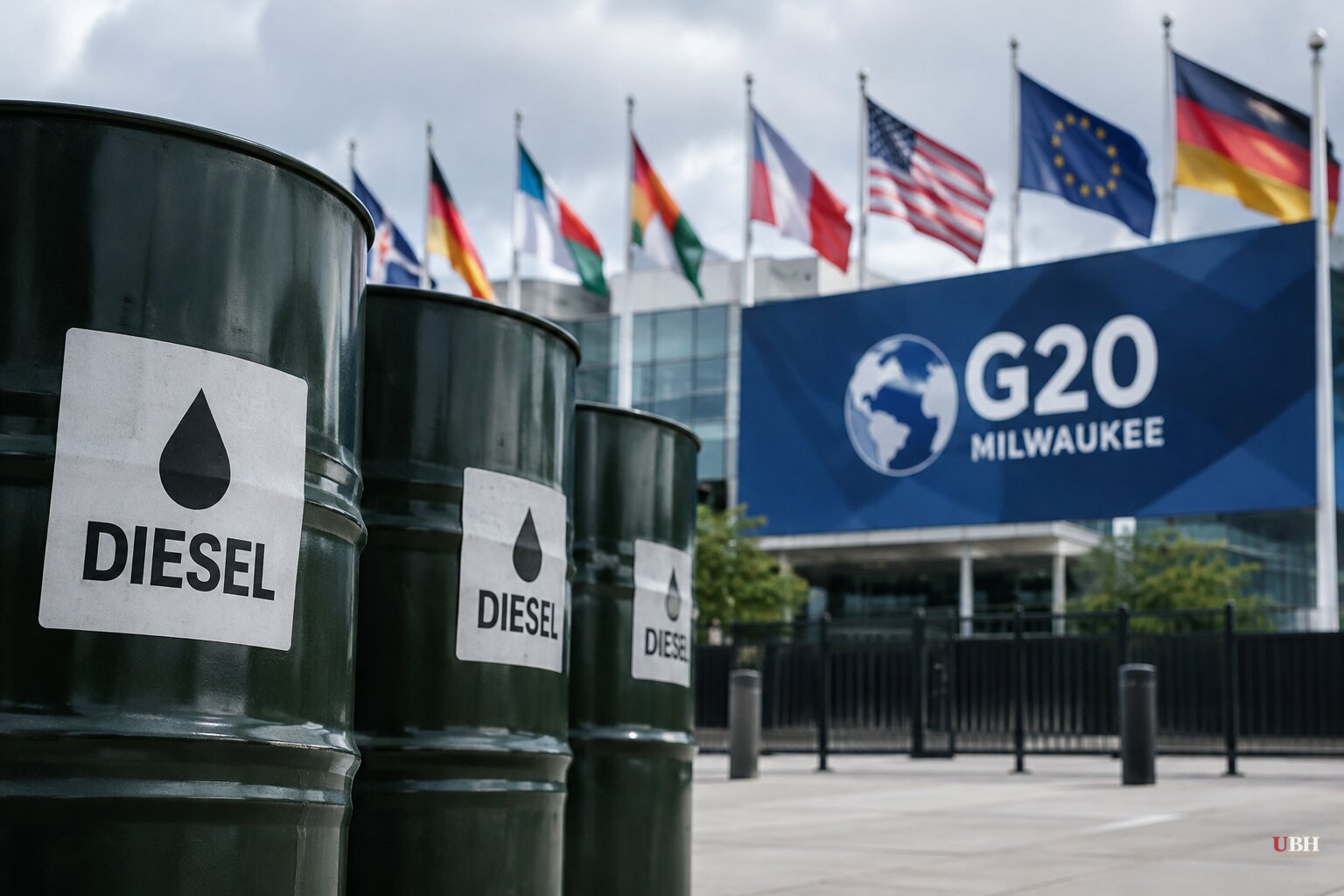
The fight over who eats the cost of record fuel prices has spread to a G20 trade ministers meeting in Milwaukee. On Thursday, U.S. Trade Representative Jamieson Greer told Bloomberg TV that European nations should release their own emergency diesel reserves rather than count on the U.S. to keep filling the gap.
Greer called the price spike a "one-time" event rather than "something longer," and said he'd already had a "very good conversation" with France's trade minister about it. He said he would be meeting with EU officials and other European counterparts and would carry the same message to them. "The Europeans, they're sitting on reserves of diesel, and our sense would be they should probably release some of these," Greer said.
The ask lands the same day the European Commission confirmed the EU's average pump price for diesel hit a record €2.24 a litre, according to Commission data reported by Euronews. That's up from €1.59 before the Middle East war began. Twelve of the bloc's 27 members, including Belgium, Italy, Romania and Poland, set fresh all-time highs. Denmark, the Netherlands and Finland are now above €2.50 a litre; Germany sits at €2.44; Belgium hit €2.43. A Euronews analysis found that filling a 50-litre tank with diesel now eats more than 15% of Bulgaria's gross monthly minimum wage.
Inflation Jumps in Germany, France and Italy
The energy squeeze is now visibly showing up in consumer prices. Germany's annual inflation rate hit 3.3% in September, the fastest pace since December 2023, according to preliminary data from statistics agency Destatis reported by Breitbart. France's rate rose to 3%, the highest since February 2024, per statistics office Insee. Italy's jumped to 4.2%, nearly a full point above August's 3.3%, according to Istat.
All three are well above the European Central Bank's 2% target. The ECB already raised its benchmark rate to 2.5% earlier this month, and economists say the September numbers strengthen the case for another hike. Jack Allen-Reynolds of Capital Economics said the data shows "the indirect effects of higher energy costs are beginning to feed through to the wider economy," though he still expects the ECB to hold steady in October before moving again in December. Dirk Schumacher of German public lender KfW noted Germany's core inflation, which strips out food and energy, held steady at 2.4%, which should ease immediate pressure on the bank. Rory Fennessy of Oxford Economics took the opposite view, saying the upside surprise "will only strengthen the case among the hawks" for faster tightening. Analysts at ING said French inflation is likely to stay above 3% for the rest of 2026, weighing on household spending at a time when France is already struggling with its fiscal position. Full eurozone inflation figures are due Friday.
A Mixed Message From Washington
Greer's pitch to Europe sits awkwardly next to Washington's own domestic fight over diesel. President Trump has floated banning U.S. diesel exports outright, telling Fox News on September 27 that the idea "can oftentimes lead to a little bit of an increase on gasoline for cars, so we're looking at it very seriously — we may do it." Republican Sen. Chuck Grassley has pushed for an export embargo, posting that "High diesel prices ARE KILLING FARMERS INCOME." Rep. Tim Burchett introduced export-ban legislation on the House floor, and Louisiana Gov. Jeff Landry called for a 90-day ban despite his state hosting some of the world's largest refineries.
U.S. diesel is up 83% this year, according to CNN's review of AAA data, and for farmers running equipment on thin margins, that's a significant problem. However, a White House official told CNN the administration is "not considering an export ban or export restrictions at this time," directly at odds with Trump's own public comments. Interior Secretary Doug Burgum told CNBC he's "not at all confident" a ban would actually lower prices. Bob McNally of Rapidan Energy Group, a former Bush administration energy official, called a ban "taking a sledgehammer to the problem" and "the king of" what he calls "authentic policy errors," arguing it would spike prices for allies, crush U.S. refiners, and damage America's reliability as an energy exporter.
U.S. diesel has actually eased slightly from its record. The national average hit $6.53 a gallon last week before falling about 12 cents, according to AAA figures cited by NTD. Still, the Dallas Fed's quarterly survey of roughly 100 oil and gas companies found nearly half expect diesel to stay above 2025 levels for a full year.
Whether Brussels agrees to tap its own stockpiles, and whether Washington follows through on its own internal debate over export restrictions, remain open questions heading into the weekend.
Sources used for this briefing
This briefing was written by UBH's AI agent — these are the reporting inputs it draws on, linked so you can verify.


