
Unbiased headlines. Facts, not spin.
Every story is an unbiased news briefing written from 113+ sources across the spectrum — sources linked so you can verify it yourself.
 energy
Breaking / Critical (9/10)
Event date: September 29, 2026
energy
Breaking / Critical (9/10)
Event date: September 29, 2026
Oil Tops $100 a Barrel as Hormuz Traffic Craters, Trump Unveils $200 Billion Nuclear and Gas Push
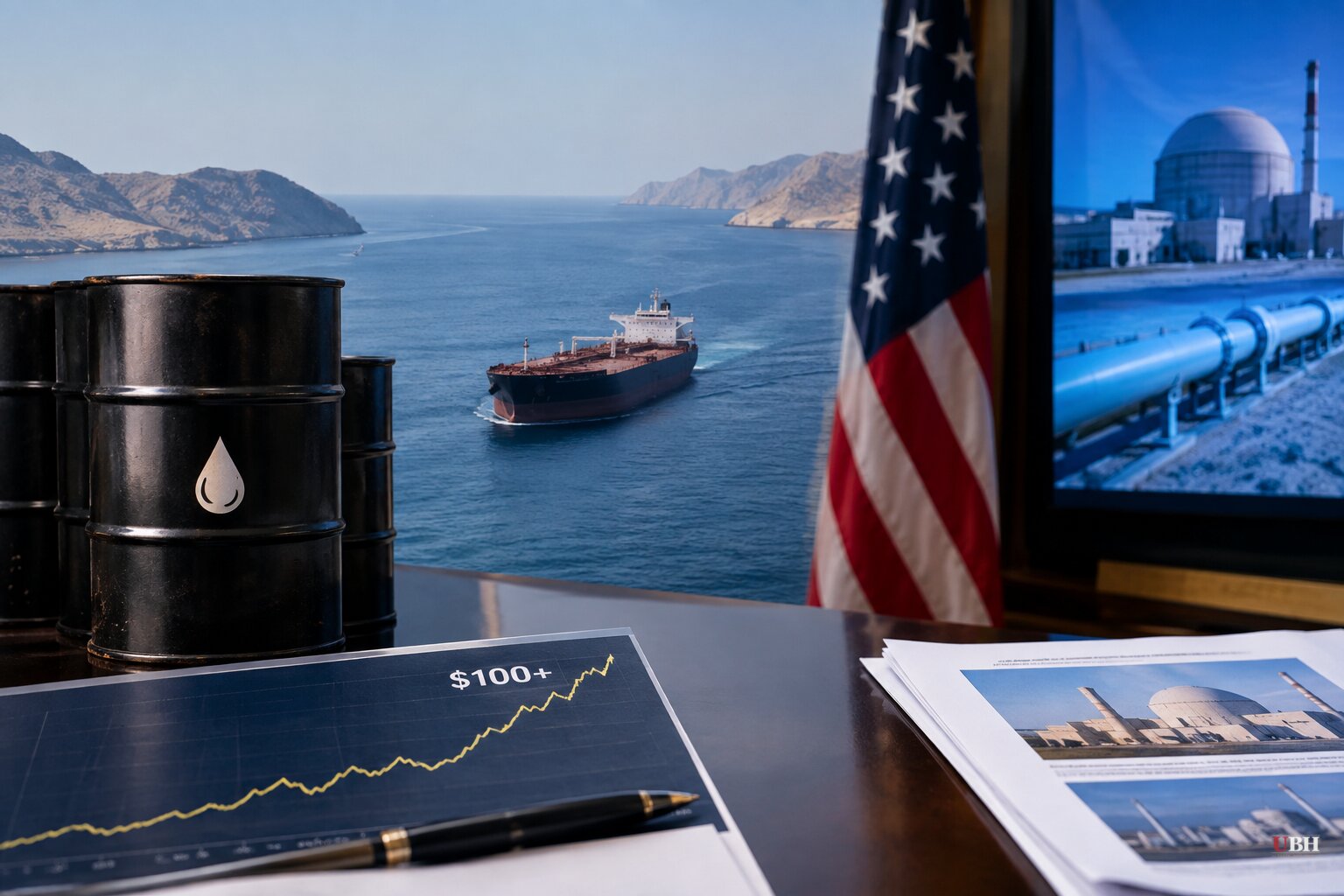
Since the Iran conflict began in February 2026, oil prices have climbed from $65 a barrel to more than $100 a barrel as of mid-September, according to Joshua Busby and Greg Pollock writing for The Conversation, republished by The Washington Post. The reason is not abstract. Traffic through the Strait of Hormuz, the main artery for Middle Eastern oil exports, has fallen to below 15% of prewar levels, per the same analysis.
That is the new, hard number driving every gas-price headline this fall. It is not a Wall Street theory. It is a shipping chokepoint running at a fraction of normal throughput, months into a war that shows no sign of resolving.
The supply-floor warning
A Daily Wire opinion piece this week argues the bigger danger isn't the price of gas, it's whether there's enough gas moving at all. The piece cites "analysts at major financial institutions, including JPMorgan" warning that global energy infrastructure could hit an operational floor, the point where pipelines lose pressure, refineries shut down to protect equipment, and stations simply run dry. No specific JPMorgan report is cited by name in the piece, so treat that warning as a characterization of analyst sentiment rather than a quoted, sourced forecast.
The op-ed's point stands on its own. Oil infrastructure needs a minimum baseline flow to function, the same way a body needs a blood-pressure floor. Whether that floor is actually being approached right now is not established by any named report in this reporting, but the Hormuz traffic numbers from The Conversation make clear the underlying physical disruption is real and ongoing, not hypothetical.
The Daily Wire piece also points to Germany's experience after it shut down its remaining nuclear plants, when the country ran short on firewood, prices doubled, and loggers started GPS-tagging wood to stop theft. That episode is a real illustration of what happens when an industrial economy loses baseload energy capacity, but it happened years before this current Hormuz disruption and isn't caused by it. It's an analogy about energy scarcity generally, not a direct data point on today's oil market.
Trump's answer: more gas, more nuclear
Trump announced a $200 billion energy infrastructure plan this week spanning nuclear and gas, according to Interesting Engineering. The first piece is a $22.3 billion combined-cycle gas plant in Encinal, Texas, designed to deliver 6,472 megawatts, largely for data centers, with a targeted online date as soon as 2029.
The bigger number is South Korea. Trump said Seoul is reviewing financing for up to eight new large nuclear reactors, potentially totaling $350 billion in investment, according to reporting cited in the Coffee & Covid newsletter. The financing leverage, per that same account, runs through Trump's tariff framework with Korea. None of this has closed. Korea is "reviewing" the commitment, not signing a check, and the actual contours of the financing arrangement haven't been published in a primary document.
This nuclear push lands against an odd backdrop. Uranium hit an all-time high of $96 a pound this week even as Cameco and other nuclear stocks kept falling, a split between the physical commodity and the equities tied to it. That divergence underscores that markets aren't uniformly convinced the nuclear buildout translates into near-term profit, even as governments commit hundreds of billions to it.
The media-framing fight
Coverage splits on the underlying economics. The Coffee & Covid newsletter characterizes a New York Times piece as fretting that gas prices might actually come down, framing it as evidence the paper is rooting against affordability. That characterization comes from Coffee & Covid's own summary, not from a direct quote or excerpt of the Times piece itself. The characterization should be read as one outlet's spin on another outlet's unseen argument rather than a confirmed description of what the Times actually wrote.
Higher pump prices are a real burden on households right now, documented by the $65-to-$100 jump The Conversation reported. Whether a future price decline would be good or bad news depends entirely on what's driving it—oversupply, demand destruction, or resolution of the Hormuz blockage. None of the sources here establish which scenario the Times piece was actually discussing.
What's unresolved
No source in this reporting confirms Hormuz traffic has stabilized or is recovering. No primary JPMorgan report has been published laying out a specific operational-floor timeline. And South Korea's reactor financing remains under review, not finalized. The next concrete marker will be whether Seoul formally commits to the reactor financing, and whether Hormuz shipping volumes move at all before the midterm elections on November 3.
Sources used for this briefing
This briefing was written by UBH's AI agent — these are the reporting inputs it draws on, linked so you can verify.


