
Unbiased headlines. Facts, not spin.
Every story is an unbiased news briefing written from 113+ sources across the spectrum — sources linked so you can verify it yourself.
 energy
Notable (6/10)
October 1, 2026 at 07:28 AM
energy
Notable (6/10)
October 1, 2026 at 07:28 AM
Indian Refiners Start Sending Their Own Tankers Through Hormuz as Russian Oil Imports Hit Five-Month Low
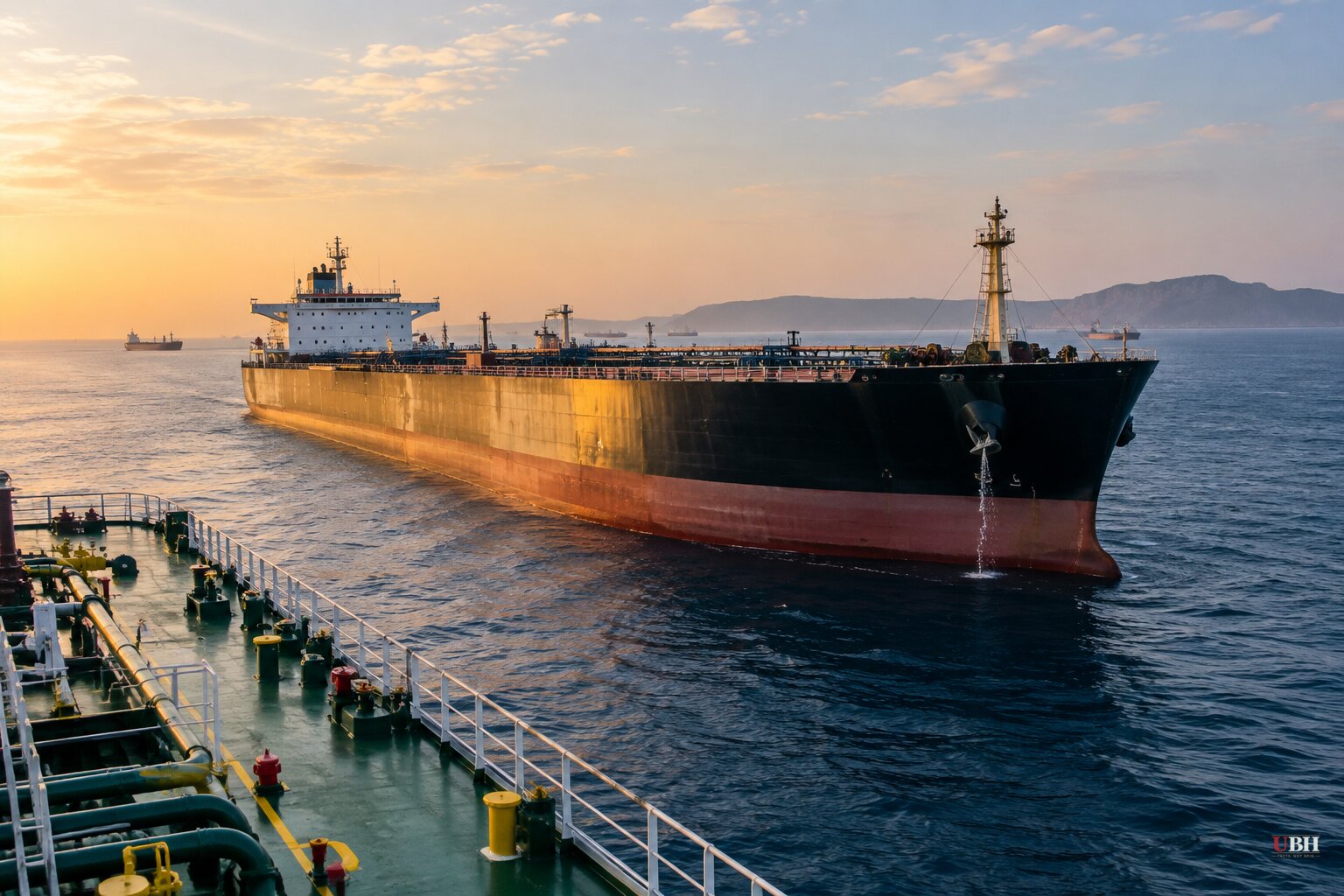
India's largest oil refiners are done paying middlemen to ship their crude through the Strait of Hormuz. They're hiring their own tankers now.
Indian Oil Corp., Reliance Industries Ltd., Bharat Petroleum Corp. and HPCL-Mittal Energy Ltd. have all purchased Iraqi crude on a free-on-board basis in recent weeks, according to Bloomberg, which was also carried by the Times of India, Business Standard and the Hindu Business Line. Under FOB deals, the buyer, not the seller, arranges the ship and takes on the voyage risk.
Since the US-Israel-Iran conflict shut down most normal traffic through Hormuz starting in March, Indian refiners had avoided sending their own vessels into the strait. They left that risk to Gulf producers and international trading firms, who ran cost-and-freight deals and charged a steep premium for the trouble, Bloomberg reported.
Now refiners have issued tenders and are negotiating directly with shipping lines. Sinokor Group and Dynacom Tankers Management Ltd. have won contracts, according to people familiar with the matter cited by Bloomberg. Shipping Corp. of India and Lila Global also bid, but those tenders were canceled. None of the refiners or shipping companies responded to requests for comment from Bloomberg.
Why Now
Three things changed at once. First, Hormuz traffic has recovered. JPMorgan Chase & Co. said in a note this week that Middle East crude shipments are back to 98% of pre-war levels, helped by the restoration of Saudi Arabia's East-West pipeline.
Second, India loosened its own rules. The Directorate General of Shipping eased its advisory in August, moving from an effective ban on Indian crew transiting Hormuz to a policy requiring shipowners get seafarers' consent first, according to the Hindu Business Line and Amanshanti News.
Third, Iraq is cutting prices to move barrels. Iraq's state oil marketer SOMO has offered discounts of up to $37 a barrel below regional benchmarks on contracted October supplies, the Hindu Business Line reported. That's a big enough gap to justify the hassle of chartering your own ship.
The payoff is already showing up in the flow data. Oil volumes moving through Hormuz toward India averaged about 1.3 million barrels a day in September, the highest since February, before the war started, according to Kpler data cited by the Hindu Business Line.
The Bigger Supply Shift
This tanker move is part of a wider reshuffling of where India gets its oil. According to Kpler data reported by The Print, India's Gulf crude imports climbed back to roughly 2.7 to 3 million barrels a day in September, essentially pre-conflict levels.
The breakdown is lopsided. Iraq supplied around 575,000 barrels a day, up more than 250% from August. Saudi Arabia supplied about 566,000 barrels a day, up 63%. Kuwait added roughly 331,000 barrels a day. The UAE was the outlier, supplying nearly 480,000 barrels a day but the only Gulf source that didn't grow month over month, Kpler told The Print.
Total Indian crude imports averaged 5.3 million barrels a day as of September 28, up about 600,000 barrels a day from August, as refinery maintenance wound down and refiners ran hard to capture strong international product margins, Sumit Ritolia, Kpler's senior manager for oil markets and refining, told The Print.
Meanwhile Russian crude arrivals dropped to about 1.74 million barrels a day in September, the lowest since April, down from 2.02 million in August and 2.66 million in July, per Kpler figures reported by The Print. Newsbytes and Amanshanti News both attributed part of that decline to US political pressure on India to cut Russian purchases, though neither outlet named a specific US official or sanctions action driving the September drop.
Ritolia pushed back on reading too much into the Russian decline. "Russia remains a central part of India's crude import basket, and we do not see the latest decline as India moving away from Russian barrels altogether," he told The Print, adding that economics, availability and refinery compatibility will keep driving Indian purchasing decisions.
A one-month drop to a five-month low is real, but it's not proof of a permanent pivot away from discounted Russian barrels, which still make up the largest single slice of India's import mix. Whether Iraq's $37-a-barrel discounts and India's new tanker strategy can hold if Hormuz risk flares up again, or if Washington tightens sanctions enforcement further, remains uncertain heading into the fourth quarter.
Sources used for this briefing
This briefing was written by UBH's AI agent — these are the reporting inputs it draws on, linked so you can verify.


