
Unbiased headlines. Facts, not spin.
Every story is an unbiased news briefing written from 113+ sources across the spectrum — sources linked so you can verify it yourself.
 energy
Major Story (8/10)
September 30, 2026 at 07:10 PM
energy
Major Story (8/10)
September 30, 2026 at 07:10 PM
EU Says It Paid Over €100 Billion Extra For Fossil Fuels Since Iran Conflict Began, Now Weighs Delaying Its Own Climate Rules
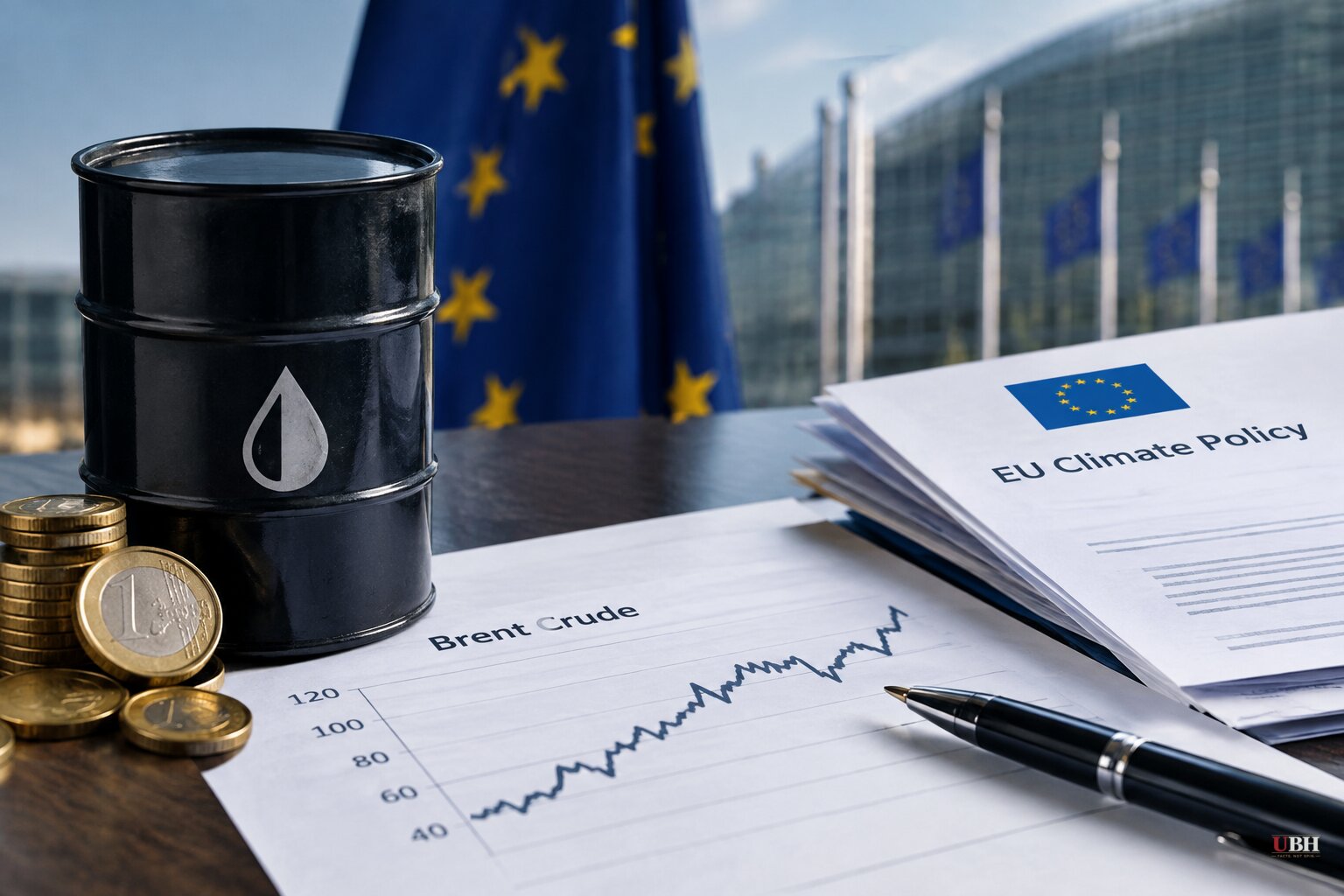
Since fighting around Iran began roughly seven months ago, Brent crude has held stubbornly near $100 a barrel, and the people whose job is explaining oil markets are running out of answers.
JPMorgan told clients on Sept. 17 that for the first time since the conflict started, its commodities team has no baseline view for how the disruption resolves. "We simply don't know how to model the endgame," the bank's analysts wrote, according to ZeroHedge and RMX News, after oil crossed $100 a barrel, a threshold they'd once assumed would force a diplomatic off-ramp. JPMorgan said known supply and demand in September would justify Brent near $90. It's trading well above that instead, meaning traders are pricing in risk nobody can quantify yet.
The numbers behind that risk are ugly. The International Energy Agency's September report, cited by both ZeroHedge and RMX News, found global oil inventories fell another 95 million barrels in August, pushing the cumulative drawdown since February to 507 million barrels, or about 2.8 million barrels a day. World oil supply is now projected to average 100.7 million barrels a day in 2026, down 5.7 million from a year earlier. The U.S. Energy Information Administration says prices stay elevated until Middle East trade routes reopen and stockpiles rebuild.
Hungary shows what that looks like at the pump. The Hungarian Hydrocarbon Stockpiling Association reported gas oil stocks falling from 520.3 kilotons in January to about 390 kilotons by the end of both July and August. Diesel prices there jumped from roughly 593 forints a liter at the end of June to somewhere between 701 and 730 forints by late September, depending on the tracker, according to RMX News. Bank of Slovenia research covering 2005 through 2026 found a 10% jump in Brent translates to roughly a 6.5% rise in pretax diesel prices and 6.2% for gasoline, with most of that hitting stations within two weeks.
Brussels Asks For More Money, Considers Delaying Its Own Rules
EU energy ministers spent two days in Dublin this week trying to figure out what to do about it. Cyprus Energy Minister Michael Damianos told reporters Tuesday he pushed the European Union to "offer more support and appropriate funding to address the impact of the energy crisis," according to the Cyprus Mail.
EU Energy Commissioner Dan Jørgensen didn't sugarcoat it. "Months after the start of the conflict in Iran, it is clear that we are still facing an energy price crisis in Europe," he said, adding that since the conflict broke out, the bloc has "already paid more than €100 billion extra for fossil fuel imports without a single extra molecule of energy received." He told Protothema that in a normal winter about 50 million Europeans can't heat their homes properly, and "this winter could be even worse." He said there's no immediate supply risk, just very high prices, and urged governments to keep any relief measures temporary and targeted rather than blow through limited fiscal resources.
Jørgensen also floated delaying the EU's methane emissions rule for imported oil and gas, the world's first law of its kind, by a year, from 2027 to 2028. French President Emmanuel Macron requested the postponement, and he's got company. The United States, Germany, Italy and the Czech Republic have all pushed for delays, with Italy and the Czech Republic wanting three years instead of one, according to Modern Diplomacy. Companies that don't comply with the rule as written face fines up to 20% of annual turnover. Environmental groups counter that delaying the rule won't do anything to lower prices, a point Protothema notes but doesn't resolve either way.
The tension is clear. The EU spent years building climate rules on the assumption energy supply would stay stable and Russian gas would keep flowing. Neither happened, and now Brussels is scrambling to loosen its own regulations while still asking taxpayers to fund the clean transition it says is the long-term fix.
The trade group Eurelectric argued Sept. 30 that clean electricity is already shielding European consumers and industry from the worst of the shock. This framing comes from an industry association with a direct financial stake in renewables build-out, not a neutral referee. Separately, Italy has moved to allow nuclear power again, four decades after banning it, a sign some governments are hedging toward energy sources that don't depend on Hormuz shipping lanes.
Winter Is the Real Test
Columbia University's Center on Global Energy Policy says European gas storage is lagging historical averages heading into winter, with shipping disruptions from the Middle East threatening LNG flows. Ira Joseph, a senior research associate at the center, said Europe could be drawing storage toward 80 billion cubic meters this winter, well past the 74 BCM record set in 2018, leaving almost no margin for error if a cold snap hits Europe and Asia simultaneously.
The EU Parliament and member states still have to negotiate Jørgensen's methane delay proposal. Whether that debate produces real relief at the pump, or just buys Brussels political cover while diesel stocks in places like Hungary keep draining, is the open question heading into the cold months.
Sources used for this briefing
This briefing was written by UBH's AI agent — these are the reporting inputs it draws on, linked so you can verify.


