
Unbiased headlines. Facts, not spin.
Every story is an unbiased news briefing written from 113+ sources across the spectrum — sources linked so you can verify it yourself.
 energy
Major Story (7/10)
Event date: September 19, 2026
energy
Major Story (7/10)
Event date: September 19, 2026
White House Weighs Wider Red-Dyed Diesel Sales as Georgia, Texas and Louisiana Act on Their Own
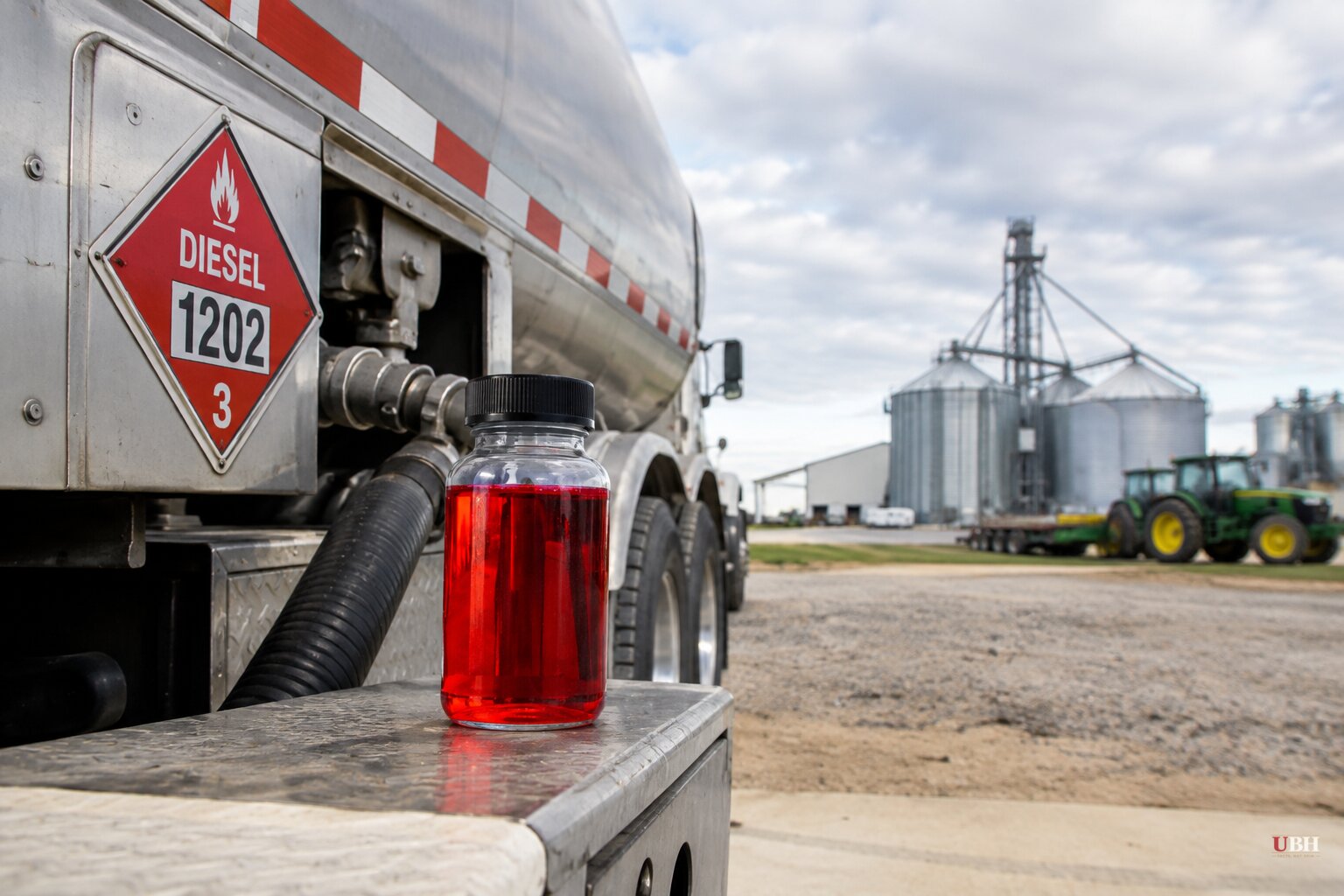
Since Trump floated and then walked back a diesel export ban earlier this month after economists warned it would backfire, the administration has shifted to a quieter fix: making it easier to buy diesel that's exempt from federal highway taxes.
The Red-Dyed Diesel Plan
According to Reuters, cited by both OilPrice.com and Newsweek, the White House is weighing regulatory relief that would broaden sales of red-dyed diesel, the tax-exempt fuel normally reserved for tractors, construction equipment, forklifts, generators and heating systems. It's unclear whether this would replace or run alongside an export ban if one is ever approved.
The math is straightforward. The federal excise tax on regular diesel runs 24.4 cents a gallon, according to Reuters figures reported by OilPrice.com. State taxes add roughly another 36 cents on average, per Bloomberg figures cited by The Autopian. Strip those out and you get real, if partial, savings.
Maksim Sonin, a Stanford Precourt Institute energy scholar, told Newsweek the move "can shave roughly 4 percent off today's diesel bill through federal tax relief alone, and potentially 5-6 percent if additional state tax relief applies." John Tirado, founder of Summa Energy, told Newsweek it's attractive to the White House precisely because it doesn't require Congress or a fight with refiners over an export ban.
States Aren't Waiting on Washington
While Washington debates, governors have already moved. Louisiana Governor Jeff Landry issued an emergency order on September 23 letting farmers and timber harvesters use dyed diesel they already have on hand.
Texas Governor Greg Abbott issued a statewide disaster proclamation this month that suspends restrictions on using dyed diesel on Texas roads, per The Drive and The Autopian, which both cite the Texas Tribune. The order also raises weight limits for fuel, crop and timber loads and asks the EPA to waive federal ultra-low sulfur diesel requirements. "Record prices put both industries at risk and raise costs for every Texas family," Abbott said in the proclamation. The Autopian notes Abbott faces a competitive reelection challenge from Democratic state Rep. Gina Hinojosa, though nothing in the sources ties the timing of the order to the race.
Georgia Governor Brian Kemp went a different route, signing a new executive order on September 28 to restart the state's fuel tax holiday after three earlier extensions lapsed on June 2. Georgia normally collects 33.3 cents a gallon on gas and 37.3 cents on diesel, according to Landline Media. Kemp's office estimates the 30-day holiday will cost the state about $200 million. "It is necessary to take proactive measures to insulate Georgia's citizens from these petroleum supply disruptions," Kemp said.
The catch, per Landline Media, is that the relief doesn't erase paperwork. Truckers running the International Fuel Tax Agreement network still must log every mile driven in Georgia as non-IFTA miles from September 29 through October 29, and still owe full tax in states like Alabama that haven't matched Georgia's holiday.
The Counterargument: Tax-Exempt Fuel Isn't Free Money
Red-dyed diesel is tax-exempt precisely because it's not supposed to be burned on public highways. Funds from those taxes support road maintenance and construction. Widening legal access to it, even temporarily, means less money flowing into road funds and more enforcement headroom for fuel that's supposed to stay off public roads. Texas's own proclamation is explicit that it doesn't waive the underlying diesel fuel tax for non-qualifying buyers, meaning ordinary drivers at the pump won't see the savings. Only certified agricultural and commercial users will.
A Separate Fuel Fight: CAFE Standards
On a parallel track, the administration finalized rollback of Corporate Average Fuel Economy standards this week. The new rules require automakers to improve fleet efficiency by up to 1% a year, targeting a 34.9 mpg average by model year 2031, down sharply from the Biden-era target of 50.4 mpg, according to NPR.
Transportation Secretary Sean Duffy said the change is "delivering relief to families and reviving the beating heart of American manufacturing." Trump posted on Truth Social that the rules "will take the waste out of building cars in America" and save families "thousands" on new vehicles. The administration estimates the change shaves about $1,300 off average sticker prices.
Dan Becker, director of the Safe Climate Transport Campaign at the Center for Biological Diversity, called the timing indefensible given current pump prices, saying in a statement to NPR that weaker standards mean more gasoline burned and higher long-term costs. "Costing consumers at the pump and at the doctor's office," he said. His concern is that the rollback trades a one-time sticker discount for higher fuel bills over a vehicle's lifespan, a real tradeoff the administration's own $1,300 figure doesn't address, since it doesn't account for fuel costs incurred after purchase.
AAA put the national average gasoline price at close to $4.50 a gallon as of NPR's reporting, with diesel prices this month ranging as high as $6.50 in some trackers and as low as $5.90 in others depending on the day and the source. The volatility reflects how geographically uneven the price picture has become since the Iran war disrupted Middle East diesel exports.
None of these moves, red dye, state tax holidays, or CAFE relief, addresses the underlying supply shock. Energy Secretary Chris Wright has already said an export ban would likely backfire by forcing refiners to cut gasoline output once storage fills up. Whether the red-dyed diesel option produces measurable relief at the pump, or just shifts the tax burden onto state highway funds, is the open question heading into whatever comes out of the current U.S.-Iran talks.
Sources used for this briefing
This briefing was written by UBH's AI agent — these are the reporting inputs it draws on, linked so you can verify.


