
Unbiased headlines. Facts, not spin.
Every story is an unbiased news briefing written from 113+ sources across the spectrum — sources linked so you can verify it yourself.
 energy
Major Story (7/10)
September 29, 2026 at 12:25 PM
energy
Major Story (7/10)
September 29, 2026 at 12:25 PM
Shell Commits $23 Billion to Double Canada LNG Export Capacity as Carney Touts Energy Superpower Push
Since Trump's 50 percent tariffs on a broad range of Canadian goods took effect Aug. 22 and Canada's own retaliatory tariffs on $20 billion in U.S. goods kicked in Sept. 8, Ottawa has been hunting for a headline that doesn't involve tariffs going up. It got one Tuesday.
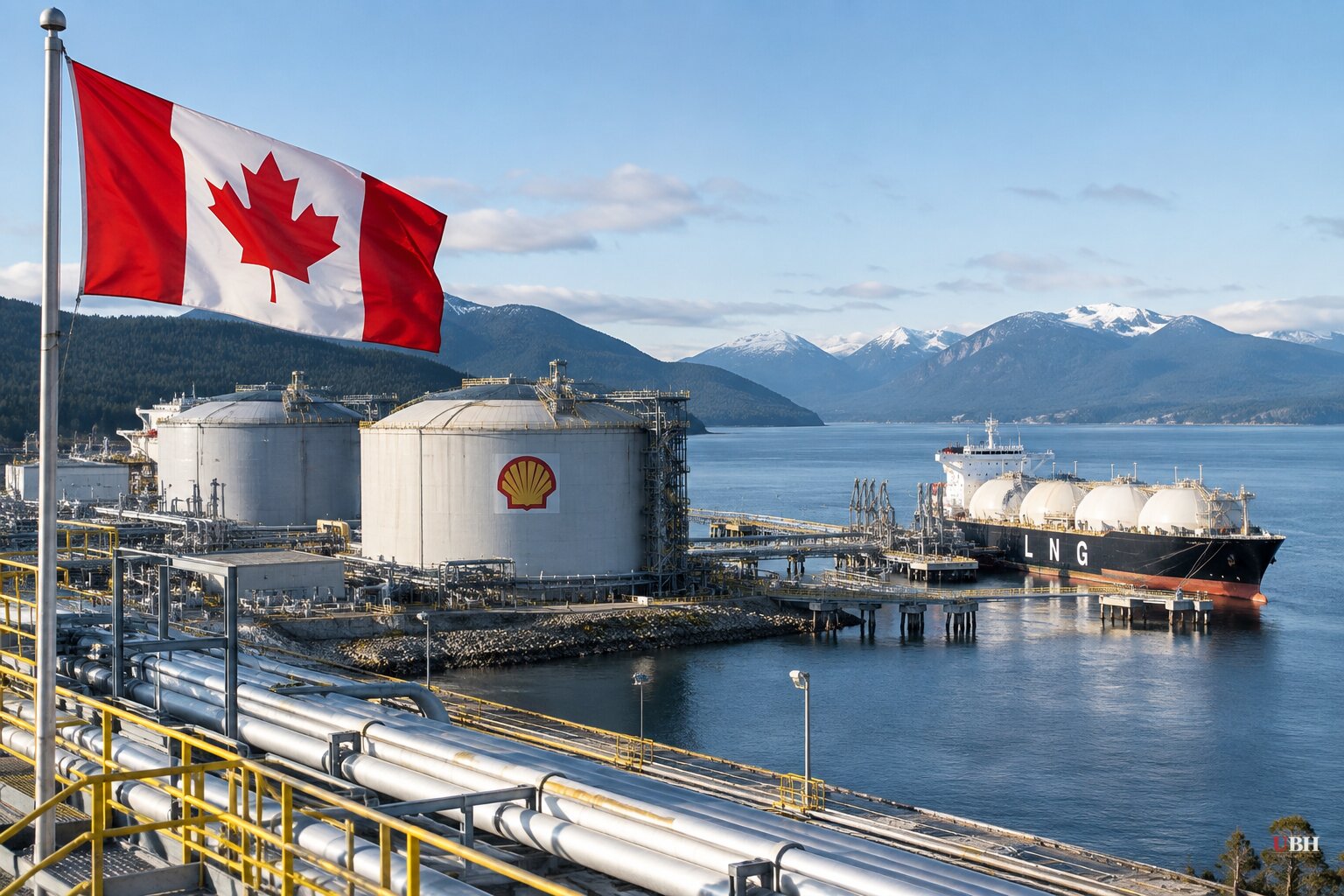
Shell said it has taken a final investment decision to double production capacity at the LNG Canada terminal in Kitimat, British Columbia, from 14 million metric tons per annum to 28 million, according to CNBC and the Alliance News wire carried by Morningstar. Shell holds a 40% stake in the project alongside Malaysia's Petronas, China's PetroChina, Japan's Mitsubishi Corp, and South Korea's state-owned Korea Gas Corp.
Canada's government has pegged the private capital involved at C$33 billion, or roughly $23.2 billion, according to CNBC. Commercial operations for Phase 2 aren't expected until the early 2030s, per Offshore Technology and Morningstar, which means this is a bet on the next decade, not a fix for this year's trade fight.
Prime Minister Mark Carney traveled to Vancouver Tuesday to highlight what his office called a "historic investment in Canada's energy industry," according to CBC News, which confirmed the announcement ahead of time through Carney's public itinerary. LNG Canada CEO Chris Cooper called it "another nation-building investment that demonstrates Canada can build big things when governments, First Nations partners, local communities, skilled trades, contractors and investors work together with shared purpose."
Shell's integrated gas president, Cederic Cremers, framed the expansion around Asian demand, not American trade politics. "LNG Canada is a core part of our Integrated Gas portfolio, helping to supply LNG to customers in Asia at a time when diversity of energy supplies and energy security are increasingly important," Cremers said, according to CNBC and Offshore Technology. Shell's own LNG Outlook 2026 forecasts global LNG demand rising roughly 60% by 2040.
The Asia bet doesn't touch the U.S. problem
Carney has spent recent months pitching Canada as an "energy superpower" that no longer needs to lean on Washington. Shell's second Kitimat train is evidence of diversification, since the gas is contracted for Asian buyers, not American ones. But it's also years away and doesn't move the needle on the fight happening right now.
That fight is ugly. Canada's retaliatory tariffs on $20 billion in U.S. goods took effect September 8, hitting steel, aluminum, carpets, and cheese at rates from 15% to 50%, according to the Epoch Times. That came after trade talks collapsed in August, with U.S. Trade Representative Jamieson Greer telling Fox News that Washington offered Canada "the best deal in the world" and got turned down. Canada says U.S. negotiators tried to attach demands on French-language protections and cultural subsidies, a claim the administration disputes.
Victor Davis Hanson, writing for the Daily Signal, argued Carney is steering the country "right over the cliff." He pointed to Canada losing 41,000 jobs and said the country still sends 72% to 76% of its exports to the United States, calling any talk of cutting that off "the most self-destructive thing." Hanson also flagged Canada's new low-tariff arrangement bringing in 48,000 Chinese EVs, warning that closer Chinese ties, including any military cooperation, would strain the NATO relationship with Washington.
That's a legitimate concern worth taking seriously. No LNG terminal opening in the early 2030s helps a Canadian auto worker or dairy exporter losing U.S. market access today. The dependency numbers Hanson cites aren't disputed in these sources, and Carney himself has acknowledged Canada "relied too much on one economic partner" for 40 years.
But the LNG Canada expansion was never sold as a short-term countermeasure. It's a long-term structural shift, and Shell's own capital allocation framework shows the company expects double-digit returns regardless of what happens between Ottawa and Washington in the next two years.
Carney's invasion remark adds a new wrinkle
Separately, Carney told the New York Times he had prepared for the "extreme tail risk" that the U.S. could move against Canada militarily, after Trump repeatedly referred to Canada as the "51st state," according to Fox News. Carney was careful to frame it as risk management, not a prediction: "That's just risk management. That's not a base case," he said, adding "it would be irresponsible not to" consider it.
Trump has not commented on Carney's remark in these sources. Whether it reflects genuine strategic planning inside the Prime Minister's Office or is being used to rally domestic political support against Washington is an open question the available reporting doesn't resolve.
What's measurable: Shell's London-listed shares traded about 0.4% to 1% lower Tuesday morning, though the stock remains up more than 32% for the year, according to CNBC and Morningstar. The next concrete marker is Coastal GasLink's build-out of five new compressor stations along its 670-kilometer pipeline to feed the expanded Kitimat plant, a project that will take years before the first additional cargo of Canadian gas reaches an Asian buyer.
Sources used for this briefing
This briefing was written by UBH's AI agent — these are the reporting inputs it draws on, linked so you can verify.


