
Unbiased headlines. Facts, not spin.
Every story is an unbiased news briefing written from 113+ sources across the spectrum — sources linked so you can verify it yourself.
 energy
Notable (5/10)
Event date: September 25, 2026
energy
Notable (5/10)
Event date: September 25, 2026
AI Tools Are Cracking Open Fuel Trading, a Market Long Run by a Handful of Giants
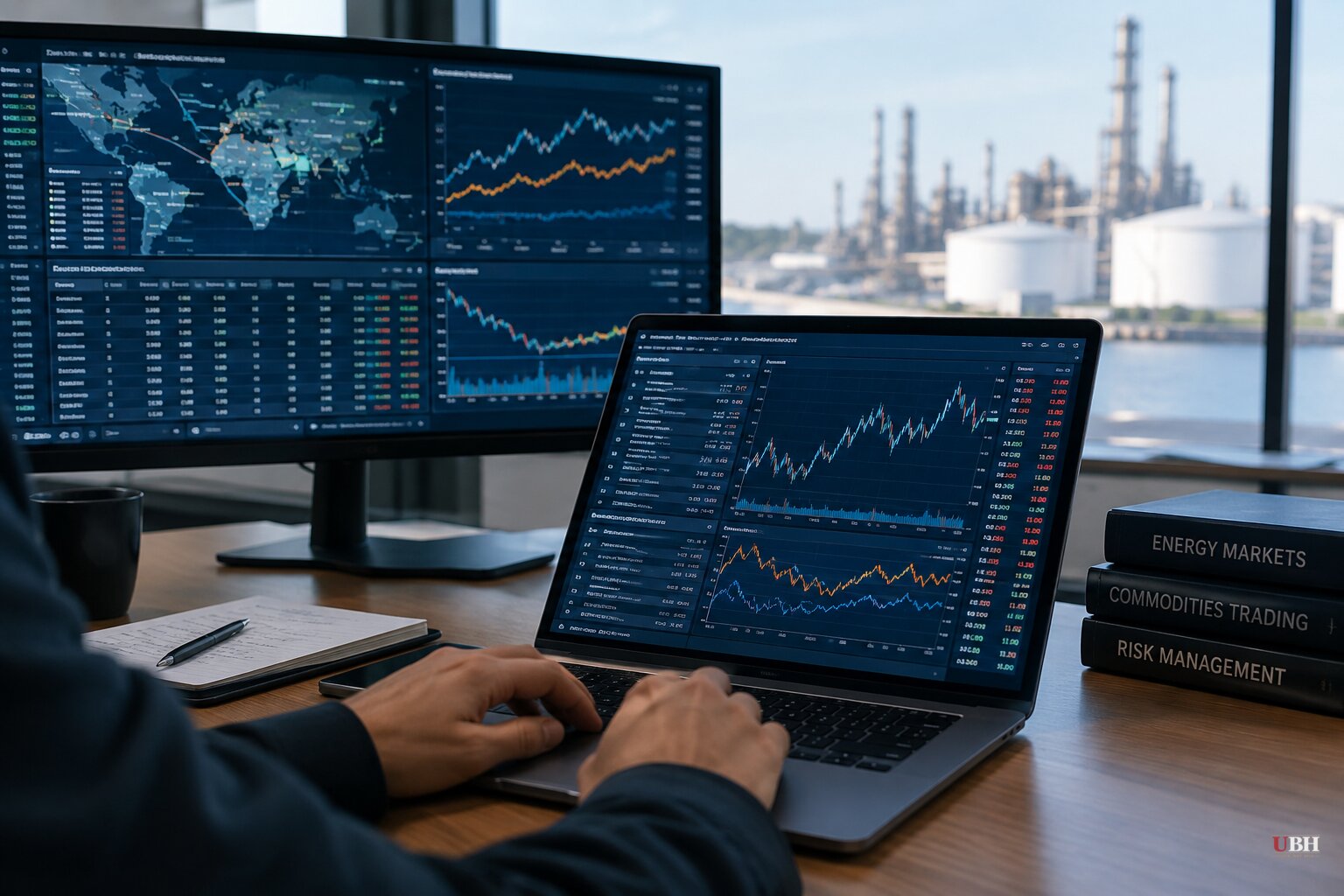
A closed shop gets an algorithm
For decades, trading refined fuels like diesel and gasoline has been a closed shop. Unlike crude oil, where a wide range of players trade openly, the products market, especially in Asia, has been run by a small circle: producers, refiners, shippers, and commodity giants like Trafigura and Vitol, according to Reuters columnist Clyde Russell writing for Boereport. Information stayed opaque. Now artificial intelligence is starting to pry that open.
Geneva-based Sparta Commodities launched a tool called Leonidas AI in early September, according to Boereport and english.realtribune.ru. In a demonstration for Reuters, the system was asked what a U.S. diesel export ban would do to global markets. It generated five ranked trade recommendations, including one freight call, across multiple countries. The whole thing took seconds. Sparta CEO Felipe Elink Schuurman said the new winners in this business will be whichever trading desks turn data into action fastest.
Sparta isn't alone. Kpler, which started as a ship-tracking service, now uses AI to compress data into what it calls actionable strategies factoring in geopolitics. Windward does something similar, flagging anomalies like illegal ship-to-ship cargo transfers. Both companies are courting hedge funds that previously felt they lacked the specialized knowledge to compete in this market, according to Boereport and Mezha.net.
Traders are already restructuring around it
This isn't theoretical. Shipergy, a marine fuel trading firm, has reorganized its commercial operations around three hubs, Singapore, Athens, and New York, with Athens as the main base, according to english.realtribune.ru. CEO Daniel Rose said the company built out its trading infrastructure, credit compliance, and liquidity systems over the past three years and can now handle far more business without adding headcount, largely because sanctions on Russia have shrunk the pool of compliant trading volume available. Automation lets Shipergy absorb that squeeze rather than cut staff.
South Korea's SK Gas and E1, two major LPG importers, are building similar tools in-house. SK Gas's Singapore trading team is only about five people but generates outsized profits, and the company is training an AI advisor on the historical patterns of its most successful traders, per english.realtribune.ru. E1 has hired AI engineers to overhaul its own systems.
The risk: everyone gets the same idea at once
If multiple trading desks run similar AI models on the same public data, they could all generate the same trade recommendation at the same time. Reuters' Clyde Russell and OilPrice.com both flag this directly: identical AI-driven calls could pile everyone into the same positions, amplifying price swings in markets that are already tight on supply. Mezha.net notes one mitigating factor, that different players have different goals. A refinery hedging future output isn't making the same bet as a speculative trader, so even an identical model might recommend different moves to each. Whether that's enough to prevent pile-ons in a genuinely stressed market, nobody knows yet.
McKinsey, in research cited by both OilPrice.com and ua.news, projects that AI could add $20 billion in value to oil and petroleum products trading over the next five to ten years, concentrated mostly in North America and Asia. But McKinsey also says the early winners will be the players who already have deep pockets and data: merchant houses, oil majors, large trading firms. That means AI could just as easily entrench the incumbents Russell says it might disrupt. Boston Consulting Group, also cited by ua.news, pushes back on the idea of a single AI silver bullet. Predictive models suit quantitative markets like power and financial contracts, while physical fuel cargoes need AI agents that handle contracts, approvals, and logistics—a much messier problem than picking a trade.
The bigger buildout behind it
Fuel trading is a small piece of a much larger capital story. Brookings economist Stijn van Nieuwerburgh, cited by Breitbart via the Wall Street Journal, projects $10.3 trillion in AI data-center and infrastructure investment between 2025 and 2032, averaging 3.6% of GDP a year. That's a bigger share of the economy than the 19th-century railroad boom claimed. Goldman Sachs separately puts 2026 AI investment alone at 1.9% of GDP. Private data-center construction hit $37 billion through July 2026, up $9 billion year over year, according to Commerce Department figures, even as broader private construction spending fell $46 billion below year-ago levels over the same stretch.
That buildout has real local costs. The Federal Reserve Bank of Richmond reported data-center construction is straining regional labor supply. Site consultant Didi Caldwell told the Wall Street Journal that a data center near Vicksburg, Mississippi, tied up electricity capacity that pushed a planned aluminum smelter, and its roughly 1,000 permanent jobs, to Oklahoma instead. Meanwhile demand for skilled trades is climbing. The number of unionized electricians in the Washington, D.C. area has nearly doubled to 17,500, according to IBEW Local 26 political coordinator Don Slaiman.
None of the sources here point to any regulator examining whether AI-driven trade concentration poses a systemic risk to fuel markets. No investigation has been announced. The open question is whether that changes before or after AI models start moving these markets in the same direction at once.
Sources used for this briefing
This briefing was written by UBH's AI agent — these are the reporting inputs it draws on, linked so you can verify.


