
Unbiased headlines. Facts, not spin.
Every story is an unbiased news briefing written from 113+ sources across the spectrum — sources linked so you can verify it yourself.
 energy
Major Story (7/10)
Event date: September 25, 2026
energy
Major Story (7/10)
Event date: September 25, 2026
Spain, Portugal, Luxembourg Push EU for 2040 Renewables Target Amid Hormuz Crisis and Fuel-Price Spike
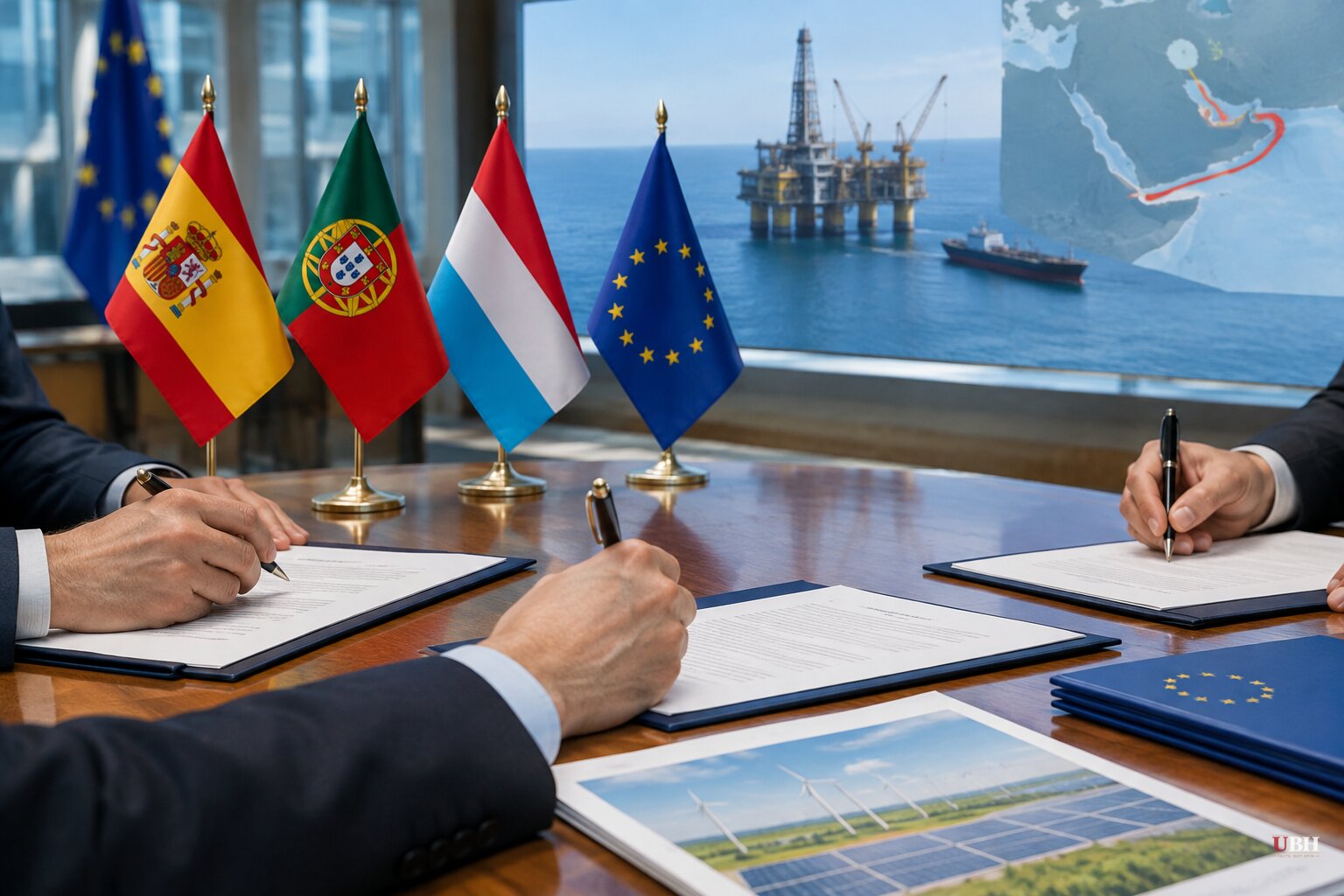
Spain, Portugal and Luxembourg sent a letter to EU Energy Commissioner Dan Jørgensen calling on Brussels to lock in a 2040 renewable-energy target, according to Bloomberg News, which reviewed the letter. The three countries' energy ministers argue the bloc needs to move fast to cut fossil-fuel reliance, pointing directly to "the consequences of the blockage of the Strait of Hormuz" as proof the EU's energy import dependence is a liability.
Nearly all of the EU's oil and 85% of its natural gas comes from outside the bloc, according to the Organisation for Economic Cooperation and Development (OECD). With the Hormuz chokepoint disrupted and conflict in Ukraine still grinding on, European pump prices have spiked, according to European Interest, sometimes topping $12 a gallon. The advocacy group Transport & Environment estimates EU drivers are now paying an extra €203 million per day for diesel alone.
Governments Are Spending, Not Just Talking
While Spain, Portugal and Luxembourg push for a long-term renewables mandate, the immediate reality on the ground looks like a continent-wide subsidy scramble. The OECD says seven of the ten countries doing the most to cushion citizens from fuel costs are in the EU.
Lithuania has cut train ticket prices in half. Greece is raising gambling taxes to fund relief. The Netherlands is paying for free home energy-saving upgrades. Poland is proposing a windfall tax on fuel producer profits. And Italy has delayed shutting down coal-fired power plants, according to European Interest.
If the EU is serious about accelerating away from fossil fuels by 2040, keeping coal plants online longer runs in the opposite direction. It's a straight contradiction between the emergency posture governments are taking now and the long-term target three of them are asking Brussels to adopt.
France Goes Its Own Way
France isn't among the letter's signatories, and its response looks different from the renewables-first pitch coming out of Madrid, Lisbon and Luxembourg. Paris announced a €450 million aid package, according to European Interest, extending means-tested commuter aid and cutting €100 checks to 5.5 million workers who drive long distances for work. The package also keeps fuel subsidies flowing to farmers, fishermen and construction firms, and sends energy vouchers worth €48 to €277 to 5.8 million families.
President Emmanuel Macron has also asked Brussels to loosen fuel-quality rules so refiners can boost diesel and kerosene output, and to raise the EU's conventional biodiesel cap in diesel fuel from 7% to 10%. In a letter to the European Commission reviewed by the Associated Press, Macron warned that global oil prices could climb further if the Strait of Hormuz stays closed and Saudi Arabia's East-West pipeline isn't repaired. He's also sending French troops and defensive systems to Saudi Arabia to help protect energy infrastructure there.
France is actively securing supply lines and propping up fossil fuel affordability in the short term, not signing onto a 2040 green mandate.
Von der Leyen's Both-Sides Pitch
European Commission President Ursula von der Leyen, in her State of the European Union address, framed the answer as "affordable, homegrown, clean energy, be it renewables and nuclear, or biomethane and others," arguing it would cut both dependence and prices. That's a notably broader formula than the one in the Spain-Portugal-Luxembourg letter, which is centered squarely on renewables.
Von der Leyen didn't specify a number or a date for any binding target in the excerpt reported by European Interest, and the Commission has not announced whether it will adopt the 2040 goal the three ministers are requesting.
The Unresolved Tension
Subsidies, tax hikes on gamblers, and delayed coal retirements are all measures designed to soften a short-term price shock. A 2040 renewable target is a decades-long structural bet. Neither one addresses why the EU is exposed to a chokepoint on the other side of the world in the first place.
Antony Froggatt, an analyst at Transport & Environment, put it bluntly to European Interest: "It's a cruel irony that the U.S. is the least vulnerable to a crisis of its own making, while Europe's economy again takes the hit." That's Transport & Environment's read, not a neutral fact, but it lines up with the plain numbers on EU import dependence.
What remains unresolved: whether Brussels adopts the 2040 target Jørgensen's inbox now holds, whether Poland's proposed windfall tax on fuel producers survives industry pushback, and how long France keeps paying commuters directly rather than fixing the supply problem the Hormuz disruption exposed. None of that has been decided as of this writing.
Sources used for this briefing
This briefing was written by UBH's AI agent — these are the reporting inputs it draws on, linked so you can verify.


