
Unbiased headlines. Facts, not spin.
Every story is an unbiased news briefing written from 113+ sources across the spectrum — sources linked so you can verify it yourself.
 energy
Major Story (7/10)
Event date: September 22, 2026
energy
Major Story (7/10)
Event date: September 22, 2026
California and East Coast Brace for Historic Storm Season as Newsom Declares Emergency, Nor'easter Already Hits New England
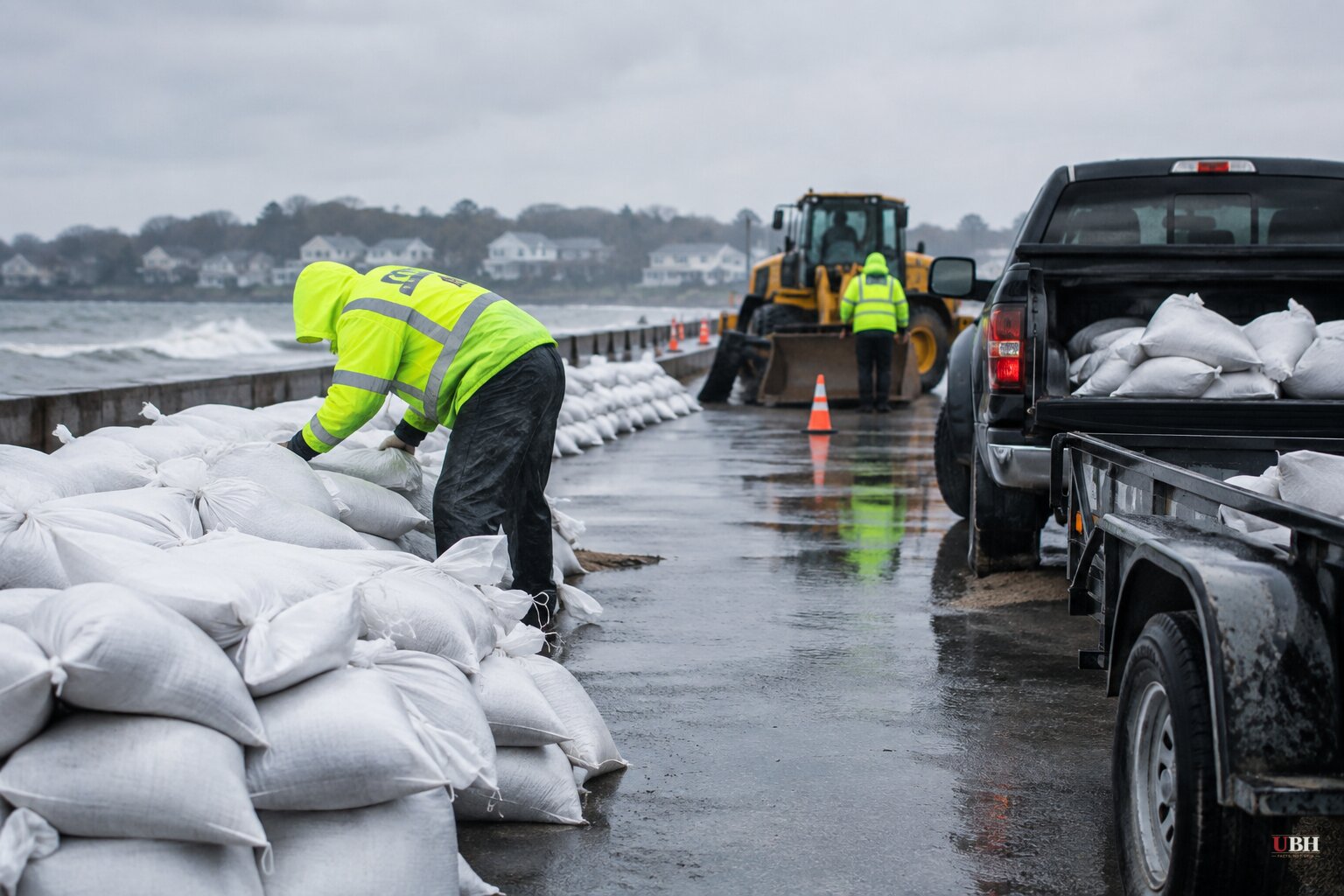
Since Gov. Gavin Newsom declared a statewide state of emergency Monday, Sept. 21, California has been racing to prepare for what NOAA forecasters say has better than a 90% chance of becoming one of the strongest El Niño events in recorded history, according to The Coast News. That same week, a rare September Nor'easter tore through the Mid-Atlantic and New England, hitting Sept. 25-27 with gale-force winds and coastal flood warnings stretching from North Carolina to Connecticut, per the National Weather Service.
Officials on both coasts are urging residents to prepare now.
California's Emergency Declaration
Newsom's proclamation directs state agencies to stage flood-fighting equipment and snow-removal gear, reinforce roads and critical infrastructure, and help local governments get ahead of flood, landslide and coastal erosion risks, according to a news release from the governor's office cited by both CNN and Breitbart. Times of San Diego reports Newsom also called in the California National Guard to assist with emergency response.
"We are preparing for this El Niño early because every Californian deserves to be safe in their home, connected to their community, and protected when severe weather comes," Newsom said.
Wade Crowfoot, California's natural resources secretary, added that the state is "taking steps now to protect communities from a potentially historic El Niño."
Patrick Barnard, research director at the Center for Coastal Climate Resilience at UC Santa Cruz, told CNN that this El Niño coincides with the peak of an 18-year high-tide astronomical cycle, meaning King Tides will run higher than usual on top of El Niño's own effects. Barnard said Pacific storms generate roughly 30% more wave energy during a typical El Niño year, and up to 50% more during a "Super" event like 2015-2016. He estimated the coming rise in coastal water levels, six inches to a foot above normal, could threaten an additional 170,000 people and $60 billion in property compared with a non-Super El Niño year.
San Diego County's Local Response
Local governments are moving in parallel. County News Center reports San Diego County's Board of Supervisors approved a countywide Severe Weather Community Preparedness Resource Hub and directed the Chief Administrative Officer to return Oct. 6 with a plan specifically for unincorporated communities hit by the January 2024 floods, including the status of nine previously flooded sites and financial assistance options for lower-income families.
More than 1,200 County employees now hold dedicated emergency-response roles with annual refresher training, according to the county. Public Works maintains nearly 2,000 miles of county roads out of 13 storm-response stations operating around the clock. Nearly 40 county and CAL FIRE stations are handing out free sand and sandbags, and the City of San Diego has already installed sand berms on beaches and the Mission Bay shoreline, per Times of San Diego.
In Oceanside, crews are clearing drains and channels, and residents can pick up free sand and 10 free sandbags at Moody's El Corazon Recycling with a shovel and photo ID, according to The Coast News, which also recommends homeowners trim trees, secure loose yard items and check FEMA's Flood Map Service Center to see if their property sits in a designated flood zone.
The East Coast Got Hit First
While California prepares for a winter peak, the East Coast already took a hit. The National Weather Service said the Nor'easter brought widespread gale-force winds, gusts up to 50 mph, and up to six inches of rain to coastal Massachusetts, with coastal flood warnings issued from North Carolina to Connecticut, per the Epoch Times.
Boston Mayor Michelle Wu called the storm's timing unusual: "Nor'easters aren't new for New England, but not usually in September, so we're taking extra preparations." New York City Mayor Zohran Mamdani urged residents to check trains, ferries and flights before traveling and to stay off low-lying coastal roads near high tide. Separately, Tropical Storm Polo formed off southwestern Mexico and Hurricane Nolo developed in the Pacific the same week, per the Epoch Times, adding to an already active storm pattern nationwide.
Where the Coverage Splits
CNN's coverage repeatedly frames El Niño's intensity as a climate change story, citing a Science journal study that found El Niño events are now 36% stronger than in the pre-industrial era, according to Times of San Diego. Breitbart and The Coast News stick closer to NOAA's baseline description: El Niño is a naturally recurring Pacific Ocean pattern that has occurred every two to seven years for as long as records exist, independent of any single cause.
Both things can be true without one canceling the other. NOAA's own definition of El Niño as a natural cycle isn't in dispute, and the Science study's finding about amplification is a specific, attributed scientific claim, not an editorial assertion. Readers should note the difference between the baseline phenomenon and the amplification claim, which comes from one named study rather than settled consensus repeated as fact by every outlet.
A reasonable case exists for California's early emergency declaration. Getting sandbags, generator fuel and National Guard units staged before a storm hits is cheaper and safer than scrambling after floodwaters rise, as the January 2024 unincorporated-community floods in San Diego County demonstrated. None of the six sources here quote a critic arguing the declaration itself is premature or wasteful.
The next concrete checkpoint is Oct. 6, when San Diego County supervisors are scheduled to receive a detailed preparedness plan for the nine sites hit hardest in the January 2024 floods, including specific financial assistance options for affected families. Whether California's coastal infrastructure holds through a winter that NOAA rates a better-than-90% shot at historic strength remains an open question nobody can answer until the storms actually arrive.
Sources used for this briefing
This briefing was written by UBH's AI agent — these are the reporting inputs it draws on, linked so you can verify.


