
Unbiased headlines. Facts, not spin.
Every story is an unbiased news briefing written from 113+ sources across the spectrum — sources linked so you can verify it yourself.
 energy
Major Story (7/10)
September 28, 2026 at 10:17 PM
energy
Major Story (7/10)
September 28, 2026 at 10:17 PM
Iran and Ukraine Wars Are Forcing a Global Rethink on Energy Security, and Nobody Agrees on the Fix
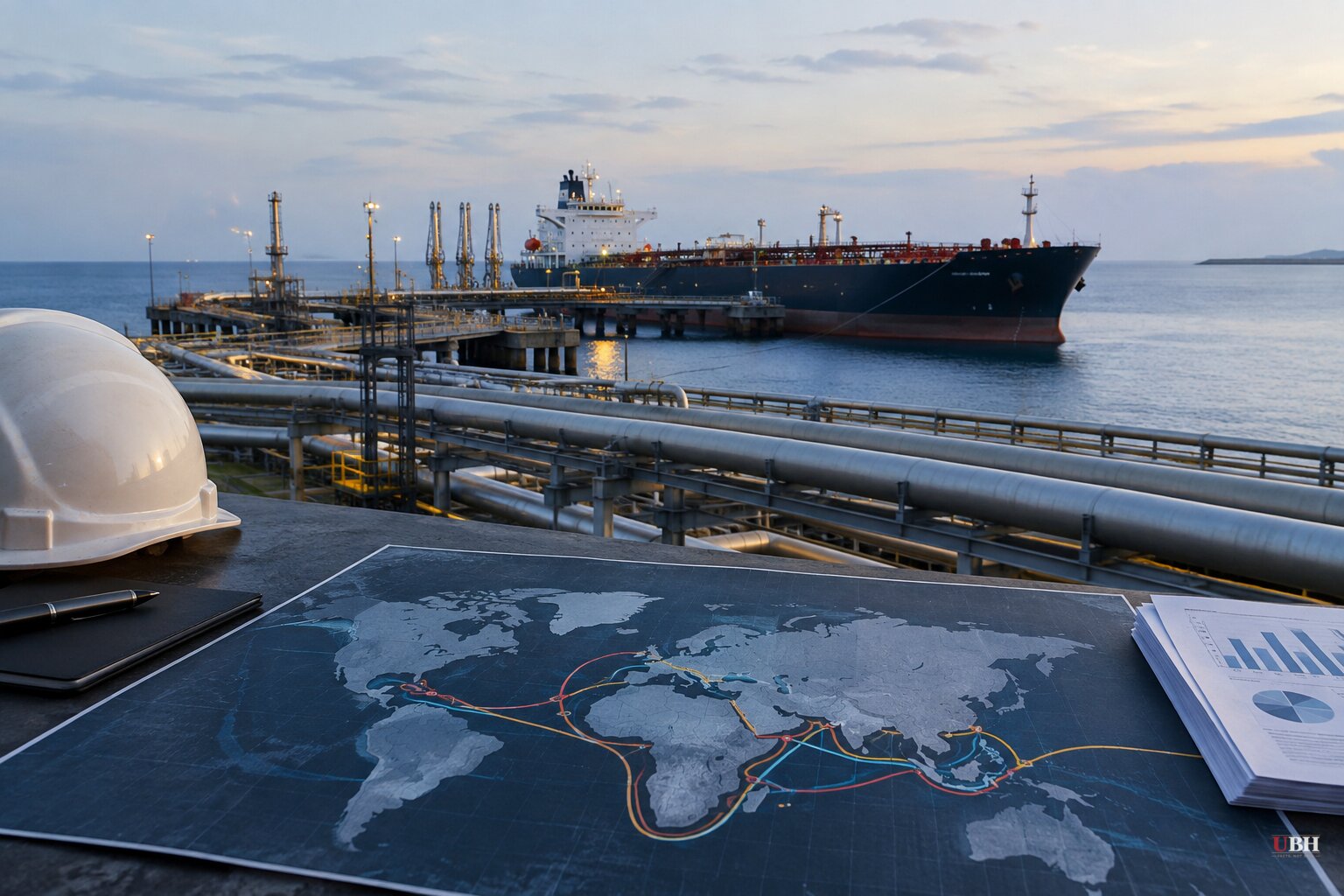
Two wars, one lesson. The Russia-Ukraine conflict blew up Europe's dependence on Russian pipeline gas. The U.S.-Iran conflict exposed the world's dependence on a single waterway. The International Energy Agency called the disruption through the Strait of Hormuz the largest oil-supply disruption in its history, with roughly 20 million barrels a day of crude and refined product affected when the strait was effectively closed, according to OilPrice.com.
The numbers on how much oil is actually moving through the Gulf now are messy, and that mess is itself the story. According to the Daily Signal, about 17 million barrels a day were held up in the Persian Gulf at the conflict's peak. After a June memorandum of understanding, traffic climbed back to 10.8 million barrels a day. New loadings from Saudi Arabia and the UAE pushed it above 13.5 million. Then it fell again, to roughly 7.6 million barrels a day, per the IEA. Goldman Sachs, in a September 2 note cited by the Daily Signal, put total Gulf exports including so-called "dark crossings" at 15 to 16 million barrels a day, about two-thirds of pre-war levels.
Why the swings? The Daily Signal, citing U.S. Navy figures, reports that as of September 25 the Navy had redirected 122 commercial vessels and destroyed at least eight Iranian tankers in response to attacks on U.S. warships. The outlet also reports the Iranian navy was largely sunk early in the conflict, with much of its missile and drone capability degraded. Iran's ability to hold the strait hostage, a leverage point it has held for decades, is measurably weaker than it was a year ago.
Fossil fuels aren't going anywhere, and demand proves it
Global coal demand is forecast to hit a record 8.94 billion tonnes in 2026, up 1.2 percent, driven partly by the Middle East conflict and partly by plain old global demand growth, according to the IEA as reported by Breitbart. The Environmental Protection Agency issued a temporary emergency fuel waiver effective September 1 to boost domestic gasoline supply, per Breitbart. The Senate also gave final approval to legislation aimed at reviving U.S. nuclear power capacity, four decades after Chernobyl, Breitbart reported, though the bill's path to the president's desk wasn't detailed. Separately, the International Atomic Energy Agency launched a new initiative called ATLAS to support floating nuclear power plants and atomic-powered cargo ships, an effort aimed at exactly the kind of maritime energy diversification the Hormuz crisis put on the table.
The renewables case, made by people who sell renewables
Francesco La Camera, Director-General of the International Renewable Energy Agency, told UN News that energy security no longer means stockpiling oil and gas. It means diversity and decentralization. He pointed to Spain weathering the current crisis better than most, Norway getting close to half its road transport electrified, and China's solar capacity overtaking its coal-fired capacity for the first time ever at the end of July. About 90 percent of new power generation capacity added worldwide each year now comes from renewables, he said.
Al Gore made a blunter version of the same argument. In Generation Investment Management's 10th annual Sustainability Trends Report, published September 17, Gore called continued fossil fuel dependence "insane" given that the world is now in its second major fossil energy crisis in four years. The report notes the Hormuz disruption bottled up a quarter of global seaborne oil trade, a third of seaborne fertilizer trade and nearly a fifth of global LNG trade. It also flagged a helium shortage that disrupted semiconductor production and raised costs for MRI-dependent healthcare providers, a knock-on effect most coverage of the Iran conflict missed entirely.
Concentrated fossil infrastructure did just prove itself fragile in ways that rippled into hospitals and chip fabs. But La Camera and Gore are both selling something. IRENA's mandate is renewables and Generation Investment Management is a sustainable-investment fund. Their advocacy doesn't make the underlying data wrong, but it isn't a neutral read either. IRENA itself warned the supply-demand gap for renewables could be wider than projected by 2030, undercutting the idea that the transition is simply arriving on schedule.
Cuba is the warning label
CNN's reporting on Cuba's Juraguá nuclear plant, abandoned when the Soviet Union collapsed before it ever went operational, is a case study in what happens when a country bets its entire energy future on one foreign patron. Cuba still suffers routine blackouts, a crisis CNN reports has deepened since President Trump's ban on oil sales to Havana. Whether the fix is more drilling, more nuclear, or more solar, single points of failure get exploited, eventually, by someone.
The open question is whether Washington's diversification push, more LNG export capacity, restarted nuclear licensing, coal held on standby, actually reduces U.S. exposure to the next Hormuz-style shock, or whether it just adds new infrastructure without solving the chokepoint problem. That answer won't be clear until the Senate's nuclear legislation either reaches Trump's desk or stalls, and until Gulf oil flows either stabilize above 13 million barrels a day or keep swinging with every new IEA update.
Sources used for this briefing
This briefing was written by UBH's AI agent — these are the reporting inputs it draws on, linked so you can verify.


